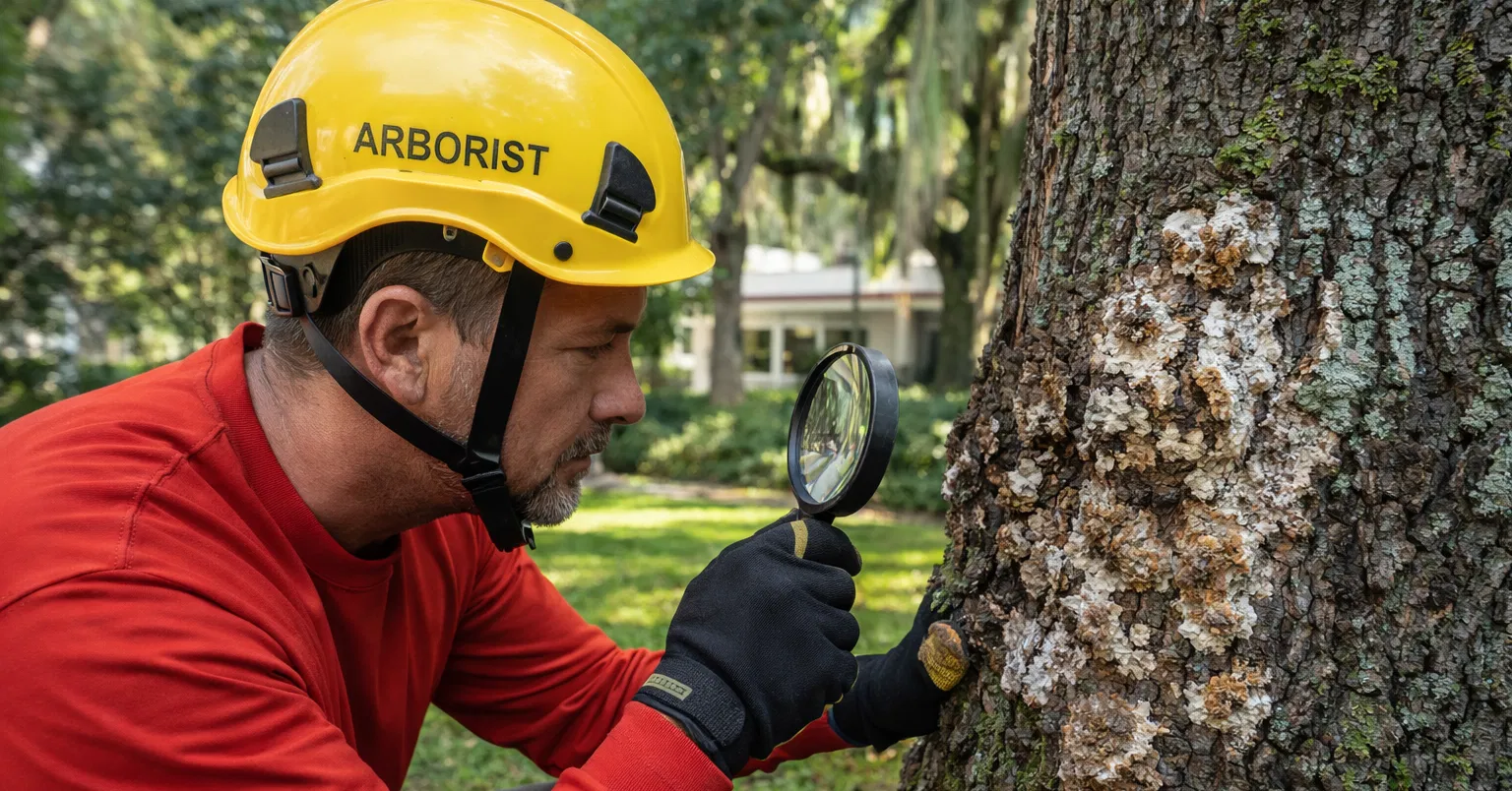
February 17, 2026
San Marco, Jacksonville, is renowned for its historic charm, beautiful architecture, and, notably, its stunning tree-lined streets. Many homes here boast expansive, shaded yards that offer a cool retreat from Florida’s sun. While this shade is a welcome amenity, it also creates a unique microclimate that can make trees highly susceptible to common fungal diseases. Understanding these issues is the first step in protecting your valuable landscape.
Key Takeaways
- Shaded yards in San Marco are particularly vulnerable to fungal diseases due to Jacksonville’s humid climate.
- Early detection and accurate identification are critical for effectively managing tree fungal infections.
- Common diseases like Anthracnose, Root Rot, and Powdery Mildew frequently affect trees in this area.
- Bushor’s Tree Surgeons provides expert diagnosis and customized treatment plans to safeguard your trees.
- Implementing regular tree care practices, such as correct pruning and watering, significantly aids in preventing fungal outbreaks.
Core Topic Explanation: Fungal Tree Diseases and Their Impact
Fungal diseases are a widespread problem for trees, caused by various types of fungi that thrive in specific environmental conditions. These microscopic organisms spread through spores, often carried by wind, water, or even insects. Once established, they can infect leaves, branches, bark, and even root systems, disrupting the tree’s ability to absorb nutrients and water, ultimately leading to decline or death.
The reason these diseases are so prevalent in shaded yards is simple: fungi love moisture and lack of direct sunlight. Shaded areas retain humidity longer, and trees receive less direct sun exposure, which helps dry out moisture on foliage and bark. This constant dampness, combined with poor air circulation common in dense canopies, creates an ideal breeding ground for many destructive fungal pathogens. Recognizing the signs early can save your trees and maintain the aesthetic and ecological value of your San Marco property.
Local Angle: Jacksonville’s Climate and Regulations Impact on Tree Health
Jacksonville’s unique environment plays a significant role in the prevalence of fungal tree issues. Our subtropical climate, characterized by high humidity and warm temperatures for much of the year, is a perfect incubator for fungal growth. The city also experiences substantial precipitation, including heavy downpours and tropical storms, which further contribute to the moist conditions fungi need to thrive.
Shaded yards, while offering respite from the heat, trap this humidity, preventing leaves and bark from drying out quickly after rain or dew. This extended moisture period allows fungal spores to germinate and infect trees more easily. Moreover, the city of Jacksonville, including the San Marco area, has specific regulations regarding tree removal and maintenance. For instance, ‘protected’ trees (those over a certain diameter at breast height, DBH, or located near property lines or rights-of-way) often require a city permit for removal. If a tree succumbs to fungal disease, navigating these regulations, which may involve mitigation efforts like planting replacement trees, adds another layer of complexity for homeowners.
Understanding these local factors is crucial for effective tree care. The University of Florida’s IFAS Extension provides valuable resources on tree health and disease management specific to our region, offering guidance on everything from proper watering to identifying common pests and diseases. UF/IFAS Extension is an excellent resource for local tree care information. Common tree species in our area, like the various oaks, are particularly susceptible to diseases such as Oak Wilt, which can be devastating.
Understanding Fungal Tree Issues in San Marco
In San Marco, the charm of mature trees often means dealing with their specific health challenges, particularly fungal diseases in shaded areas. Many of these issues are exacerbated by the constant moisture and reduced sunlight that define many of our beautiful, older yards. Being able to identify these problems early is key to successful treatment.
Top Causes
High Humidity and Lack of Airflow
High humidity and still air create a damp environment where fungal spores flourish. In densely shaded yards, air circulation is often poor, preventing moisture from evaporating quickly from leaf surfaces and bark. This prolonged wetness is an open invitation for various fungi to take hold and spread.
Poor Soil Drainage
Soil that doesn’t drain well can lead to waterlogged conditions around tree roots. This creates an anaerobic environment, stressing the roots and making them highly susceptible to root rot fungi. Compacted soil, common in older neighborhoods, further worsens drainage issues.
Overwatering
While trees need water, consistently overwatering, especially in shaded areas with poor drainage, can be just as harmful as underwatering. Excess moisture around the root collar and base of the tree provides ideal conditions for fungal pathogens to infect the root system.
Incorrect Pruning
Improper pruning techniques can weaken a tree, creating open wounds that serve as entry points for fungal spores. Cuts that are too large, flush cuts, or leaving stubs can all compromise the tree’s natural defenses, making it vulnerable to infection.
Weakened Trees
Trees that are already stressed from other factors, such as drought, nutrient deficiencies, pest infestations, or mechanical damage, have a weaker immune system. This makes them less able to fight off fungal infections when exposed to spores.
Proven Solutions: DIY vs. Professional Care
Limited DIY Options
For very minor fungal issues, homeowners might try some basic interventions. This includes improving air circulation by carefully pruning lower branches (if safe and small), raking fallen leaves and debris to remove spore sources, and ensuring proper watering to avoid over-saturation. However, these methods are often insufficient for established infections and can even do more harm than good if not done correctly. Many fungal diseases require more targeted approaches.
Professional Expertise from Bushor’s Tree Surgeons
When it comes to serious fungal diseases, professional help is invaluable. Certified arborists possess the knowledge and tools for accurate diagnosis and effective treatment. Bushor’s Tree Surgeons can provide a precise assessment of your tree’s condition, identifying the specific fungus at play and tailoring a solution.
| Disease Type | Common Hosts | Symptoms | Professional Treatment |
|---|---|---|---|
| Anthracnose | Oak, Sycamore, Maple | Brown/black spots on leaves, twig dieback | Fungicide sprays, canopy thinning |
| Root Rot | Most tree species | Yellowing leaves, wilting, and decay at the tree base | Soil drainage improvement, root collar excavation |
| Powdery Mildew | Crepe Myrtle, Dogwood, Elm | White, powdery growth on leaves | Fungicide application, improved air circulation |
| Oak Wilt | Oak species | Rapid wilting, bronzing leaves, vascular staining | Fungicide injections, removal of infected trees |
- Accurate Diagnosis: A certified arborist can correctly identify the type of fungal disease, which is crucial for selecting the right treatment.
- Fungicide Application: Professionals have access to specialized fungicides and the equipment to apply them safely and effectively, targeting the specific pathogen.
- Strategic Pruning: Expert pruning can remove infected branches, improve air circulation within the canopy, and allow more sunlight to penetrate, reducing humidity.
- Soil Treatment and Aeration: Addressing underlying soil issues, such as compaction or poor drainage, can significantly improve root health and the tree’s overall resilience.
- Tree Removal: In severe cases where a tree is too far gone or poses a safety risk, professional removal might be the only option. We can guide you through Jacksonville’s permit process for protected trees.
Prevention Tips for Healthy Shaded Yards
- Proper Watering Techniques: Water deeply but infrequently, allowing the soil to dry out slightly between waterings. Avoid overhead watering that keeps foliage wet, especially in the evenings.
- Regular Pruning by an Expert: Schedule annual pruning with a certified arborist to remove dead or diseased branches, improve air circulation, and ensure the tree maintains a strong structure. This also creates fewer entry points for fungi.
- Improving Soil Health: Address compacted soil with aeration. Consider adding organic matter to improve drainage and nutrient availability, fostering a healthier root system.
- Choosing Disease-Resistant Species: When planting new trees in shaded areas, select species known for their resistance to common local fungal diseases. Researching native and adapted plants for Jacksonville is always a good idea.
- Regular Inspections: Periodically inspect your trees for any early signs of disease. The sooner a problem is detected, the easier it is to treat and prevent its spread.
- Good Sanitation Practices: Promptly rake and remove fallen leaves, twigs, and other debris from around the base of your trees. This eliminates potential hiding spots for fungal spores and reduces the inoculum for future infections. For more general tree care tips, the Arbor Day Foundation offers valuable advice.
Local Insight: San Marco Neighborhoods and Tree Health
San Marco’s distinct character is deeply tied to its lush, mature trees. From the grand oaks shading historic homes near San Marco Square to the dense canopies in residential areas like South Shores and Colonial Manor, trees define the neighborhood’s aesthetic. However, these very features create microclimates that are ripe for fungal issues. The close proximity of trees, often planted decades ago, means less sunlight penetrates to the lower canopy and ground level, keeping humidity high. This is particularly noticeable in yards with multiple mature trees, where air movement is restricted.
Homeowners in these areas often observe leaf spots, powdery mildew on shrubs and understory trees, and even signs of root rot due to consistent moisture. Maintaining these trees is not just about aesthetics, it’s about preserving property value and the unique charm of San Marco itself. Understanding these local nuances helps us target specific solutions for your landscape.
Common Mistakes to Avoid
- Ignoring Early Signs: Many homeowners overlook subtle changes in their trees, allowing fungal diseases to progress to a severe stage before seeking help. Early detection is paramount.
- Overwatering or Underwatering: Both extremes can stress trees and make them more vulnerable to fungal infections. Consistent, appropriate watering is essential for tree health.
- Improper Pruning: Using dull tools, making incorrect cuts, or pruning at the wrong time of year can create wounds that invite fungal pathogens, rather than deterring them.
- Using Incorrect Fungicides: Applying the wrong type of fungicide, or applying it incorrectly, can be ineffective, waste money, and potentially harm the tree or surrounding environment. Always identify the specific fungus first.
- Planting Susceptible Species in Shady Spots: Choosing tree species that naturally struggle in humid, shaded conditions, or are known to be highly susceptible to local diseases, sets them up for failure from the start.
Frequently Asked Questions
What are the first signs of a fungal tree disease?
The first signs of fungal tree disease often include discolored leaves (spots, yellowing, browning), premature leaf drop, powdery or fuzzy growth on bark or leaves, cankers on branches, or general wilting. Observing these changes early is crucial for effective intervention.
Can I treat fungal tree diseases myself?
While minor issues like raking leaves or improving air circulation can be DIY, treating established fungal diseases often requires professional expertise. A certified arborist can accurately diagnose the specific fungus and recommend appropriate treatments, including specialized fungicides or advanced pruning techniques.
How does Jacksonville’s climate affect tree fungi?
Jacksonville’s subtropical climate, with its high humidity and warm temperatures, creates an ideal breeding ground for many types of fungi. Frequent rainfall and the potential for heavy downpours further exacerbate moisture levels, making trees, especially those in shaded yards, highly susceptible to infection.
When is the best time to prune trees to prevent disease?
The best time to prune trees to prevent disease largely depends on the tree species and the specific disease risk. Generally, dormant season pruning (late fall to early spring) minimizes stress and disease transmission. However, immediate removal of diseased branches can be necessary at any time.
What is the ‘protected tree’ status in San Marco?
In Jacksonville, ‘protected tree’ status applies to trees meeting certain size and location criteria. For instance, any tree 6 inches in diameter or more within 20 feet of a street right-of-way, or 11.5 inches or more elsewhere on the lot, usually requires a permit for removal.
How often should I have my trees inspected for disease?
Regular inspections are vital for early detection. We recommend having a certified arborist inspect your trees at least once a year, especially before and after storm season. More frequent checks may be beneficial for older or high-value trees, or if you notice any unusual changes.
Are some tree species more prone to fungal issues in shaded yards?
Yes, some tree species are more susceptible to fungal issues, especially in shaded, humid conditions. Common examples include sycamores, oaks, maples, crepe myrtles, and dogwoods. Proper species selection for your specific yard conditions can significantly reduce disease risk.
Final Thoughts on Protecting San Marco Trees from Fungal Disease
Protecting the beautiful trees in your San Marco shaded yard requires vigilance and expert care. By understanding the common fungal issues, their causes, and effective solutions, you can help ensure the longevity and health of your landscape. Proactive measures, from proper watering to professional pruning, are key to preventing these diseases from taking hold. Don’t let fungal infections diminish the beauty and value of your property’s trees.