March 31, 2026
Key Takeaways
- Over-trimming palms is the #1 cause of palm decline and nutrient deficiency.
- Removing green fronds weakens the palm’s ability to photosynthesize.
- “Hurricane cutting” does not protect palms and often increases storm damage risk.
- Improper pruning timing can stress palms and invite pests and disease.
- Hiring a trained professional prevents irreversible structural and health damage.
What Are Palm Trimming Mistakes and Why Do They Cause Palm Decline?
Palm trimming mistakes refer to improper pruning practices that damage a palm’s natural growth cycle, weaken its structure, and reduce its ability to produce energy. Unlike hardwood trees, palms grow from a single terminal bud and do not regenerate damaged trunks or tops.
When green fronds are removed too early, the palm loses essential nutrients it reabsorbs from aging leaves. Over time, this leads to nutrient deficiencies, slow growth, yellowing fronds, and sometimes permanent decline.
According to the Palm tree overview on Wikipedia, palms are monocots with a single growing point, meaning improper pruning can cause irreversible damage.
Why Proper Palm Trimming Matters for Long-Term Health
Palm trimming is not just cosmetic. It directly affects the palm’s energy production and structural integrity.
Healthy palms naturally shed older fronds. When trimmed correctly, only fully dead or broken fronds should be removed. Removing green or partially green fronds interrupts nutrient recycling, especially potassium and magnesium.
Nutrient Loss Is the Hidden Danger
University extension studies show that potassium deficiency is one of the most common palm health issues. Over-pruning accelerates this deficiency because palms pull nutrients from older fronds before they die.
When green fronds are removed:
- Nutrient reserves drop
- Growth slows
- Yellow spotting increases
- Fronds become smaller each season
- Crown size reduces over time
This is one of the most common mistakes we see during service calls at our tree service company.
The Most Common Palm Trimming Mistakes
1. Over-Trimming Green Fronds
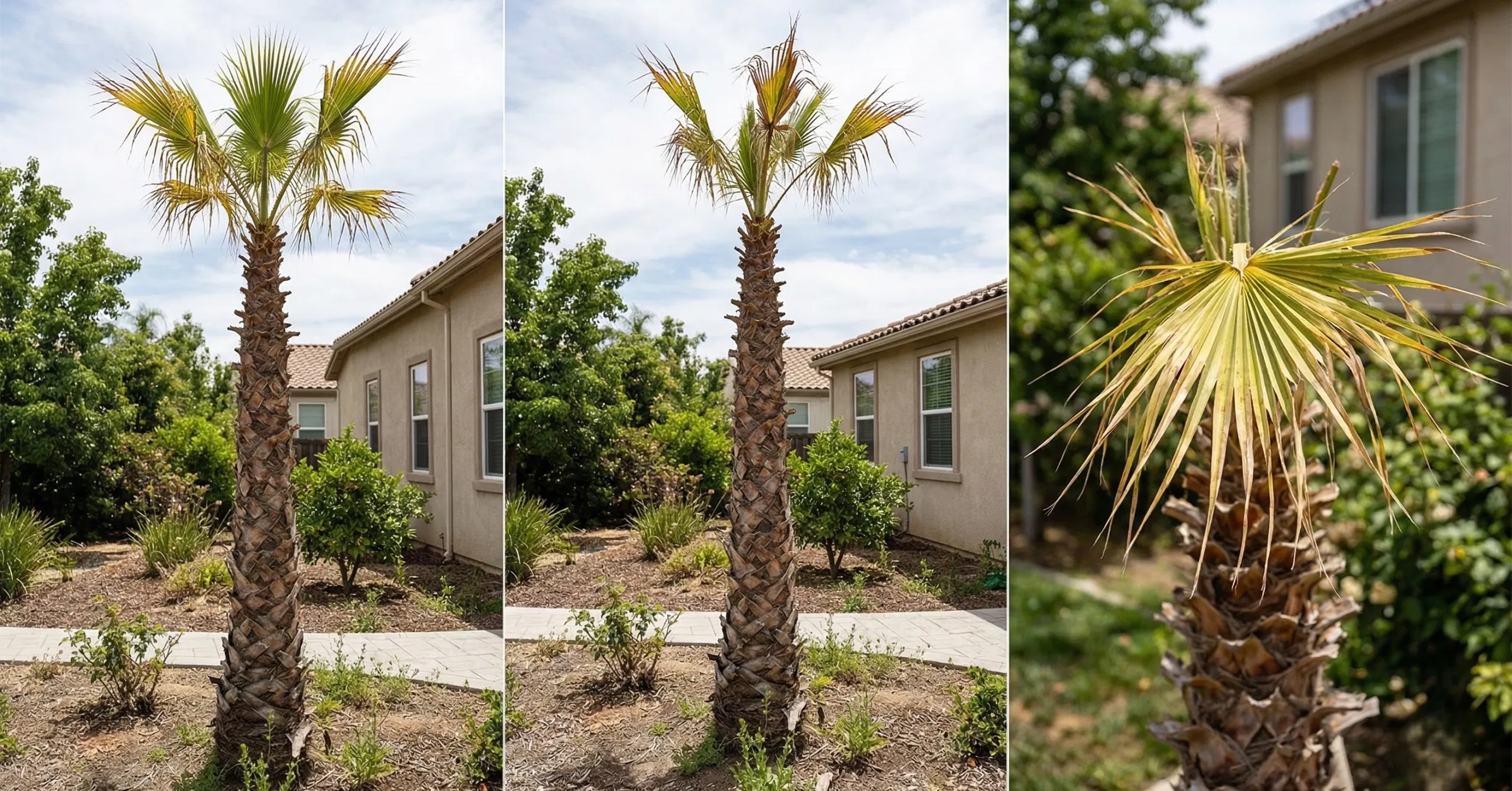
The biggest mistake homeowners make is cutting palms into a “pineapple” or tight feather shape.
If fronds are green, they are actively feeding the tree. Removing them weakens the palm immediately.
2. Hurricane Cutting
Many believe trimming palms into a narrow tuft protects against storms. In reality, hurricane cutting increases wind resistance and removes structural balance.
Research from university extension programs shows palms with full, natural canopies often perform better in storms than over-pruned palms.
3. Topping or Cutting the Crown
Cutting into the top growing point kills the palm. Palms do not branch or regenerate from trunk wounds like hardwood trees.
4. Using Improper Tools
Dull or contaminated tools can introduce fungal diseases and cause tearing rather than clean cuts.
When Should Palm Trimming Be Done?
Palm trimming should be done only when fronds are fully brown, broken, or pose a safety hazard. In most climates, once or twice per year is sufficient.
Signs It’s Time for Professional Palm Trimming
- Fully dead lower fronds
- Hanging fruit stalks causing mess or pests
- Storm-damaged fronds
- Safety concerns near structures or walkways
If removal is required due to severe decline, professional tree removal may be the safest option.
How Palm Decline Happens Over Time
Palm decline is gradual and often linked to repeated poor trimming practices.
Here is what we typically see in the field:
- Homeowners trim each year heavily.
- Palm begins showing yellowing on lower fronds.
- Crown size shrinks over several seasons.
- New fronds emerge smaller and weaker.
- Trunk thins or growth stalls.
Once nutrient deficiencies reach an advanced stage, recovery becomes difficult.
Signs Your Palm May Be Over-Trimmed or Nutrient-Stressed
| Symptom or Pattern | Likely Cause | What It Usually Means |
| Tight “pineapple” canopy with only a few upright fronds | Over-trimming green fronds | Palm becomes nutrient-stressed and structurally weakened. Recovery can take multiple growing seasons. |
| Yellow or brown spotting on older fronds | Potassium deficiency | Often worsened when green fronds are removed too early. Requires palm-specific fertilization. |
| Frizzled or stunted new growth | Manganese deficiency | Usually related to soil nutrient imbalance rather than trimming alone. Requires proper diagnosis. |
| Rapid yellowing after trimming | Excessive removal of green fronds | Palm loses the ability to recycle nutrients. Future trimming must be conservative. |
| Gradually shrinking canopy each year | Repeated over-trimming | Long-term decline risk. Severely stressed palms may eventually require removal. |
Real Job Story: A Preventable Palm Decline
We were recently called to inspect three queen palms that had been aggressively trimmed every 6 months for years. The homeowner believed it “kept them clean.”
By the time we arrived, the palms had a severe potassium deficiency and sparse crowns. Soil testing confirmed a nutrient imbalance. We implemented a fertilization schedule and stopped over-pruning. Two palms recovered slowly over two years. One required professional tree removal due to advanced decline.
The key lesson: palms decline from repeated stress, not one bad trim.
How to Trim Palms Correctly
Proper palm trimming follows one simple rule: remove only what is completely dead.
Best practices:
- Remove brown fronds only
- Leave green and partially green fronds intact
- Avoid cutting above the horizontal
- Use sanitized, sharp tools
- Fertilize annually with palm-specific nutrients
Professional evaluation helps prevent long-term damage.
FAQs About Palm Trimming Mistakes
How do I know if my palm is over-trimmed?
If your palm has a very tight, shaved look with only a few upright fronds, it has likely been over-trimmed. A healthy palm should have a full, rounded canopy extending outward.
Can over-trimmed palms recover?
Yes, but recovery depends on severity. If the crown is intact and nutrient levels are corrected, palms can gradually rebuild canopy size over multiple growing seasons.
Does trimming palms make them grow faster?
No. Removing green fronds reduces energy production. Palms grow at a genetically determined rate that trimming does not increase.
What happens if you cut the top of a palm tree?
Cutting the growing tip kills the palm. Unlike hardwood trees, palms cannot regenerate from trunk cuts.
How often should palms be trimmed?
Most palms need trimming once per year or less. Only remove dead or hazardous fronds.
Is hurricane cutting good for storm protection?
No. Research shows that over-pruned palms may suffer more structural stress during high winds.
Why are my palm fronds turning yellow after trimming?
Yellowing often indicates potassium deficiency triggered by excessive removal of nutrient-storing fronds.
Should I remove palm fruit?
Fruit stalks can be removed if they create a mess or attract pests, but avoid removing healthy green fronds unnecessarily.
Can trimming spread palm diseases?
Yes. Using contaminated tools can spread fungal pathogens between trees.
When should I call a professional?
Call a professional if your palm shows severe yellowing, thinning crown, structural instability, or if trimming involves height risks.
Final Thoughts on Preventing Palm Decline
Palm trimming is simple when done correctly and harmful when done aggressively. The goal is preservation, not reshaping. Removing only dead material protects nutrient cycling and structural balance.
When in doubt, consult a qualified professional to protect your investment and landscape health.
Reviewed by a Certified Arborist
Author Bio
Brad Bushor is an ISA Certified Arborist (FL-5743A) and Tree Risk Assessment Qualified (TRAQ) arborist with Bushor’s Tree Surgeons. A third-generation tree care professional, Brad began working in the field in 2006 and earned his ISA certification at age 19. He specializes in palm pruning, tree risk evaluation, and practical tree health solutions for Jacksonville landscapes.
Sources
University of Florida IFAS Extension. (n.d.). Fertilization of field-grown and landscape palms in Florida (EP261). https://edis.ifas.ufl.edu/publication/EP261
USDA Forest Service. (n.d.). Urban and community forestry program. https://www.fs.usda.gov/managing-land/urban-forests/ucf
Wikipedia contributors. (n.d.). Arecaceae. In Wikipedia, The Free Encyclopedia. https://en.wikipedia.org/wiki/Arecaceae