June 29, 2026
Key Takeaways
- Maintaining tree health in Northeast Florida requires specialized care tailored to sandy, nutrient-deficient coastal soils.
- Proactive soil management, structural pruning, and proper hydration establish deep, storm-resilient root systems.
- Mulching mistakes like “volcano mulching” trap moisture against the bark, leading to root rot and fungal infection.
- Protecting the Critical Root Zone (CRZ) during construction prevents soil compaction and fatal root damage.
- Routine health assessments by certified arborists identify structural defects and pests before they cause failures.
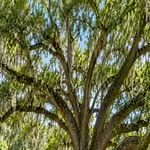
Northeast Florida boasts an impressive urban forest, characterized by ancient live oaks draped in Spanish moss, towering slash pines, and vibrant magnolias. These trees provide crucial benefits to homeowners, including natural cooling, improved air quality, reduced stormwater runoff, and enhanced property values. However, maintaining a thriving canopy in the Greater Jacksonville region requires an understanding of a highly specific environment. Our coastal ecosystem presents distinct challenges, including nutrient-deficient sandy soils, high humidity, prolonged summer heatwaves, and seasonal tropical storms.
Without a proactive, long-term health care strategy, residential trees can easily fall victim to environmental stressors, opportunistic pests, and structural decay. Many property owners assume that mature trees are entirely self-sufficient, only calling for assistance after a major branch fractures or a disease takes hold. In reality, the key to minimizing property risk and ensuring canopy longevity lies in preventive maintenance. By implementing comprehensive soil, water, and structural management strategies, you can build a resilient landscape that withstands both seasonal climate extremes and intense severe weather events.
Essential Core Pillars of Coastal Tree Preservation
To successfully cultivate a lasting landscape in Northeast Florida, property owners must look beyond basic aesthetic grooming and address the core biological needs of their trees. The coastal environment demands a systematic approach that links subsurface root stabilization with protective upper-canopy care. By focusing on the essential mechanisms that drive tree immunity, structural anchor strength, and seasonal defense, you transition your landscape from a state of reactive survival to long-term vitality. The following foundational practices form a cohesive strategy that addresses local environmental vulnerabilities before they escalate into high-risk hazards.
1. Soil Optimization and Deep-Root Nutrition
The foundation of long-term tree health sits entirely beneath the surface. Northeast Florida soils are predominantly sandy, which means they possess an exceptionally high drainage rate but a very low cation exchange capacity. In simple terms, nutrients like nitrogen, potassium, and magnesium leach rapidly through the sand whenever it rains, leaving trees starved of the essential elements required for cellular growth and defense.
To combat this inherent lack of nutrients, property owners should avoid broadcast, quick-release surface turf fertilizers, which stimulate excessive, weak vegetative growth in the canopy while failing to reach deep structural roots. Instead, long-term care relies on deep-root fertilization. This specialized process uses professional injection probes to deliver a pressurized blend of slow-release macronutrients, essential micronutrients, and beneficial mycorrhizal fungi directly into the upper 8 to 12 inches of the soil profile, right where the tree’s active absorbing roots reside. This targeted delivery strengthens root branching, improves drought tolerance, and corrects common coastal deficiencies like palm chlorosis, which is caused by a severe lack of magnesium or manganese.
2. Dynamic Hydration and Moisture Management
Water management in Northeast Florida is a balancing act between seasonal droughts and intense tropical deluge periods. While established native trees are remarkably adapted to our climate, urban environments alter natural hydrology. Paved driveways, concrete foundations, and standard turf irrigation systems frequently disrupt the soil’s natural moisture balance.
The most effective long-term irrigation strategy for trees is infrequent, deep watering rather than frequent, shallow cycling. Shallow watering, common with automated lawn sprinklers, encourages trees to develop a lazy, superficial root system close to the surface. When a severe drought or hurricane hits, these surface-rooted trees quickly destabilize or dry out. By applying water deeply and slowly across the entire edge of the canopy’s drip line, you train the root system to grow downward into deeper soil strata, creating a robust anchoring mechanism that improves structural stability during high-wind events.
3. The Science of Proper Mulching
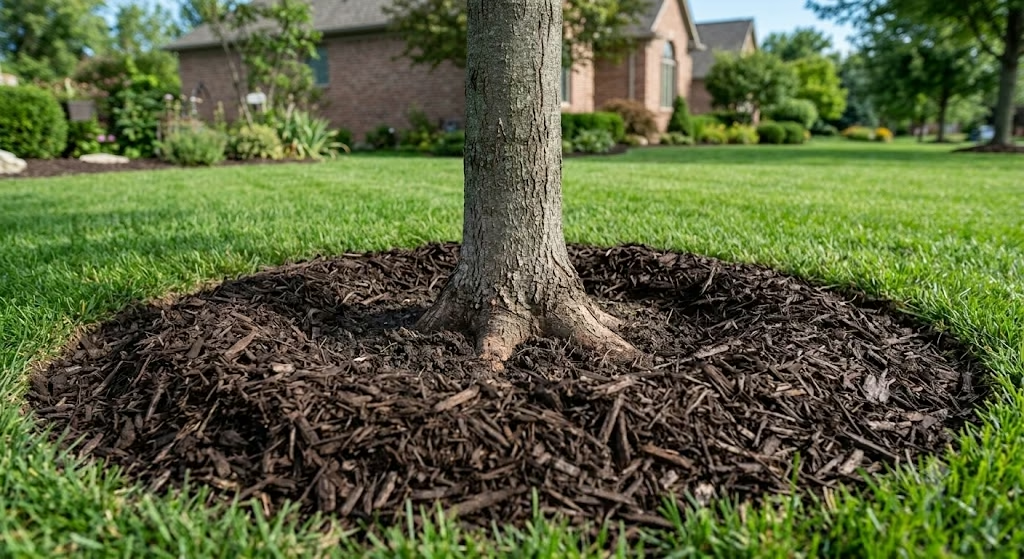
Mulching is arguably the most cost-effective long-term preservation tool available to homeowners, provided it is applied correctly. A broad, well-maintained mulch ring mimics the natural forest floor by insulating the soil against extreme summer heat, conserving soil moisture, suppressing competing weed growth, and continuously returning vital organic matter to the sand as it breaks down.
Unfortunately, a widespread landscaping mistake known as “volcano mulching” runs rampant through residential developments. This occurs when mulch is piled thickly directly against the base of the tree trunk, completely burying the root flare.
Critical Biological Fact: Tree bark is engineered to be exposed to air and light. When piled under damp mulch, the hidden bark remains perpetually saturated, suffocating the delicate cambium layer underneath and inviting wood-rotting fungal pathogens.
To properly apply mulch, follow the “3-3-3 Rule“: create a ring that extends at least 3 feet out from the trunk, maintain a depth of roughly 3 inches, and leave a clear 3-inch air gap between the mulch material and the bare bark of the tree trunk.
4. Proactive Pest and Disease Mitigation
Northeast Florida’s warm, humid climate creates an ideal breeding ground for a wide variety of destructive insects and infectious plant pathogens. Long-term management requires moving away from reactive, blanket chemical spraying, which destroys beneficial predatory insects and contaminates local waterways. Instead, modern arborist practices utilize Integrated Pest Management (IPM).
IPM focuses on routine visual inspections to detect early signs of stress before an infestation gets out of hand. For instance, property owners should watch for the accumulation of fine, white cotton-like fluff on oak branches, which indicates an active scale insect infestation, or localized canopy thinning, which can point to subterranean root rot. When treatments are deemed necessary, certified arborists favor direct trunk injections or targeted systemic soil drenches over airborne sprays. These advanced delivery methods introduce protective treatments directly into the tree’s internal vascular system, effectively managing target threats like boring beetles, webworms, and lethal bronzing while leaving the surrounding ecosystem completely unharmed.
5. Safeguarding the Critical Root Zone
As homeowners renovate landscapes, install swimming pools, or repave driveways, underground tree roots are routinely subjected to silent, catastrophic damage. A tree’s root system is not a mirror image of its canopy; rather, it consists of extensive, shallow lateral roots that expand outward up to two to three times the width of the branch spread.
The area directly beneath the canopy is known as the Critical Root Zone (CRZ). Operating heavy machinery, storing construction materials, or changing soil grades inside this zone causes severe soil compaction. Compaction crushes the tiny pore spaces within the soil, cutting off the vital supply of oxygen and water required for root survival. To prevent irreversible decline, which often manifests as mysterious canopy dieback three to five years after construction concludes, always erect sturdy, temporary protective fencing around the entire perimeter of the CRZ before any mechanical equipment or construction crews enter your property.
6. Multi-Year Structural Pruning Cycles
Waiting until a major storm arrives to evaluate branch integrity is an incredibly risky strategy. Mature trees require a consistent, multi-year structural pruning cycle conducted by trained professionals to systematically remove defects and improve wind aerodynamics.
Structural pruning involves identifying and correcting major structural flaws while they are still manageable. This includes eliminating rubbing branches, balancing lopsided canopies, and thinning out dense exterior foliage to allow heavy tropical winds to pass safely through the crown without catching it like a sail. Furthermore, establishing a single, strong central leader trunk on younger trees prevents the formation of weak, codominant stems that split open easily under stress. By investing in minor, strategic structural corrections every 3 to 5 years, you drastically minimize the long-term risk of catastrophic limb failure and protect your home from sudden storm damage.
Protecting your property from the long-term damage caused by improper pruning requires hiring an experienced tree health care firm in Northeast Florida who understands tree biology. Bushor’s Tree Surgeons has been dedicated to preserving the magnificent urban canopy of Greater Jacksonville since 1962.
Operating 24/7 with a fully equipped fleet, our licensed and fully insured teams deliver professional tree trimming & pruning, tree health care, stump grinding & removal, hazardous tree removal, storm damage cleanup, arborist consultations, cabling and bracing, and 24/7 emergency tree services across Duval, Clay, and St. Johns counties. We refuse to use destructive practices like topping or lion-tailing, ensuring your trees remain safe and resilient. Contact Bushor’s Tree Surgeons today to discuss your tree care needs or to schedule your completely free upfront service estimate.
Frequently Asked Questions About Tree Health Care in Northeast Florida
Why is deep-root fertilization better than standard surface lawn fertilizer?
Surface fertilization feeds lawn grass first, often causing excessive turf growth while failing to sink into deeper soil profiles. Pressurized deep-root injections bypass the turf entirely, placing slow-release nutrients precisely into the root zone where a tree’s primary feeding roots can absorb them.
How do I locate the Critical Root Zone (CRZ) of a tree on my property?
As a general baseline, calculate one foot of radius away from the trunk for every single inch of trunk diameter measured at breast height (4.5 feet above the ground). This designated circular area must be completely protected from heavy equipment and soil compaction.
What are the main signs that a mature tree is suffering from soil compaction?
Symptoms typically develop slowly over several seasons. Look for premature leaf dropping, unusually small or yellowing foliage, stunted twig growth at branch tips, and gradual canopy dieback starting from the top down.
Can native Florida trees survive severe droughts without supplemental watering?
Established, mature native trees like live oaks possess deep root systems that tolerate dry spells well. However, young trees, newly planted specimens, or mature trees recovering from construction stress require regular, deep supplemental watering during extended droughts to prevent severe vascular failure.
What is lethal bronzing, and which local tree species does it affect?
Lethal bronzing is a destructive, incurable bacterial disease spread by tiny piercing insects called planthoppers. It primarily targets palm tree species, causing rapid frond discoloration and fruit drop, eventually destroying the palm’s central spear leaf.
How often should a homeowner schedule a professional arborist inspection?
For optimal safety and preventive care, large mature trees should be inspected by an ISA Certified Arborist every two to three years. Trees that are elderly, diseased, or located near construction zones should be evaluated annually ahead of hurricane season.
Why does Spanish moss grow on my trees, and does it cause them harm?
Spanish moss is an epiphytic plant, meaning it relies on the tree solely for physical support while absorbing moisture and nutrients directly from the air. It is not a parasite and does not steal nutrients from the tree, though extremely heavy accumulations can occasionally shade out interior leaves.
What is the primary hazard of over-mulching around the base of a trunk?
Piling mulch against the bark traps constant moisture, creating an anaerobic environment that suffocates the trunk’s living cambium layer. This damp condition invites opportunistic wood-boring insects and root-rotting fungi to compromise the tree’s base.
Summary Checklist: Tree Health Maintenance and Risk Management
| Tree Condition | Identified Risk Level | Recommended Action Plan |
|---|---|---|
| Burying the Root Flare | High risk of fungal infection | Excavate excess mulch and expose the root flare completely |
| Severe Soil Compaction | Root suffocation and decline | Schedule professional air-spade aeration or vertical mulching |
| Nutrient Deficiency | Weakened tree health and stress | Apply slow-release nutrients through deep-root fertilization |
| Shallow Lawn Watering | Surface root development and instability | Switch to deep, infrequent watering along the drip line |
| Dense Exterior Foliage | Elevated storm and wind damage risk | Perform selective canopy thinning to improve airflow and wind resistance |
Final Advice
Maintaining healthy trees in Jacksonville requires far more than occasional trimming or storm cleanup. Florida’s humid climate, heavy rainfall, and frequent hurricanes create constant pressure on tree health, making early diagnosis and preventive care essential for long-term landscape safety. Ignoring warning signs such as fungal growth, leaning trunks, dead branches, or thinning canopies can quickly lead to expensive emergency situations and major property hazards. The best approach is proactive maintenance supported by certified arborists who understand the biological and structural challenges unique to Northeast Florida trees.
Before hiring any tree service company, property owners should verify ISA certifications, licensing, insurance coverage, and experience handling Florida-specific tree diseases and storm-related risks. Proper pruning, annual inspections, root management, and rapid response to storm damage can significantly extend the lifespan of valuable trees while protecting nearby structures and outdoor spaces.
If you need a reliable tree health care firm in Northeast Florida, contact Bushor’s Tree Surgeons today for a Free Estimate.