February 13, 2026
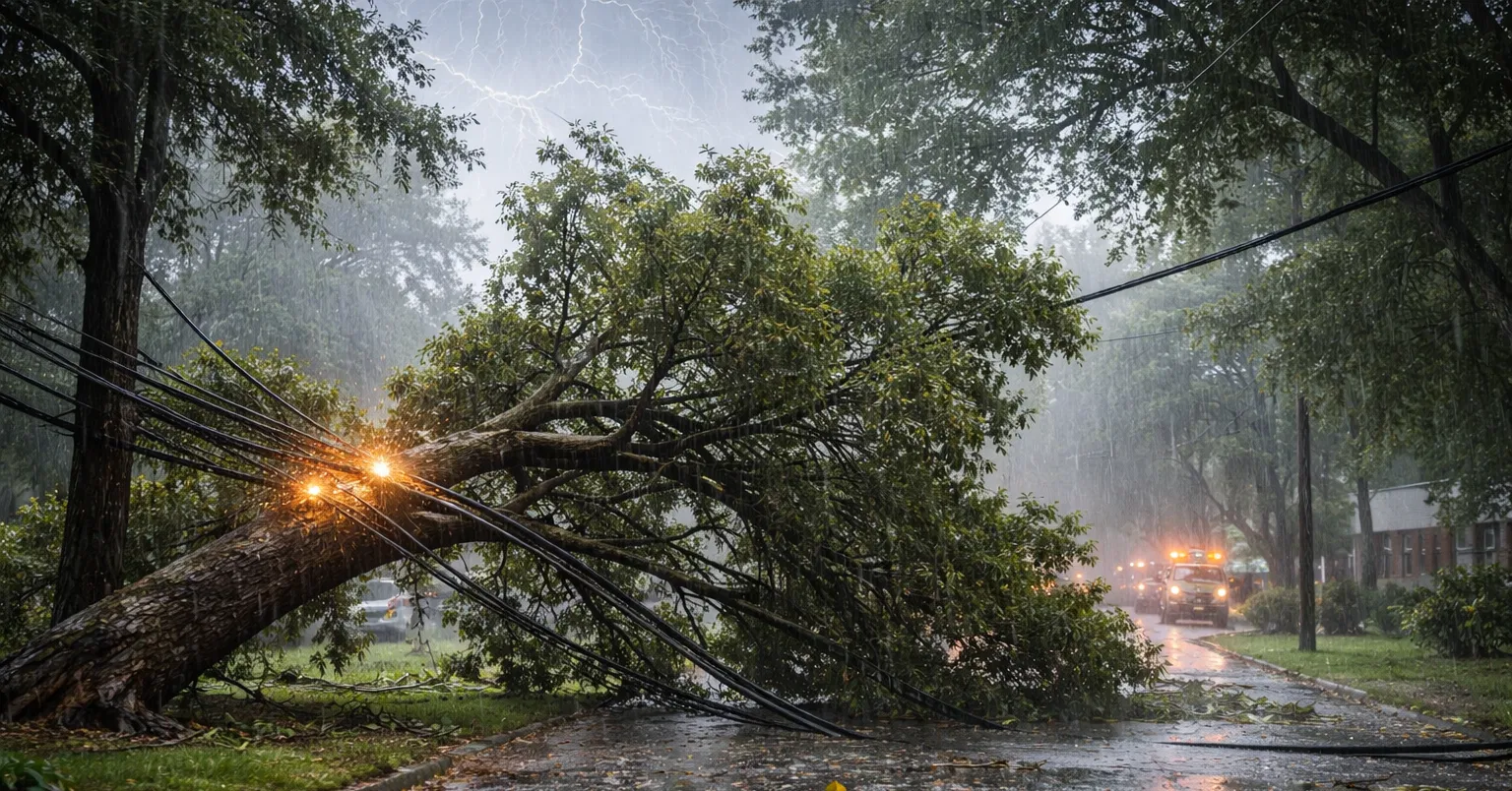
A powerful storm can change everything in seconds. One loud crack, a flash of light, and suddenly a tree is tangled in power lines near your home. Many homeowners freeze in that moment, unsure what to do. The truth is, when a tree makes contact with power lines, it is not just a power outage issue. It is a life-threatening emergency that requires immediate and professional attention.
Bushor’s Tree Surgeons has seen these situations across Jacksonville and nearby communities. We know how storms, loose soil, and overgrown trees can quickly lead to dangerous electrical hazards. This guide explains exactly what happens when a tree falls on power lines, what to do next, and how to prevent it from happening in the future.
Emergency Tree on Power Lines? Don’t Risk It.
Call Bushor’s Tree Surgeons for immediate, professional help in Jacksonville.
✅ 24/7 emergency response
✅ Certified, insured arborists
✅ Safe tree and debris removal near power lines
📞 Call (904) 789-8884 or Request Service Now
Why Trees Fall on Power Lines During Storms
Storms combine the worst possible conditions for trees. Heavy rain, high winds, saturated soil, and lightning can all cause structural stress. Understanding why trees fall helps you identify early warning signs and reduce future risk.
Soil saturation weakens roots
When soil becomes waterlogged, roots lose their grip. Trees in low or poorly drained areas can tilt or uproot completely. Once the roots give way, the tree can fall in any direction, often toward nearby lines or structures.
Wind pressure and canopy weight
Strong winds push trees repeatedly in one direction. Large canopies act like sails, catching gusts and pulling against the trunk. If the trunk or root plate is already weakened, one heavy gust can send the tree over.
Unbalanced or neglected trees
If a tree has not been pruned correctly, one side may become heavier than the other. An uneven canopy adds stress during storms. This imbalance increases the chance of breakage or toppling.
Decay and hidden internal weakness
Rot, hollow trunks, and old storm wounds make trees unstable. Even if the tree appears healthy, internal decay can cause sudden failure during wind or rain.
Proximity to power lines
In many Jacksonville neighborhoods, large shade trees grow close to overhead lines. When branches touch or sway near live wires, it only takes one strong storm for direct contact or collapse to occur.
What Actually Happens When a Tree Touches a Power Line
When a tree or branch contacts an electrical line, several things can happen in an instant. Each poses a danger to anyone nearby.
The line may energize the tree and ground
Electricity always seeks the easiest path to the ground. If a wet tree connects a power line to the ground, the entire tree can carry high voltage. Anyone who touches it or the nearby soil could be electrocuted.
Arcing and sparks
Electricity can jump across small gaps of air. When a branch gets close to a live wire, the power can arc, creating flashes, pops, or burning marks. This can ignite dry leaves, grass, or nearby structures.
Power outages
A single tree falling on a major line can cut power to dozens or hundreds of homes. Utilities must isolate and repair the damaged section before restoring service.
Fire or explosion risk
If the impact breaks equipment or transformers, fire may occur. Even after the storm, damaged lines may remain energized and dangerous.
Structural and property damage
When trees hit power lines, they often bring poles or transformers down with them. This can destroy fences, crush cars, damage roofs, or block roads.
Emergency steps to keep you and others safe
When a tree hits power lines, you are dealing with two hazards at once: falling timber and live electricity. It is never safe to assume a line is off just because the lights are out or the wire is silent. Lines that appear harmless may still carry lethal voltage.
Every year across the United States, people are injured or killed after coming into contact with downed power lines. The danger increases after storms when puddles, metal fences, and debris may all conduct electricity.
If you ever face this situation, take immediate action from a distance and never try to fix or move anything yourself.
What to Do If a Tree Falls on Power Lines
Here is the exact sequence of steps you should follow to protect yourself and others.
- Stay away from the tree and lines: Keep at least 35 feet back from the area. Do not approach to take a closer look.
- Warn others to stay clear: Keep children, pets, and neighbors away. Place visible markers or barriers if possible.
- Call 911 immediately: Report the situation as an electrical emergency. Fire and rescue crews will coordinate with the power company.
- Notify your utility provider: In Jacksonville, contact JEA or your local power company to report a downed line or hazard.
- Do not touch fences, puddles, or metal objects nearby: Electricity can travel through wet surfaces and conductive materials.
- If a line falls on your vehicle, stay inside: The car acts as a shield. Do not exit unless there is fire or smoke. If you must leave, jump clear with both feet together and shuffle away without touching the car again.
- Document the event from a safe distance: Take photos or videos for insurance purposes only after authorities secure the scene.
These steps save lives. The safest approach is always to keep your distance and call professionals.
What the Utility Company Does Next
Once reported, your power company takes control of the site. Here is how the process works:
Isolation and shutdown: Crews first isolate the power flow and cut electricity to the affected line. This prevents further arcing or fire and allows them to work safely.
Site inspection: Technicians inspect poles, lines, and transformers to determine the extent of the damage. If any equipment is damaged, they may replace it on-site.
Coordination with tree removal experts: Utilities often call certified arborists or emergency tree services like Bushor’s Tree Surgeons to remove or cut back the fallen tree once the area is de-energized.
Repair and restoration: After the debris is cleared, crews repair the line, reattach conductors, and test the system before power is restored.
Cleanup and safety verification: Once the hazard is removed, the area is checked again for residual risk. Only then is the site cleared for homeowners to return.
How Bushor’s Tree Surgeons Respond to Emergency Calls
At Bushor’s Tree Surgeons, we respond to emergency tree incidents across Jacksonville and nearby communities. Safety and speed are our top priorities.
When a tree falls onto or near power lines, our team follows a proven protocol:
- Rapid dispatch: We arrive quickly once the utility has confirmed that lines are de-energized and the area is safe to enter.
- Hazard assessment: We inspect the tree, trunk, and surrounding soil to identify tension points, broken limbs, or hidden risks.
- Controlled removal: Using cranes, ropes, and specialized rigging, we dismantle the tree section by section to prevent further damage.
- Full cleanup: We remove all debris, clear the area, and perform stump grinding if requested.
- Property inspection: Our arborists check nearby trees for stress or root disturbance that may cause later failure.
Every situation is handled with precision, communication, and complete safety.
Who Pays for the Damage When a Tree Falls on Power Lines
When a tree falls on power lines, several questions arise about who is responsible and what insurance covers. Here are the key points to understand:
- Utility-owned lines vs. homeowner-owned lines: The utility typically maintains main distribution lines, but homeowners may be responsible for service lines that connect from the pole to their home.
- Acts of nature: If the tree fell due to a storm, most insurance policies treat it as an accident and cover damage to your property.
- Neglect or visible decay: If the tree was dead, leaning, or previously reported as hazardous and no action was taken, insurance may deny the claim.
- Neighboring trees: If your neighbor’s tree fell onto your lines or property, liability depends on whether neglect can be proven.
- Documentation helps: Keep records of regular tree inspections and maintenance. Bushor’s Tree Surgeons provides written reports that serve as proof of responsible care.
When in doubt, contact your insurance company immediately and provide detailed information, photos, and arborist assessments.
Preventing Trees from Falling on Power Lines
Prevention starts long before a storm hits. Regular maintenance and smart planting choices reduce risk and protect your property.
Schedule annual tree inspections:
Have a certified arborist inspect your property at least once a year, especially before hurricane season. Professional eyes can spot root damage, decay, or structural imbalance early.
Maintain proper clearance:
Keep at least ten feet of clearance between branches and distribution power lines. For high-voltage transmission lines, greater distances are required. Never prune near live wires yourself. Hire professionals trained in utility line clearance.
Trim and balance the canopy:
Selective pruning reduces wind resistance and prevents uneven weight. Balanced trees handle storms far better than those left unmaintained.
Manage soil and drainage:
Ensure proper grading and drainage around large trees. Waterlogged soil weakens roots and increases the chance of toppling during high winds.
Choose the right species and location:
When planting, select trees suited for Jacksonville’s soil and climate. Avoid placing large canopy trees directly beneath or near utility lines. Opt for smaller, wind-resistant species such as crape myrtle, holly, or magnolia.
Reinforce early warning awareness:
After heavy rain or wind, check your yard. Leaning trees, lifted roots, or cracked soil near the base signal potential failure. Call an arborist before the next storm hits.
A Real Jacksonville Storm Story That Could Have Ended Worse
After a strong thunderstorm swept through the Arlington area, a large water oak fell across a residential street, pulling down two power lines. The homeowners reported it immediately to JEA. The power company secured the site and contacted Bushor’s Tree Surgeons for removal.
When our team arrived, the lines were confirmed safe, but the tree’s base showed severe root rot. The crew used cranes and rigging to remove the trunk in controlled sections. Power was restored the same afternoon, and cleanup was completed the same day.
Because the homeowner had previously scheduled inspections, insurance covered the full removal and property repair. Acting fast prevented further outages and damage to nearby houses.
Homeowner Questions About Trees and Power Lines
What should I do if a tree is growing too close to power lines?
Call your utility or a certified tree service. Do not attempt to prune it yourself. Professionals use insulated tools and follow clearance standards.
Will the power company remove a tree that threatens lines?
Utilities typically maintain clearance for main lines. Trees on private property may be your responsibility. Check with your local provider for policy details.
Is it dangerous if a branch just touches a line during rain?
Yes. Moisture increases conductivity. Even light contact can allow current to travel through the tree and into the ground. Stay away and report it immediately.
Who pays for tree removal after a storm?
If the tree caused property damage, your homeowners’ insurance generally covers it. If the tree only damages lines or utility poles, the utility handles repairs, but not debris removal on your property.
How can I tell if my tree is a risk before hurricane season?
Look for cracks in the trunk, exposed roots, dead branches, fungus around the base, or an unbalanced canopy. Schedule a professional inspection if you notice any of these signs.
When should I call Bushor’s Tree Surgeons?
Call as soon as you see a tree leaning toward power lines, hanging branches near service wires, or any tree movement after a storm. Early assessment prevents emergencies later.
Prepare Your Trees Before the Next Storm Hits
Trees and power lines can coexist safely if both are managed correctly. The danger begins when maintenance is ignored or storms expose hidden weaknesses. Once a tree hits a power line, it becomes an immediate safety hazard. Waiting or approaching on your own can lead to injury, fire, or loss of life.
Preventive care is the best solution. Regular pruning, soil management, and professional inspections protect not only your property but also your community. Every season, Bushor’s Tree Surgeons helps Jacksonville homeowners prepare their trees for Florida’s unpredictable weather. We combine technical expertise with a safety-first approach that keeps families protected year-round.
Contact Bushor’s Tree Surgeons
Bushor’s Tree Surgeons
Jacksonville, Florida
Phone: (904) 789-8884
Website: bushortree.com
If a storm leaves you with a fallen tree or a power line hazard, do not take risks. Contact Bushor’s Tree Surgeons for immediate, professional help. We provide emergency response, safe tree removal, and full property cleanup across Jacksonville and the surrounding areas.
Protect your home before the next storm. Schedule your tree inspection today.