November 10, 2026
Vertical cracks in a tree trunk can develop because of frost damage, sunscald, changing moisture levels, or underlying structural weaknesses. Some cracks affect only the outer bark, while others extend deeper into the wood and indicate a potential safety hazard. The depth, location, and surrounding symptoms help determine how serious the damage may be.
A crack accompanied by decay, cavities, a sudden lean, or exposed wood deserves professional attention. Avoid filling or sealing the wound yourself. If the crack is deep, widening, or located near a major branch union, arrange an inspection with a qualified arborist in Jacksonville, FL.
The Science Behind Tree Growth and Bark Splitting
Trees expand outward as they grow. Just beneath the outer bark sits the cambium, a layer of living tissue that produces new wood on the inside and new inner bark on the outside. This process increases the trunk’s diameter over time.
As the trunk expands, the outer bark must accommodate that growth. Depending on the species, bark may naturally develop ridges, furrows, or shallow fissures. These features are not necessarily signs of damage.
However, environmental stress and structural problems can cause deeper splits. Sudden temperature changes, drought, sunscald, and weaknesses where major stems join can all contribute to trunk cracking.
Understanding the difference between normal bark development and a potentially hazardous split helps property owners decide when to seek professional advice.
Frost Cracks: Why Winter Temperatures Can Split a Trunk
One common cause of vertical trunk damage is a frost crack. These cracks can develop when rapid temperature changes create stress within a tree’s trunk.
- Rapid temperature changes: During winter, the outer trunk can cool and contract faster than the wood deeper inside. This difference can place stress on the trunk.
- Wood tension: When the stress exceeds the wood’s capacity to withstand it, a vertical split may develop. Some frost cracks produce a loud sound as the wood separates.
- Trunk exposure: Frost cracks may occur on the south or southwest side of a trunk, where winter sunlight can warm the surface before temperatures drop again.
- Natural response: A tree may gradually grow new tissue around the edges of a crack. This process can help compartmentalize the injury, although it does not guarantee that the trunk has regained its original strength.
Some frost cracks reopen during later winters, leaving a visible seam or raised ridge. If the crack is deep or continues to widen, have an arborist evaluate the tree rather than assuming it will heal safely.
Sunscald: Winter Sun Damage to Tree Bark
Sunscald is another type of winter injury that can cause bark to split or peel. It often affects young trees and species with relatively thin bark, including some maples, cherries, and fruit trees.
The damage can develop through a cycle of daytime warming and nighttime freezing.
- Daytime warming: Winter sunlight warms the trunk, particularly on its south- or southwest-facing side.
- Cell damage: When temperatures drop sharply after sunset, the warmed tissues may suffer cold injury.
- Bark splitting: Damaged tissue can die, dry out, and separate from the trunk over time, exposing the wood beneath.
- Prevention: Appropriate watering, a suitable layer of mulch over the root zone, and properly fitted tree guards may help reduce certain forms of winter injury. Keep mulch away from the trunk, and follow guidance suited to the tree species and local conditions.
The Arbor Day Foundation offers general resources on tree planting and care. If a young tree develops a large damaged area or a persistent split, consult an arborist to determine the extent of the injury.
Co-Dominant Stems and Included Bark Failures
Not every vertical crack results from weather. Some develop where a tree has two or more major stems competing for space. These are known as co-dominant stems.
When two stems form a narrow, V-shaped union, bark can become trapped between them. This condition, called “included bark,” may prevent the stems from forming a strong wood connection.
As the stems grow, pressure can increase along the union. A crack may then develop where the stems meet, creating a potential failure point.
Warning signs include
- A deep split extending downward from a V-shaped branch union.
- Bark trapped between two large stems.
- A crack that widens or becomes more visible over time.
- Movement at the union during windy conditions.
- A large stem positioned above a home, driveway, walkway, or other frequently used area.
These signs warrant a professional assessment. Depending on the tree’s condition, an arborist may recommend monitoring, pruning, structural support, or removal. Do not attempt to pull the stems together or install support hardware yourself.
Drought, Flooding, and Rapid Moisture Changes
Changes in soil moisture can stress trees and contribute to bark or wood damage. Prolonged drought affects water movement and growth, while sudden changes in moisture can place additional strain on an already stressed tree.
The effects vary by species, soil conditions, root health, and the severity of the environmental change. Moisture fluctuations should not automatically be assumed to be the cause of a vertical crack.
Look for other signs of stress, including:
- Wilting or discolored leaves.
- Premature leaf drop or branch dieback.
- Cracks accompanied by dead or peeling bark.
- Soil that remains saturated for extended periods.
- Root damage or changes in the tree’s stability.
If you notice several symptoms together, professional tree health care can help identify possible causes and determine an appropriate course of action.
Identifying Signs of Imminent Tree Failure
A vertical crack does not automatically mean a tree will fall. However, certain symptoms can indicate a serious structural problem, especially when they appear together.
Contact a qualified arborist promptly if you notice:
- A deep or widening split: A crack that extends into the wood or continues to grow needs closer evaluation.
- A damaged branch union: A split at a narrow, V-shaped union may indicate weakness where major stems connect.
- A sudden change in lean: New leaning or raised soil near the roots may signal a loss of stability.
- Signs of decay: Cavities, soft or crumbling wood, and fungal growth can indicate internal deterioration.
- Unusual fluid discharge: Dark or foul-smelling liquid may signal a condition that needs professional diagnosis.
- Cracks after a storm: Fresh splits, hanging branches, or broken stems can create immediate hazards.
If a damaged tree could fall onto a home, road, or area used by people, keep your distance and prevent others from approaching it. Do not stand beneath the affected branches or try to test the trunk’s stability.
A professional tree risk assessment can help evaluate the crack, identify other defects, and determine whether the tree can be retained safely.
Why You Should Avoid Wound Sealants and Pruning Paint
Finding a crack in a favorite shade tree may prompt you to cover the wound with paint, tar, cement, or another sealant. In most cases, this is not recommended.
Trees respond to injuries through natural defence processes that limit the spread of decay. Covering a crack does not restore the wood’s strength or correct the underlying problem.
Instead of sealing the wound:
- Leave the crack uncovered unless an arborist recommends a specific treatment.
- Avoid cutting away bark or wood to make the wound look cleaner.
- Do not insert cement or other filler into a cavity.
- Monitor the tree for changes, without approaching an unstable trunk.
- Seek professional advice if the crack is deep, expanding, or accompanied by decay.
A qualified arborist can determine whether the tree needs monitoring, pruning, structural support, or removal. The right response depends on the tree’s condition and the risk it poses to people and property.
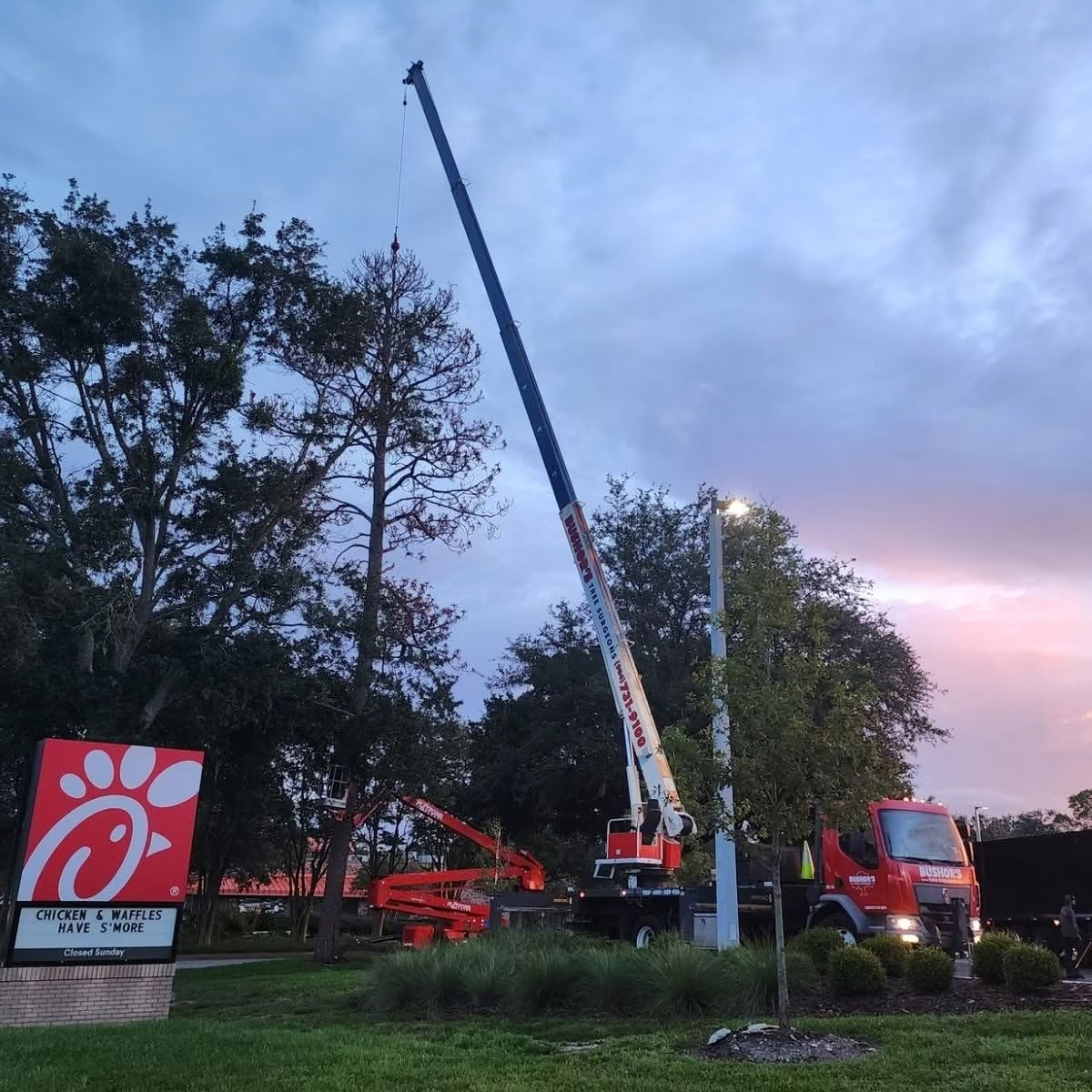
Secure Your Landscape With Bushor’s Tree Surgeons
If you have noticed a vertical crack in a mature tree, do not rely on appearance alone to judge its safety. Bushor’s Tree Surgeons has served Jacksonville and the surrounding area for decades, with ISA-certified arborists who can assess tree health and structural concerns.
Depending on the findings, our team may recommend appropriate tree trimming and pruning to address selected branches or tree cabling and bracing when a tree is suitable for structural support. If the damage makes the tree unsafe to retain, professional tree removal may be the safest option.
We assess each situation individually and explain the available options. Contact Bushor’s Tree Surgeons to arrange an evaluation if you are concerned about a cracked trunk or a potentially hazardous tree.
Frequently Asked Questions
Can a tree survive a large vertical crack in its trunk?
Yes, some trees survive vertical cracks, particularly when the damage is limited and the tree remains healthy. However, survival does not necessarily mean the trunk is structurally safe. The crack’s depth, location, and associated signs of decay or instability determine whether the tree needs treatment, monitoring, or removal.
Should I fill a crack in my tree trunk with cement or tree sealant?
No. Do not fill a trunk crack or cavity with cement, tar, or general-purpose wound sealant. These materials do not restore structural strength and may interfere with appropriate assessment. Leave the wound uncovered unless a qualified arborist recommends a specific treatment.
What exactly is a frost crack?
A frost crack is a vertical split associated with temperature-related stress in a tree’s trunk. Rapid changes in temperature can cause different parts of the trunk to expand or contract at different rates, creating enough stress to split the wood.
How do I know if a vertical crack is dangerous?
A crack is more concerning when it is deep, widening, located at a major stem union, or accompanied by decay, fungal growth, a new lean, or root movement. If the tree could fall onto a structure or occupied area, keep clear and arrange a professional assessment promptly.
Do you provide tree inspections in East Arlington, Jacksonville FL?
Yes. Bushor’s Tree Surgeons serves Jacksonville and surrounding communities in Northeast Florida. Our team can assess cracked trunks, structural weaknesses, and other potential hazards, then recommend suitable next steps. Learn more about our tree service in East Arlington, Jacksonville FL.