June 13, 2025
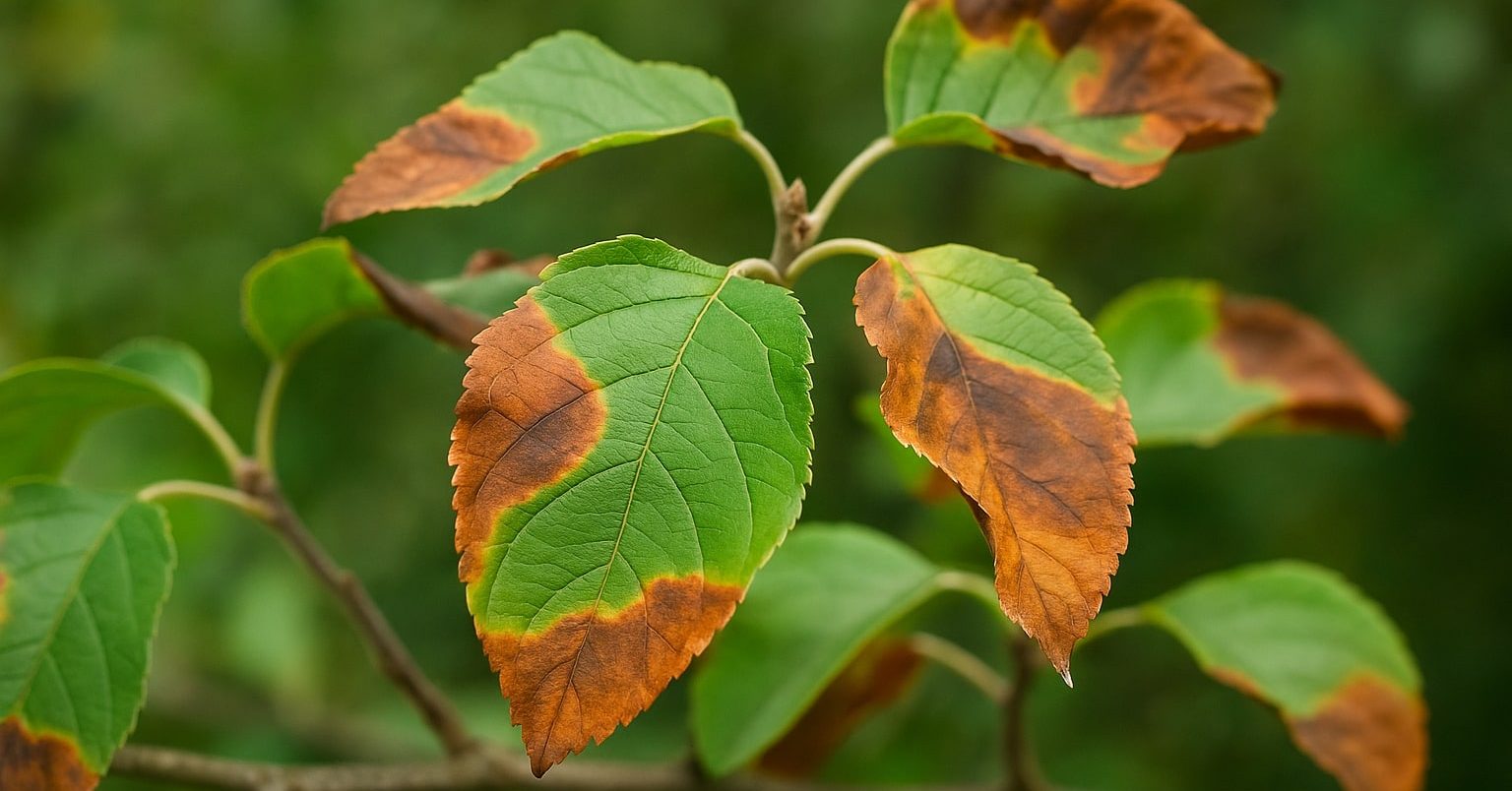
Homeowners often notice leaves on their trees turning brown, crisp, or scorched around the edges, especially during the warmer months. This condition, often referred to as “leaf scorch,” is a common issue that can affect a wide variety of tree species. While it may look alarming, burnt leaves are not always a sign of disease. Instead, they can be a symptom of environmental stress, cultural issues, or underlying health concerns.
In this article, we will explain the common causes of burnt leaves, how to identify them correctly, and what steps you can take to restore your tree’s health.
Common Causes of Burnt Tree Leaves
1. Drought Stress
When trees do not receive enough water, the first signs of stress often appear on the leaves. They may curl, brown at the edges, or drop prematurely. Young or newly planted trees are especially vulnerable because their root systems are not fully developed. To learn more about how dry conditions affect trees and what you can do to protect them, read our full guide on drought stress in trees.
2. Excessive Heat
High summer temperatures can overwhelm a tree’s ability to transport water from the roots to the leaves. When evaporation occurs faster than water can be replaced, leaves appear scorched.
3. Over-Fertilization
Applying too much fertilizer can cause a buildup of salts in the soil. This damages the root system and prevents water uptake, leading to leaf burn.
4. Root Damage
Compacted soil, construction, or root pruning can limit a tree’s access to water and nutrients. When roots are stressed, leaves quickly show signs of decline.
5. Disease or Pests
While less common, certain fungal infections, bacterial leaf scorch, or insect infestations can mimic the appearance of leaf burn. A professional diagnosis may be needed to confirm.
How to Identify Leaf Scorch vs Other Issues
Not all brown leaves are caused by the same problem. Here are some indicators that point specifically to leaf scorch:
- Browning typically starts at the edges and tips of leaves, moving inward.
- Damage appears uniformly across the canopy rather than in isolated spots.
- Leaves may remain attached to the tree rather than falling off immediately.
- Occurs most often during hot, dry weather.
Other conditions such as fungal leaf spots or nutrient deficiencies often show irregular patterns, spots, or discoloration that differ from the crisp edges of leaf scorch.
Steps to Treat and Prevent Burnt Leaves
Watering Practices
- Water deeply and infrequently to encourage strong root growth.
- Focus on watering the root zone rather than just the surface.
- Use mulch around the base of the tree to retain soil moisture and regulate temperature.
Soil and Fertilizer Management
- Test soil before applying fertilizer to avoid over-fertilization.
- Apply slow-release fertilizer in appropriate amounts.
- Avoid using lawn fertilizers near trees, as they may contain high salt levels.
Protecting Roots
- Prevent soil compaction by limiting heavy foot traffic or equipment near tree roots.
- Avoid cutting roots unless absolutely necessary.
- Provide adequate spacing for root expansion during planting.
Professional Care
If symptoms persist despite improved care, consult a tree care specialist. They can diagnose whether disease, pests, or other hidden issues are causing the leaf burn and recommend the right treatment.
Seasonal Factors and Leaf Burn
Seasonal weather patterns often play a role in leaf scorch. Understanding when trees are most vulnerable can help you take proactive measures:
- Spring – Newly planted trees are adjusting to soil and root conditions. They may struggle with sudden heat or uneven watering.
- Summer – Long stretches of heat and drought often bring the most noticeable cases of leaf scorch.
- Fall – Leaves naturally change color, but early browning or crisping at the edges may indicate stress rather than seasonal change.
- Winter – Evergreen trees can experience “winter burn,” where cold winds and frozen soil prevent water absorption, leaving foliage dry and brown.
Species Most Prone to Leaf Scorch
Some trees are more susceptible to leaf scorch than others due to their water needs and natural tolerances:
- Maple trees – Especially Norway and sugar maples, which have shallow roots.
- Linden trees – Often stressed in hot, dry summers.
- Oak trees – Susceptible to bacterial leaf scorch.
- Dogwood trees – Prefer shaded, cool conditions and may burn in full sun.
- Evergreens – Prone to winter burn when exposed to harsh winds.
Knowing which species are at higher risk helps homeowners plan better watering and placement strategies.
Long-Term Impacts of Leaf Scorch
While occasional leaf burn may not permanently harm a tree, repeated stress over several seasons can weaken it. This can lead to:
- Increased vulnerability to pests and diseases.
- Reduced growth and fewer leaves.
- Premature leaf drop affects photosynthesis.
- Decline in overall tree health and longevity.
A tree that is consistently stressed may eventually require professional intervention or removal.
Comparison Table: Environmental Leaf Scorch vs Disease-Related Issues
| Feature | Environmental Leaf Scorch | Disease-Related Issues |
| Pattern of Damage | Browning at edges and tips, moving inward | Irregular spots, blotches, or patchy discoloration |
| Timing | Appears during hot, dry, or windy weather | May appear anytime, depending on pathogen |
| Leaf Drop | Leaves often stay attached until fall | Premature leaf drop is more common |
| Tree Parts Affected | Primarily leaves, uniform across canopy | Can spread to branches, trunk, or roots |
| Recovery | Often improves with better care and watering | May worsen without targeted treatment |
Landscape and Soil Considerations
The location and soil type around your tree can influence its health:
- Trees planted near pavement or buildings may suffer from heat reflection and limited water.
- Clay soils hold water poorly, while sandy soils drain too quickly, both leading to stress.
- Compacted soils prevent proper root expansion and oxygen exchange.
Improving soil structure and ensuring the right planting location reduces the risk of leaf scorch.
Common Myths About Burnt Leaves
- Myth: Burnt leaves always mean disease.
Fact: Most cases are caused by environmental stress rather than illness. - Myth: More fertilizer will fix the problem.
Fact: Over-fertilizing often makes leaf burn worse. - Myth: Pruning scorched leaves will cure the tree.
Fact: While pruning can improve appearance, it does not solve the underlying issue. - Myth: Trees will recover on their own.
Fact: Without adjustments to care, ongoing stress can weaken or kill the tree.
When to Call a Professional
You should consider calling a tree service if:
- The scorch appears on multiple trees across your property.
- Entire branches or sections of the canopy are dying back.
- You suspect disease or pest involvement.
- The tree is mature and valuable to your landscape.
A professional can determine whether the problem is environmental or pathological and create a management plan that restores your tree’s health.
Frequently Asked Questions About Burnt Leaves
Can burnt leaves recover?
No. Once leaves are scorched, they cannot return to green. However, with proper care, new growth can emerge healthy in the next season.
Is leaf scorch contagious between trees?
Not in most cases. Environmental scorch is not contagious, but bacterial leaf scorch can spread between certain species.
Should I remove burnt leaves?
It is not necessary to remove scorched leaves unless they pose an aesthetic concern. Focus on addressing the underlying cause.
Can mulch prevent leaf burn?
Yes. Mulching helps regulate soil temperature and retain moisture, reducing stress that causes scorch.
Do young trees recover better from leaf burn?
Yes. Younger trees often bounce back more quickly if given proper water and soil care.
Call on Tree Care Services in Jacksonville, Fl
If you’re noticing burned leaves on your tree (or trees), you’ll want to call a tree professional to evaluate your tree(s) as soon as possible. Leaf scorch is a sign your tree is in distress – the earlier you address the problem, the more likely your tree can be saved.
Certified arborists know how to properly treat leaf scorch and will let you know if the tree needs to be removed.
Our four tree surgeons ensure the highest quality of tree service in Jacksonville. If your tree has leaf scorch or seems to be in distress, we will come up with a plan to treat the tree or remove it.
Call us at (904) 789-8884 or click our Jacksonville Tree Service contact page to learn more and to set up an appointment with one of our certified arborists.