March 26, 2026
Planting a new tree is an investment in your property’s future, but seeing it struggle during Florida’s intense rainy season can be disheartening. Many homeowners in Jacksonville and across the state face this challenge. Understanding why these young trees fail is the first step toward ensuring their survival and helping them establish strong roots.
Key Takeaways
- Florida’s rainy season (May-October) often leads to soil oversaturation, suffocating newly planted tree roots by depriving them of essential oxygen.
- The warm, wet conditions create an ideal breeding ground for destructive fungal diseases, including root rot, which are a major threat to young trees.
- Waterlogged soil compromises root stability, making new trees highly vulnerable to toppling or breaking during strong winds common in Florida storms.
- Proper site selection, soil preparation for drainage, correct planting depth, and choosing species adapted to Florida’s climate are critical for success.
- Regular monitoring for signs of stress and consulting ISA Certified Arborists from Bushor’s Tree Surgeons can prevent common planting mistakes and ensure tree health.
What is Florida’s Rainy Season and How Does it Affect New Trees?
Florida’s rainy season, typically from May through October, is characterized by frequent, heavy downpours and high humidity. According to Wikipedia’s Climate of Florida, there is a defined rainy season from May through October when air-mass thundershowers that build in the heat of the day drop heavy but brief summer rainfall. While rain is vital for growth, this intense period can quickly become detrimental to newly planted trees, whose root systems are not yet fully established.
Understanding Jacksonville’s Climate and Soil
Jacksonville’s climate mirrors the state’s rainy season patterns, with soil types often being sandy. While sandy soil drains faster than clay, continuous heavy rains can still lead to oversaturation, especially in low-lying areas or poorly prepared planting sites. Understanding these local nuances is key to successful tree establishment.
Primary Reasons Newly Planted Trees Fail in Wet Conditions
Newly planted trees are highly susceptible to several issues during prolonged wet periods. These factors often combine to create a perfect storm for tree failure.
Soil Oversaturation and Root Suffocation
Soil oversaturation is a leading cause of failure for new trees during the rainy season. When soil pores fill completely with water, oxygen, which is essential for root respiration, is displaced. Without oxygen, roots cannot properly absorb water and nutrients, effectively drowning the tree. According to Rutgers University Extension, ‘Roots need oxygen for respiration, and when its level in the soil drops below 10%, root growth in most trees declines.
Increased Fungal and Bacterial Disease Risk
The warm, humid, and consistently wet conditions of Florida’s rainy season create an ideal environment for various fungal and bacterial pathogens. Root rot, powdery mildew, and anthracnose are common culprits that thrive in these conditions, attacking weakened root systems and foliage.
Structural Instability and Wind Damage
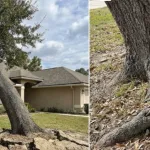
Waterlogged soil significantly compromises the structural integrity of a tree’s root system. Roots become less anchored, and the saturated soil offers less resistance, making the tree highly vulnerable to toppling or uprooting during the strong winds and thunderstorms prevalent in Florida’s rainy months.
Nutrient Leaching and pH Imbalance
Excessive rainfall can leach essential nutrients from the soil, depriving newly planted trees of the resources they need for healthy growth. Additionally, prolonged saturation can alter soil pH, further hindering nutrient uptake and overall tree vigor.
Signs Your Newly Planted Tree Is Struggling
Catching problems early is crucial for saving a struggling tree. Look for these warning signs:
- Yellowing or Browning Leaves (Chlorosis/Necrosis): Often indicates nutrient deficiency or root stress from too much or too little water.
- Wilting Foliage: Leaves may droop even when the soil feels wet, a sign the roots aren’t functioning.
- Stunted Growth: Lack of new shoot growth or smaller-than-expected leaves.
- Premature Leaf Drop: The tree sheds leaves out of season to conserve resources.
- Canopy Thinning: Fewer leaves overall, making the tree look sparse.
- Visible Fungal Growth: Mushrooms or other fungi appearing at the base of the tree or on the trunk, indicating root rot.
- Soft, Mushy Bark: Especially near the soil line, a sign of severe root or collar rot.
- Unusual Odor from Soil: A foul, sulfur-like smell can indicate anaerobic conditions due to prolonged waterlogging.
Preventative Strategies for Rainy Season Tree Survival
Preventing failure starts with thoughtful planning and execution. Here’s how you can give your new tree the best chance.
Proper Site Selection and Soil Preparation
Choosing the right location is non-negotiable. Select a site with good natural drainage. If drainage is poor, consider amending the soil with organic matter to improve structure or planting in a raised bed or mound to elevate the root crown above the water table.
Correct Planting Techniques
Planting too deeply is a common mistake that leads to root suffocation. The root collar (where the trunk flares out at the base) should be at or slightly above the soil line. According to UF/IFAS Extension, ‘Three of the most common causes of poor plant establishment or tree death are planting too deep, under watering, and over watering. Ensure the planting hole is two to three times wider than the root ball, but only as deep as the root ball.
Strategic Watering (Even During Rain)
It might sound counterintuitive, but even during the rainy season, newly planted trees can experience drought stress. This happens if the heavy rain doesn’t penetrate the root ball, or if the roots are damaged by oversaturation. Monitor soil moisture regularly and provide supplemental watering during dry spells to ensure consistent moisture within the root zone.
Effective Drainage Solutions
If your site is prone to standing water, consider installing French drains or creating swales to divert excess water away from the tree’s root zone. For individual trees, creating a slight mound can help shed surface water.
Choosing the Right Tree Species for Florida
Not all trees are created equal for Florida’s climate. Opt for native or Florida-friendly species known for their adaptability to wet conditions and sandy soils. Examples include Bald Cypress, Live Oak, and Red Maple. Avoid species highly sensitive to wet feet.
Common Mistakes Homeowners Make (and How to Avoid Them)
Many tree planting issues stem from common misconceptions or shortcuts. Avoiding these pitfalls can significantly improve your tree’s chances of survival.
| Common Mistake | Impact on New Tree | Best Practice for Florida’s Rainy Season |
| Planting too deep | Root collar becomes buried, leading to suffocation, rot, and girdling roots. | Plant with the root collar at or slightly above soil grade. |
| Insufficient drainage | Soil oversaturation causes oxygen loss and root rot. | Improve drainage with soil amendments, raised beds, or proper site selection. |
| Ignoring soil pH | Nutrient lockout can occur even when nutrients are present in the soil. | Test the soil pH and amend it to match the requirements of the tree species. |
| Over-mulching (“mulch volcano”) | Smothers the root collar and traps moisture against the trunk, encouraging pests and disease. | Apply 2–4 inches of mulch in a donut shape and keep mulch away from the trunk. |
| Not checking root ball moisture | Heavy rain may not reach the root ball, leaving roots dry. | Check moisture inside the root ball and water as needed. |
| Choosing unsuitable species | Trees struggle to adapt and become more vulnerable to disease and stress. | Choose Florida-friendly or native species adapted to local soil and climate. |
When to Call a Professional Arborist
Even with the best intentions, tree issues can arise. Knowing when to call in a professional can prevent further damage and save your tree. Bushor’s Tree Surgeons employs ISA Certified Arborists who bring expert knowledge and experience to tree care.
- Persistent Wilting or Discoloration: If signs of stress don’t improve with adjusted watering or drainage.
- Visible Fungal Growth: Indicates a potential disease that requires expert diagnosis and treatment.
- Structural Concerns: Leaning, cracking, or instability, especially after heavy rains or strong winds.
- Pest Infestations: Unsure how to identify or treat pests affecting your new tree.
- Before Planting: For site assessment, soil testing, and species selection recommendations.
- Permit Requirements: If your tree removal or planting project requires specific city permits in Jacksonville. Contact us for professional guidance.
Jacksonville’s Local Tree Regulations and Permits
In Jacksonville, Florida, understanding local tree regulations is crucial for any tree-related project, including new plantings. While permits are generally not required for planting on residential property, awareness of protected tree definitions and mitigation requirements is important, especially if future tree work is anticipated. For example, protected trees are often defined by their Diameter-at-Breast-Height (DBH) and certain species. The City of Jacksonville even offers a tree planting program to help citizens plant trees in rights-of-way, reflecting the city’s commitment to an urban canopy. Always check with local authorities or a professional arborist to ensure compliance.
Frequently Asked Questions
What is Florida’s rainy season?
Florida’s rainy season runs from May through October, bringing high temperatures and frequent, intense rainfall. This combination creates unique challenges for newly planted trees, primarily due to soil oversaturation and increased humidity.
Why do new trees fail during Florida’s rainy season?
The most common reasons include soil oversaturation leading to root oxygen deprivation, increased risk of fungal diseases like root rot, structural weakening of the root system, making trees vulnerable to wind, and nutrient leaching.
How can I tell if my newly planted tree is struggling?
Signs include yellowing or browning leaves, wilting, stunted growth, leaf drop, canopy thinning, and visible fungal growth on the trunk or soil. Early detection is key to successful intervention.
What are the best ways to protect new trees from heavy rain?
Select appropriate species for Florida’s climate, prepare the soil for good drainage, use correct planting depth, and consider drainage solutions like raised beds. Strategic watering during dry spells within the rainy season is also crucial.
Isn’t Florida’s sandy soil good for drainage?
While sandy soil generally drains well, continuous heavy rainfall can still lead to oversaturation and compaction, especially in areas with poor underlying drainage or if the planting hole creates a ‘bathtub effect.’
Should I consult an arborist for new tree planting?
Absolutely. ISA Certified Arborists can assess soil conditions, recommend suitable tree species, advise on proper planting techniques, diagnose disease, and suggest effective drainage solutions to ensure your tree’s long-term health.
Conclusion
Ensuring the survival of newly planted trees in Florida’s rainy season requires a proactive approach, from understanding soil dynamics to choosing the right species. While the climate presents challenges, informed decisions and proper care make a significant difference. If your newly planted trees are showing signs of distress, or if you need guidance on proper planting and care in the Jacksonville area, don’t hesitate to reach out to the experts. Bushor’s Tree Surgeons stands ready with experienced ISA Certified Arborists to help your trees thrive. Get in touch with us for a consultation.