August 18, 2026
After a bad storm rolls through Jacksonville, Florida we get the same call over and over: my live oak got hit hard, should it be removed or can it be saved? It’s one of the most common and most emotionally loaded questions we field, because live oaks are often decades, sometimes over a century, old, and they carry real sentimental and property value.
The good news is that live oaks are among the toughest, most storm-resilient trees in the Southeast, and their dense wood and deep root systems mean many can recover fully even after damage that looks alarming. But not every damaged oak is a good candidate for saving, and making the wrong call in either direction, removing a tree that could have been saved, or trying to save one that’s genuinely becoming a hazard, can be costly. Here’s how we actually make that call when we’re standing in front of a storm-damaged live oak.
Why Live Oaks Handle Storm Damage Differently
Before getting into the assessment process, it helps to understand why live oaks are such strong candidates for storm recovery in the first place.
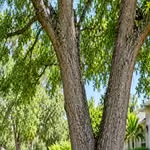
- Live oak wood is far denser than fast-growing species like water oak or laurel oak, so it takes more force to cause structural failure. Their deep, wide-spreading roots give exceptional anchorage even in Jacksonville’s variable soil, offering stability many other species simply can’t match.
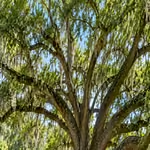
- On top of that, live oaks compartmentalize damage well, walling off injured or decaying tissue and continuing to grow and function around it, something many other species do far less effectively. This is part of why you’ll see centuries-old live oaks throughout Northeast Florida that show clear evidence of past storm damage, old healed wounds, asymmetric canopies, but continue to thrive.
None of the above means live oaks are immune to serious damage. It just means the bar for unsalvageable is genuinely higher for this species than for most others.
The First Question: Where Is the Damage?
Canopy and limb damage, including broken branches or a lost scaffold branch, often looks devastating but is frequently recoverable because the trunk and root system remain intact. Trunk damage, like cracks or splits, requires careful evaluation since it can compromise structural integrity in ways canopy damage doesn’t.
Root and root plate damage, including soil heaving or a new lean, is generally the most serious category, since it affects the tree’s ability to stay upright. Canopy damage alone is the most recoverable; root plate movement is most likely to lead to removal.
How Much Canopy Loss Is Too Much?
This is one of the most common questions we get, and the honest answer is that it depends on more than just the percentage. That said, as a general guideline, live oaks that have lost up to 30 to 40% of their canopy in a storm often have a good chance of recovering with proper post-storm pruning and follow-up care, assuming the trunk and root system are sound. Beyond that threshold, recovery becomes less certain, though we’ve seen live oaks bounce back from even more significant canopy loss when the remaining structure was strong and follow-up care was consistent.
What matters most is which limbs were lost. Losing several smaller branches spread across the canopy is generally much less concerning than losing one or two major scaffold limbs that made up a large portion of the tree’s structural framework.
Warning Signs That Point Toward Removal
- Significant Lean: A newly developed lean, especially when accompanied by soil heaving around the base, often indicates root failure. This can greatly increase the risk of the tree falling, particularly during high winds or storms.
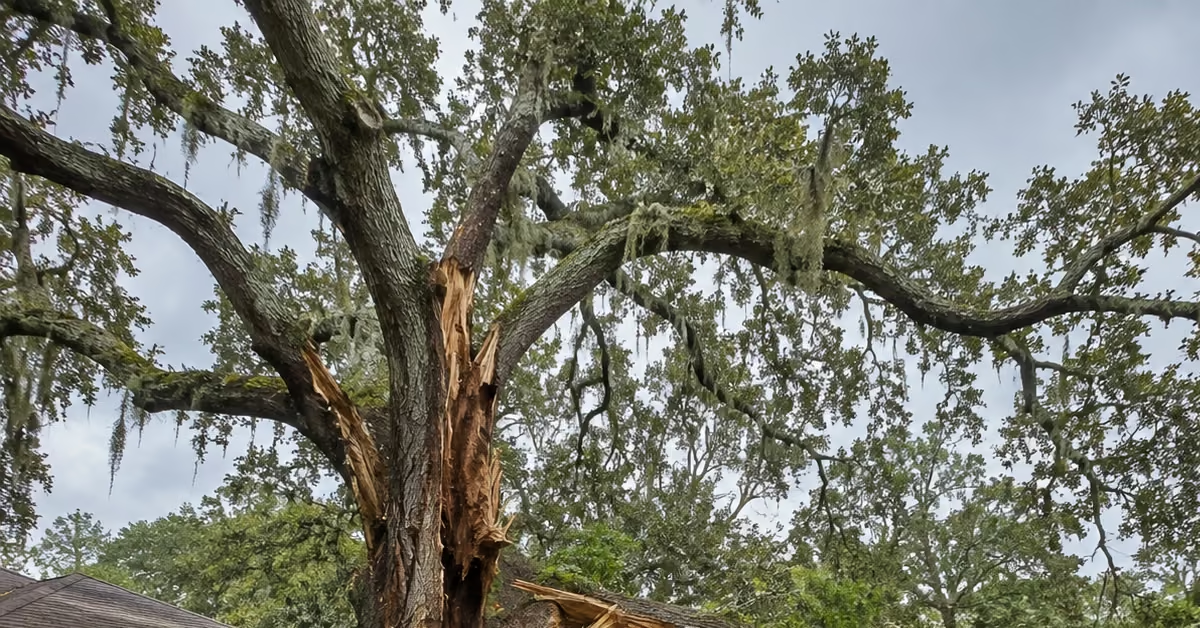
- Deep Trunk Cracks: Large cracks or splits extending into the trunk weaken the tree’s structural integrity. Even if the canopy appears healthy, these defects can lead to sudden trunk failure.
- Major Root Damage: Exposed, torn, or broken structural roots reduce the tree’s ability to remain stable. Since roots provide most of a tree’s support, severe root damage is often a strong indicator that removal may be necessary.
- Severe Trunk Decay: Extensive trunk damage combined with visible cavities or decay compromises the tree’s strength from the inside out. Pruning cannot correct this type of structural issue, making removal the safer long-term solution.
- Widespread Limb Loss: When more than half of the tree’s major structural limbs are damaged, the remaining canopy may not be able to recover. Attempting to save the tree can leave it structurally weak and more susceptible to future failure.
- Multiple Risk Factors: If several of these warning signs occur together, especially near a home, driveway, or other high-traffic area, the overall risk increases significantly. In these cases, removal is often the safest recommendation.
Signs the Tree Can Be Saved
- Healthy Trunk Structure: If the trunk and primary scaffold branches remain sound, the tree still has a strong structural foundation. This often means pruning can restore its health and appearance without requiring removal.
- Stable Root System: A tree with no new lean, root plate movement, or soil heaving generally has a stable root system. Healthy roots are a strong indicator that the tree can recover with proper care.
- Good Pre-Storm Health: Trees that were healthy before storm damage typically recover much better than those already in decline. A strong, vigorous tree has more energy reserves to heal and produce new growth.
- Localized Branch Damage: When damage is limited to secondary branches instead of the main trunk or structural limbs, selective pruning is usually enough to restore the tree safely.
- No Major Root Injury: The absence of exposed, torn, or broken structural roots suggests the tree’s stability has not been compromised. This significantly improves the chances of successful recovery.
- Strong Recovery Potential: With professional pruning, routine monitoring, and proper maintenance, many healthy live oaks can fully recover within one to three growing seasons while retaining their long-term landscape value.
What the Recovery Process Looks Like
- Comprehensive Inspection: Recovery begins with a detailed inspection of the canopy, trunk, and visible root zone. An ISA-Certified tree service firm in Jacksonville, Florida checks for hidden structural defects that may not be obvious from the ground.
- Safe Limb Removal: Broken, hanging, or severely damaged limbs are removed first to eliminate immediate hazards and prevent additional bark tearing or branch failure.
- Proper Pruning: Clean, well-placed pruning cuts help the tree compartmentalize wounds and heal naturally. Proper pruning also minimizes the risk of decay, pests, and future structural problems.
- Structural Support: If weak branch unions remain after the storm, cabling or bracing may be recommended to provide additional support while the tree continues to grow and strengthen.
- Ongoing Tree Care: Recovery doesn’t end after pruning. Fertilization, routine health monitoring, and scheduled follow-up inspections help identify delayed issues such as internal decay or root decline before they become serious.
- Prompt Action Matters: Addressing storm damage within the first one to two weeks significantly improves the tree’s chances of recovery. Removing torn limbs and treating open wounds early helps reduce pest infestations, disease, and long-term structural damage.
When Removal Is the Right Call
- Root Plate Movement: When the soil around the tree base is lifting, cracking, or shifting, it may indicate that the root system is no longer providing reliable support. Trees with compromised root plates have a higher risk of falling, especially during storms or strong winds.
- Major Trunk Splitting: Large splits or cracks in the main trunk can severely weaken the tree’s structure. Since these issues cannot be corrected through pruning, removal may be the safest option to prevent sudden trunk failure.
- Extensive Structural Damage: When a large portion of the tree’s main limbs, trunk, or framework has been compromised, the tree may no longer be able to recover safely. Attempting to preserve a severely damaged tree can create ongoing hazards for people and property.
- High-Risk Location: A damaged tree located near a home, driveway, power lines, or frequently used areas requires a more cautious approach. Even moderate structural issues can become serious when the potential impact area includes people or valuable property.
- Professional Evaluation: Removing a mature live oak is never a decision made lightly. Our arborists carefully assess the tree’s condition, explain the risks involved, and help homeowners understand why removal may be the most responsible choice when safety concerns outweigh preservation.
At Bushor’s Tree Surgeons, we understand that a storm-damaged live oak is more than just a tree, it’s a valuable part of your property’s landscape. Our ISA-Certified Arborists carefully evaluate the canopy, trunk, and root system to determine whether your oak can recover or if removal is the safest option. When a tree can be saved, we provide expert pruning, and structural cabling & bracing, support to help it regain strength and stability. If severe damage makes tree removal necessary, our team safely removes the tree while protecting your property. With over six decades of experience serving Jacksonville homeowners, Bushor’s Tree Surgeons provides honest recommendations focused on safety, preservation, and long-term tree health. Call our team at (904) 789-8884 to Book Your Free Estimate.
Frequently Asked Questions About Storm-Damaged Live Oak by the Homeowners in Jacksonville, Florida
Can a live oak really survive losing a major limb?
Often, yes. Live oaks compartmentalize damage well and can heal around lost limbs, especially if the trunk and roots remain sound and proper pruning follows.
How quickly do I need to have a storm-damaged oak assessed in Jacksonville, Florida?
Within a few days to a week. Torn or hanging limbs create entry points for pests and decay that can turn a recoverable situation into a serious one.
What if my live oak has a new lean but no visible cracks?
A new lean, even without cracking, is a serious warning sign and typically warrants a professional root zone evaluation.
Is cabling a good option for a storm-damaged live oak?
Often, yes. It provides support for weakened limb unions while reducing the risk of future failure at that location.
Does the age of the tree affect whether it should be saved?
Not usually. A very old oak with sound trunk and root structure can often recover, while a younger tree with major trunk or root compromise may still need removal.
Will insurance cover the cost of saving or removing a storm-damaged tree?
Coverage varies significantly by policy and by whether the tree damages a structure or is at risk of doing so. It’s worth documenting the damage with photos and an arborist assessment early, since that documentation is often needed regardless of which direction a claim ultimately takes.
Summary Checklist: Post-Storm Live Oak Tree Assessment
| Step | Key Consideration | Action Item |
| Initial Assessment | Identify damage location. | Determine whether damage is in the canopy, trunk, or root zone. |
| Canopy Evaluation | Estimate percentage of loss. | Assess canopy loss and whether major scaffold limbs were affected. |
| Root Zone Check | Look for stability issues. | Inspect for new lean, soil heaving, or exposed torn roots. |
| Trunk Inspection | Check for structural compromise. | Look for deep vertical cracks extending into the trunk. |
| Recovery Planning | Support healing if salvageable. | Schedule pruning, consider cabling, and set up monitoring. |
| Timing | Act quickly after the storm. | Have the tree assessed within one to two weeks. |
Final Advice
A storm-damaged live oak should never be judged only by how it looks immediately after a storm. Broken branches, missing canopy, and scattered debris can make a healthy tree appear beyond recovery, while hidden issues like root movement or trunk cracks may reveal a much greater safety concern.
Before deciding on removal, have the tree inspected by an ISA Certified Arborist who can evaluate the canopy, trunk, and root system. Many live oaks can recover from significant storm damage when the structural framework remains strong and the right pruning techniques are applied. If the damage is limited to broken limbs, professional storm pruning, cabling, or bracing can help restore stability and encourage healthy regrowth. However, trees with major trunk splits, root plate failure, or severe structural damage may pose an ongoing risk and require removal.
At Bushor’s Tree Surgeons, our experienced arborists focus on preserving valuable trees whenever it is safe to do so while providing responsible removal when a tree becomes a hazard. With more than six decades of experience serving Jacksonville homeowners, we provide honest evaluations and recommendations based on safety, tree health, and long-term property value. Don’t wait after a major storm. Early assessment can make the difference between saving a mature live oak and losing it. Call Bushor’s Tree Surgeons at (904) 789-8884 for a prompt storm damage evaluation.