September 30, 2026
Key Takeaways
- Jacksonville is the largest city by land area in the contiguous United States, which creates a uniquely varied mix of urban, suburban, and rural tree canopy within one city.
- Jacksonville’s location in North Florida gives it a climate distinct from South Florida cities like Miami, with occasional freezes and a wider four-season temperature range.
- The St. Johns River and extensive coastline shape everything from soil composition to storm exposure across different parts of the city.
- Jacksonville’s tree canopy leans heavily on native live oaks and pines rather than the tropical palms that dominate further south.
- Understanding these regional differences matters for property owners making decisions about landscaping, storm preparation, and tree care.
- What works for a tree in Orlando or Miami doesn’t always translate directly to what a Jacksonville property needs.
Jacksonville, FL stands apart from other Florida cities because of its enormous land area, North Florida climate, mix of river and coastal environments, and distinctly different tree canopy. As the largest city by land area in the contiguous United States, Jacksonville combines dense urban neighborhoods, sprawling suburbs, rural properties, and forested areas within one city. Its location near the Georgia border also brings cooler winters and occasional freezes that South Florida cities such as Miami do not experience.
Furthermore, St. Johns River and Atlantic coastline create varying soil, moisture, and storm conditions across the area. These factors help explain why Jacksonville’s landscape is dominated by native trees such as live oaks and pines rather than the more tropical species common farther south, and why tree care here often requires a more region-specific approach.
North Florida’s Climate Vs. South Florida’s
Many people picture Florida as uniformly tropical, but Jacksonville’s climate is meaningfully different from cities like Miami, Fort Lauderdale, or Tampa. Sitting near the Georgia border, Jacksonville falls into USDA Hardiness Zone 9a, while South Florida cities often reach Zone 10 or 11. That difference means Jacksonville experiences occasional winter frosts and even the rare freeze, conditions that are essentially non-existent in Miami. This colder edge limits which tropical species can reliably survive here and favors trees like live oaks, pines, and magnolias over the palm-heavy landscapes more common in South Florida.
Jacksonville also sees a wider swing between summer and winter temperatures than its southern counterparts, giving it more of a true, if mild, four-season climate. That seasonal variation affects everything from when trees flower to when the optimal pruning windows fall during the year.
The St. Johns River and Coastal Influence
The St. Johns River runs directly through the heart of Jacksonville, and the city also borders the Atlantic coastline, giving it a dual relationship with water that many other Florida cities don’t share in quite the same way.
Neighborhoods near the river or the coast deal with higher humidity, occasional salt spray, and different soil drainage patterns than inland parts of the city. This proximity to water also means certain Jacksonville neighborhoods face elevated flood risk during heavy storms, which can affect root health in ways that drier, more inland Florida cities don’t experience as consistently.
A Different Kind of Tree Canopy
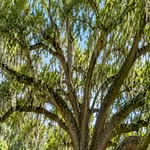
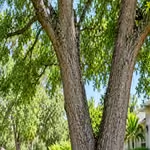
Because of its northern location within the state, Jacksonville’s tree canopy looks noticeably different from cities further south. Southern live oaks, longleaf pines, and southern magnolias dominate here, while South Florida cities lean more heavily on true tropical species like royal palms, banyans, and gumbo limbo trees that couldn’t reliably survive a Jacksonville winter. Even within Florida that hardiness zone differences across the state meaningfully change which species are realistic, low-maintenance choices in one region versus another.
This distinction matters practically. A landscaping plan copied from a Miami or Orlando yard may include – species that struggle or fail outright in Jacksonville’s cooler winters, while some of Jacksonville’s best-performing natives would be poor, overly aggressive choices in a more tropical climate.
Storm Exposure Compared to Other Florida Regions
Every part of Florida deals with hurricane risk, but the specifics vary by region. Jacksonville’s position in the northeastern corner of the state means storms often arrive after tracking up the peninsula or approaching from the Atlantic, sometimes as weakened systems compared to what South Florida experiences directly, though the city still regularly sees serious tropical storms and occasional direct hurricane impacts.
Northeast Florida has its own distinct storm track patterns compared to South Florida or the Panhandle, which affects how professional tree service firms in Jacksonville, FL plan seasonal storm-prep recommendations. Because Jacksonville’s tree canopy includes so many mature, large-limbed live oaks, storm preparation here often focuses heavily on limb union inspection and canopy thinning, a somewhat different emphasis than in cities dominated by smaller ornamental or tropical species.
Neighborhood-to-Neighborhood Variation Within Jacksonville Itself
Because the city is so large, conditions can vary significantly even within Jacksonville’s own borders, which is another way it differs from more geographically compact Florida cities. A historic neighborhood near downtown with decades-old live oak canopy has very different tree-care needs than a newer suburban development on the city’s western edge, where topsoil is often thinner from construction grading and canopy cover is younger and sparser. Beaches communities on the coast contend with salt-laden wind that inland neighborhoods rarely face, while low-lying areas near tributaries of the St. Johns River deal with periodic soil saturation that can stress root systems in ways drier upland neighborhoods don’t experience.
This internal variation means that even general Jacksonville-specific advice sometimes needs to be adjusted further based on exactly which part of this expansive city a property sits in.
Population Growth and Its Effect on the Urban Canopy
Jacksonville has seen steady population growth and new development over the past decade, which is reshaping its tree canopy in ways distinct from more built-out Florida cities. New construction often means younger, smaller trees replacing established canopy, at least temporarily, while mature neighborhoods retain decades-old live oaks that require a different kind of long-term structural care.
This mix of a rapidly developing urban fringe alongside historic, tree-lined neighborhoods gives Jacksonville a more varied age profile of trees than cities that built out their footprint long ago and have since seen comparatively little new development.
What This Means for Property Owners
For homeowners and property managers, Jacksonville’s combination of size, climate, and geography means tree care advice needs to be locally specific rather than generically ‘Florida.’ A tree service familiar with South Florida’s tropical species and hurricane patterns may not fully understand the structural quirks of a century-old Jacksonville live oak or the cold-snap risk to a marginal palm variety planted near the coast.
Working with a team that understands Jacksonville’s particular mix of native species, seasonal patterns, and storm exposure, and that offers services like tree health assessments and storm preparation pruning, tends to produce better long-term outcomes than applying generic statewide advice.
Bushor’s Tree Surgeons helps Jacksonville property owners manage the tree-care challenges created by the city’s unique climate, soil conditions, coastal exposure, and diverse tree canopy. Our ISA-Certified Arborists assess mature live oaks, pines, palms, magnolias, and other local species for structural or health concerns. We can identify risks linked to weak limbs, root stress, storm damage, or unsuitable planting conditions before they become serious problems.
Bushor’s Tree Surgeons’ team can also provide professional tree pruning to improve structure and reduce storm-related hazards. For properties affected by severe weather, we offer storm damage cleanup and 24/7 emergency tree services. We can also help homeowners select appropriate trees and develop care plans suited to Jacksonville’s conditions. With local knowledge and species-specific expertise, we help keep Jacksonville trees healthy, safe, and better prepared for the area’s changing weather.
Frequently Asked Questions About Jacksonville, FL
Why is Jacksonville considered so large geographically?
Jacksonville consolidated its city and county governments in 1968, making it the largest city by land area in the contiguous United States and creating a mix of urban, suburban, and rural areas within one municipality.
Is Jacksonville’s climate the same as Miami’s?
No. Jacksonville sits in a cooler USDA hardiness zone than Miami, with occasional winter frosts, while Miami rarely if ever experiences freezing temperatures.
Do Jacksonville and South Florida share the same common trees?
Not entirely. Jacksonville leans on native live oaks, pines, and magnolias, while South Florida relies more heavily on true tropical species like royal palms and banyans.
Does Jacksonville get hit by hurricanes as often as South Florida?
Jacksonville does experience hurricanes and tropical storms, though storm tracks and intensity at landfall often differ from what South Florida experiences directly.
How does the St. Johns River affect local tree care?
Properties near the river or coastline often deal with higher humidity, salt exposure, and flood-related root stress that inland areas of the city experience less frequently.
Can I use the same landscaping plan in Jacksonville that worked in Orlando or Miami?
Not always. Some species that thrive in Central or South Florida aren’t well suited to Jacksonville’s cooler winters, so local guidance is important before planting.
What tree issue is most specific to Jacksonville compared to other Florida cities?
Managing large, mature live oaks with complex limb structures is a bigger focus in Jacksonville than in cities with smaller, more uniformly tropical canopies.
Does new construction in Jacksonville affect existing trees nearby?
It can. Grading, soil compaction, and root disturbance from nearby construction are common stressors, particularly in fast-growing suburban areas, and are worth having evaluated by an arborist.
Summary Checklist: Jacksonville Tree Care and Canopy Factors
| Factor | How It Differs in Jacksonville |
|---|---|
| City size | Largest land area of any city in the contiguous US, mixing urban, suburban, and rural canopy |
| Climate zone | USDA Zone 9a, cooler than most of South Florida, with occasional frost |
| Waterways | St. Johns River and Atlantic coastline both influence soil, humidity, and flood risk |
| Dominant species | Native live oaks, pines, and magnolias rather than tropical palms |
| Storm patterns | Distinct northeastern Florida storm tracks compared to South Florida |
| Landscaping fit | Species suited to Central or South Florida may not thrive here |
| Local expertise | Tree care benefits from region-specific, not generic statewide, guidance |
Final Advice
Keep Jacksonville’s specific climate zone in mind before adopting landscaping ideas from other parts of Florida, since species that thrive in Miami or Orlando don’t always hold up here. Pay extra attention to storm preparation for mature live oaks, which make up such a large share of the local canopy. If your property sits near the St. Johns River or the coast, factor in the added humidity, salt exposure, and flood risk when planning tree care. Choose a tree service familiar with Northeast Florida’s particular mix of species and storm patterns rather than generic statewide advice, and schedule seasonal inspections ahead of hurricane season.
Bushor’s Tree Surgeons has worked across Jacksonville’s uniquely varied landscape for years, and our ISA-Certified Arborists understand exactly how this city’s size, climate, and geography shape what your trees need.