September 30, 2026
Key Takeaways
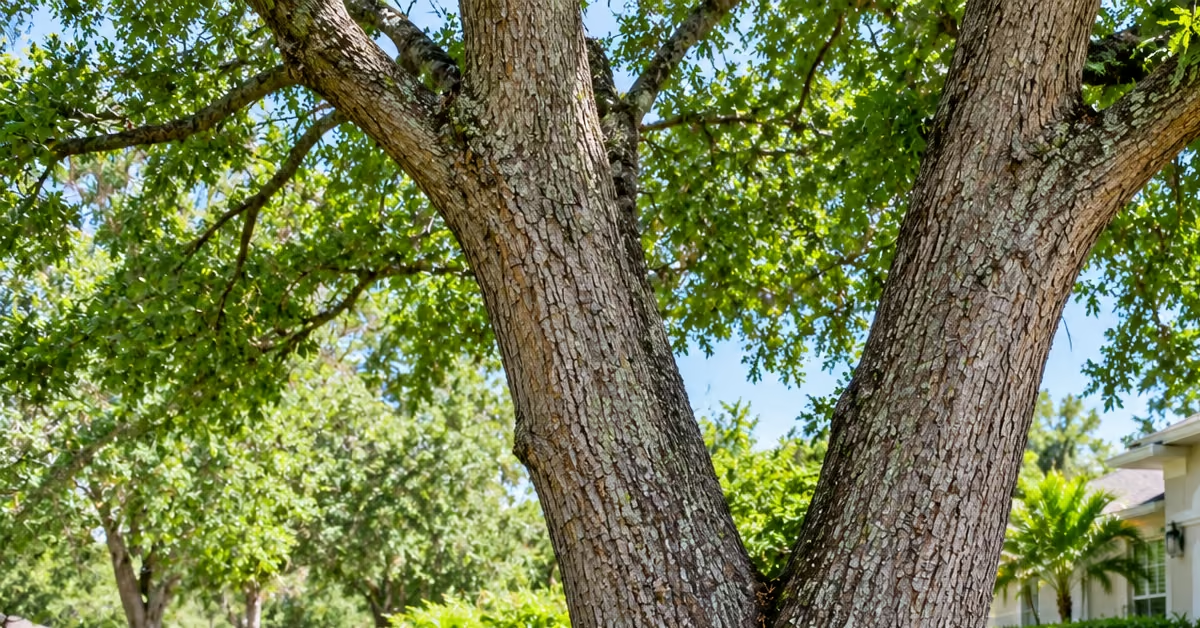
- A split-trunk tree has two or more major stems arising from near ground level, which is a naturally weaker structure than a single central trunk.
- Cabling and bracing are two different tools: cabling limits movement in the canopy, while bracing uses rigid rods to physically reinforce a split at or below the union.
- The decision between cabling, bracing, and removal depends on how far the trunk has already separated, the presence of decay, and the tree’s location relative to targets like homes or driveways.
- Early-stage splits with sound wood are the best candidates for combined cabling and bracing.
- Advanced splits, visible cavities, or fungal conks are strong indicators that removal is the safer choice.
- A certified arborist’s hands-on inspection is the only reliable way to evaluate a split trunk correctly.
A split-trunk tree in Jacksonville requires cabling or bracing if the split is minor and both stems share a healthy root system, allowing flexible hardware to relieve stress from summer storm winds. However, if the crack extends deep into the main trunk, shows internal decay, or threatens structural failure near a house, immediate professional tree removal is required to protect your property.
In these cases, an arborist may recommend cabling to limit movement, bracing to reinforce a weak or partially split union, or removal when the tree presents an unacceptable risk or has extensive decay or structural damage.
Many multi-stem trees stand for decades without incident. The concern arises when the union between those stems is structurally weak, whether from included bark, decay, or storm stress, because that union carries the combined weight and wind load of both leaders.
Understanding the difference between a naturally sound multi-stem tree and a genuinely compromised split trunk is the first step in deciding what kind of support, if any, the tree needs.
How Arborists Evaluate a Split Trunk
A proper evaluation starts well below the visible split. Arborists examine the angle of the union, since a narrow, V-shaped attachment is far more prone to failure than a wide, U-shaped one. They look for included bark, which occurs when bark becomes trapped inside the union instead of forming solid wood-to-wood contact. They also probe for decay using a mallet or resistance drill, because internal rot can hollow out a trunk that still looks healthy from the outside.
Beyond the union itself, the assessment considers the tree’s overall lean, root plate stability, and proximity to structures, power lines, or areas where people gather. A split trunk over an empty side yard carries a different risk profile than the same split hanging over a driveway or a child’s play area, and that context shapes the final recommendation.
When Cabling Is the Right Fit
Cabling works well on a split trunk when the union still has sound wood and the separation is minor or has not yet begun. A flexible steel cable installed high in the canopy, between the two leaders, restricts how far they can sway apart during wind events without eliminating the natural movement the tree needs to stay healthy. This is a preventive measure most appropriate for trees identified early, before any visible gap has formed at the base of the split.
When Bracing Becomes Necessary
Bracing is a more rigid intervention than cabling, and it’s typically used when a split has already started to open at or near the base of the trunk. Threaded steel rods are drilled through both stems below the split and secured with hardware that pulls the trunks together, physically resisting further separation.
Bracing is often installed alongside cabling rather than as a replacement for it: the rod stabilizes the base of the split while the cable manages movement higher in the canopy. Bracing is most effective when the wood around the drilled area is still solid. If the trunk is soft, spongy, or shows signs of advanced decay at the union, the hardware has nothing sound to anchor into, and bracing will not hold up over time.
When Removal Is the Safer Recommendation
Some split-trunk trees are past the point where cabling or bracing can offer reliable protection. Signs that point toward removal include –
- a visible, widening gap at the base of the split
- fungal conks or mushrooms growing at the union or root flare
- a hollow sound when the trunk is tapped, or
- a split that already extends more than a few inches into solid wood.
- A trunk that has failed to close over an old wound, combined with a co-dominant split, is also a red flag.
Location matters heavily here too. A borderline split-trunk tree positioned directly over a house, a bedroom window, or a frequently used walkway warrants a more conservative recommendation than the same tree standing in an open field, simply because the consequences of a failure are so much greater.
Split-Trunk Risk in Jacksonville’s Common Tree Species
Not every species in Jacksonville is equally prone to developing a split trunk, and knowing which trees on your property are higher risk can help you prioritize inspections.
- Live oaks and laurel oaks are the most frequent candidates for split-trunk assessments locally. This is largely because both species naturally produce multiple large leaders instead of one dominant central trunk, especially when they were topped or heavily pruned when young.
- Crape myrtles, a staple of Jacksonville landscaping, are also commonly multi-stemmed by design, though their smaller size generally means a split poses less risk to structures than a mature oak would.
- Southern magnolias and water oaks can develop split trunks as well, often as a result of storm damage or poor early pruning that encouraged competing leaders rather than a single central stem.
- As Jacksonville sits in a region that regularly experiences tropical storms, high winds, and heavy summer rain, any co-dominant tree in the area faces more frequent stress events than the same species might in a milder climate, which is part of why proactive inspection matters so much here.
Why This Decision Isn’t a DIY Project
Drilling into a trunk, tensioning a cable, or judging how much internal decay a tree can tolerate all require training most homeowners don’t have. An improperly placed brace rod can actually accelerate decay by introducing an entry point for pathogens, and a cable installed at the wrong height or tension can do more harm than good. This is one of the clearest cases where an experienced tree service firm in Jacksonville, Florida can assist by conducting professional assessment to protect everyone who walks beneath it.
Bushor’s Tree Surgeons can assess split-trunk trees to determine whether cabling or bracing can provide the support they need. Our ISA-Certified Arborists evaluate the trunk union, structural weaknesses, and other risk factors before recommending a support system. Bushor’s Tree Surgeons uses dynamic or static cabling systems to limit excessive movement while allowing the tree to retain natural movement.
For split trunks or weak crotches, Bushor’s Tree Surgeons’ team install bracing rods to reinforce the affected area and resist further separation. We may also recommend structural pruning to reduce weight and stress on weak sections of the tree. Our team designs each support system according to the tree’s size, condition, and structural needs. We follow ANSI A300 standards and use properly sized cables and hardware for professional installation.
Frequently Asked Questions About Split-Trunk Trees in Jacksonville, FL
Is a split-trunk tree always dangerous?
No. Many split-trunk or co-dominant trees are structurally stable for their entire lives. Risk depends on the strength of the union, the presence of decay, and how much the trunk has already separated.
Can cabling fix a trunk that has already split open?
Cabling alone usually isn’t enough once a visible gap has formed at the base. In that situation, bracing is typically combined with cabling, or removal may be recommended if the wood is compromised.
How much does bracing a split trunk typically cost in Jacksonville?
Costs vary with tree size, the number of rods needed, and site access, but bracing is generally less expensive than removing and replacing a large, mature tree.
How often should a cabled or braced split-trunk tree be inspected?
An annual inspection, or a check-up after any major storm, helps confirm the hardware is still properly tensioned and the union hasn’t deteriorated further.
Do live oaks split more often than other Jacksonville trees?
Live oaks and laurel oaks frequently develop co-dominant stems due to their natural growth habit, which is why they show up often in split-trunk assessments, though the same principles apply to any species.
What does included bark have to do with a split trunk?
Included bark forms when two stems grow so closely together that bark gets trapped in the union instead of solid wood forming. It weakens the connection and is one of the main reasons split trunks eventually separate.
Will insurance cover damage from a split-trunk tree failure?
Coverage varies by policy and by whether the tree showed prior signs of hazard, which is another reason a documented professional assessment is valuable to have on file.
Can a split-trunk tree be saved after a hurricane causes visible separation?
Sometimes. If the wood is still sound and the separation is caught quickly, emergency bracing combined with cabling can stabilize the tree, but an arborist needs to inspect it right away to confirm it’s a safe candidate.
Summary Checklist: Split-Trunk Tree Assessment in Jacksonville, FL
| Evaluation Area | What to Confirm |
|---|---|
| Union angle and shape | Wide U-shaped unions are more stable than narrow V-shaped ones |
| Included bark | Check whether bark is trapped in the union instead of solid wood |
| Extent of separation | Determine if the split is beginning, moderate, or already open |
| Decay indicators | Look for conks, soft wood, or hollow sounds when tapped |
| Target proximity | Note whether the tree overhangs a home, driveway, or gathering area |
| Appropriate intervention | Match findings to cabling, bracing, or removal |
| Professional assessment | Schedule an ISA-Certified Arborist evaluation before deciding |
Final Advice
If you notice a split or co-dominant trunk anywhere on your property, don’t wait for it to widen before acting. Have it inspected as soon as you spot early warning signs like bark separation, a visible seam, or fungal growth near the base. Never attempt to drill, cable, or brace a trunk yourself, since improper installation can weaken the tree further and create a liability. Schedule follow-up inspections after major storms, and keep records of any support systems installed on your trees.
Bushor’s Tree Surgeons has helped Jacksonville homeowners evaluate and stabilize split-trunk trees for years, and our ISA-Certified Arborists are ready to give your tree the same thorough, standards-based assessment.