September 30, 2026
Key Takeaways
- Jacksonville’s humid subtropical climate and sandy coastal soils favor a specific mix of native and adapted tree species.
- Southern live oak is the defining tree of the region, valued for its longevity, shade, and iconic sprawling form.
- Sabal palms, longleaf pines, and southern magnolias are also common, and each comes with its own maintenance needs.
- Some popular ornamental species, like certain non-native palms, are more vulnerable to cold snaps and storms than native alternatives.
- Knowing which species you have helps predict the pruning, pest, and storm-preparation needs specific to that tree.
- A local certified arborist can help identify species-specific risks that generic tree care advice often misses.
Jacksonville’s local trees are shaped by the city’s hot, humid climate, sandy soils, mild winters, and exposure to heavy rain and coastal storms. The result is a diverse urban landscape dominated by local tree species such as southern live oak, sabal palm, southern magnolia, longleaf pine, and crape myrtle, each with different growth habits, maintenance needs, and storm risks. Native species such as live oak and sabal palm are particularly well adapted to Jacksonville’s conditions, while some ornamental and non-native trees can struggle with heat, humidity, cold snaps, or severe weather.
Understanding which trees thrive locally and how each species responds to Jacksonville’s climate can help homeowners choose suitable trees and provide the right care throughout the year.
Why Jacksonville’s Tree Palette Looks the Way It Does
Jacksonville sits at the boundary between temperate and subtropical growing zones, which gives the area an unusually wide range of tree species compared to cities further north or further south. The region’s sandy, well-drained soils, high humidity, hot summers, and mild winters favor trees that tolerate heat and occasional drought but can also handle heavy rain during storm season.
Coastal influence adds salt tolerance to the list of traits that help a species thrive here long-term. This mix of conditions is why Jacksonville’s neighborhoods feature such a distinct combination of towering native oaks, ornamental flowering trees, and palms, each filling a different role in the local landscape.
-
Southern Live Oak (Quercus virginiana)
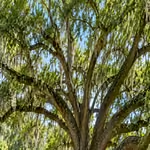
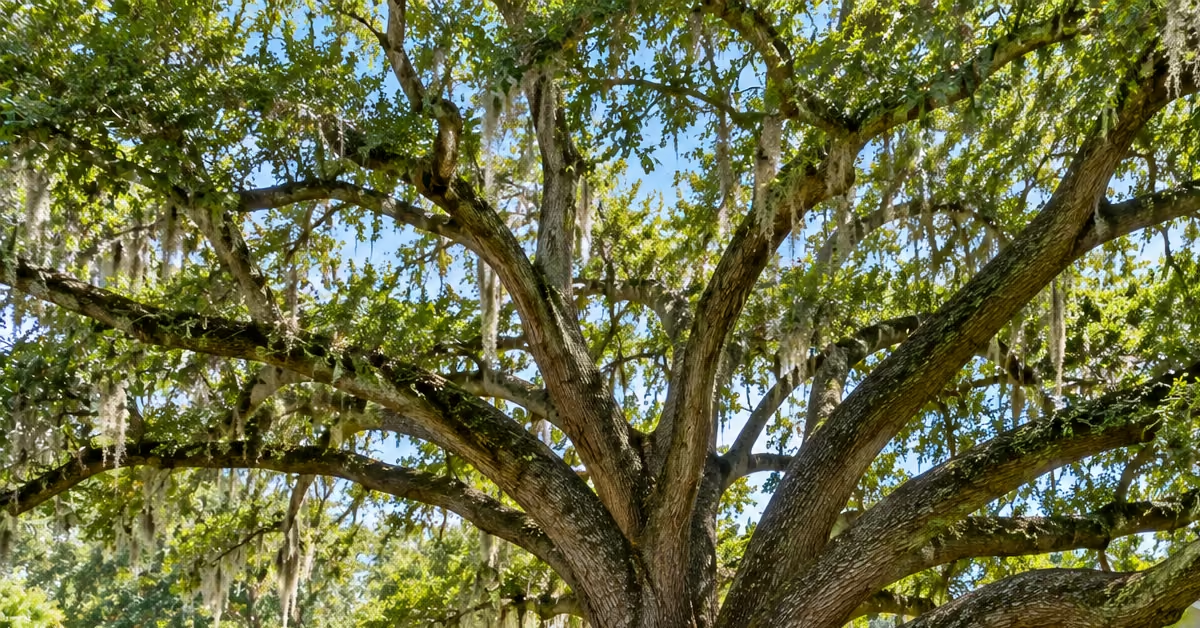
No tree is more closely associated with Jacksonville than the southern live oak. These trees can live for centuries, developing wide, sprawling canopies supported by massive limbs that often stretch further horizontally than the tree is tall. Live oaks are evergreen, tolerant of heat, drought, and salt spray, and generally have strong wood when healthy, though their natural growth habit of multiple co-dominant leaders means limb unions need periodic structural evaluation as the tree matures.
Because of their size and value, live oaks are also the species most likely to need professional attention for issues like included bark, weak limb unions, or root zone protection during nearby construction.
-
Sabal Palm (Sabal palmetto)
The sabal palm, Florida’s state tree, is a common sight throughout Jacksonville, prized for its resilience to wind, salt, and drought. Unlike hardwood trees, palms don’t have a traditional branching structure that requires cabling, but they do need regular removal of dead fronds, since these can become dangerous projectiles in high wind if left unmanaged. Sabal palms are also relatively resistant to the storm damage that affects many other species, largely because of their flexible trunks and reduced canopy surface area.
-
Southern Magnolia (Magnolia grandiflora)
Southern magnolias are popular for their large, fragrant white blooms and dense evergreen foliage, which makes them a favorite for privacy screening and shade in Jacksonville yards. They generally have a single central trunk, which gives them a more predictable structure than live oaks, but their dense canopy can catch significant wind load during storms. Magnolias also drop a heavy volume of large leaves and seed pods year-round, which is a maintenance consideration many homeowners don’t anticipate when planting one.
-
Longleaf Pine (Pinus palustris)
Once the dominant tree across much of the Southeast, longleaf pine populations have declined significantly but still appear throughout North Florida, including parts of Jacksonville. These pines are well adapted to sandy soils and occasional fire, and they can grow quite tall with a relatively narrow canopy compared to an oak.
Longleaf pines are generally wind-resistant when healthy, but any trunk lean, root damage, or beetle activity should be evaluated quickly, since pines can fail with less warning than many hardwoods.
-
Crape Myrtle (Lagerstroemia)
Crape myrtles are one of the most widely planted ornamental trees in Jacksonville, valued for their long summer bloom season and manageable size. They’re naturally multi-stemmed, which is a normal and attractive part of their form rather than a structural defect in most cases, given their smaller overall scale.
The most common issue with crape myrtles isn’t storm risk but improper pruning, since the practice of severely cutting back the canopy each year, sometimes called ‘crape murder,’ weakens the tree over time and encourages weak, whip-like regrowth.
Species That Struggle in Jacksonville’s Climate
Not every popular ornamental tree is well suited to this environment. Some non-native palm varieties and certain fast-growing ornamental species are more vulnerable to Jacksonville’s occasional winter cold snaps or to root and trunk decay in the area’s humid conditions.
Fast-growing trees planted for quick shade, like certain non-native maples or poplar varieties, often come with weaker wood and shorter lifespans than natives like live oak or magnolia, making them more prone to storm damage over time. If you’re planning new plantings or trying to identify what’s already growing on your property, our team can help confirm species and flag any early red flags during a tree health inspection.
Matching Care to the Species You Have
Generic tree care advice often misses the mark because different species fail in different ways. A live oak’s biggest risk is usually a weak limb union, while a pine’s biggest risk might be root or trunk instability with little visible warning. A magnolia’s dense canopy needs wind-load consideration that a sparse-canopied palm doesn’t. Identifying exactly what’s growing on your property is the first step toward a maintenance plan, whether that’s structural pruning, cabling, or simply routine monitoring, that actually addresses the risks specific to that tree.
A Simple Seasonal Care Calendar
Late winter, before spring growth begins, is generally the best window for structural pruning on deciduous and many evergreen species, since the tree’s form is easier to see and wounds have time to begin closing before summer heat. Early summer, ahead of peak hurricane season, is the right time for a storm-readiness inspection, including a check of any cabled or braced limb unions. Late summer and fall bring the highest storm risk, which is when reactive care, like removing storm-damaged limbs, tends to spike. Winter is typically the best time to plant new trees, giving roots a chance to establish before the stress of summer heat arrives.
Trees Better Suited to Other Climates
Some species that thrive in cooler or drier climates simply aren’t a good long-term fit for Jacksonville. Certain maples and birches, for example, tend to struggle with heat stress and are more susceptible to pests and root rot in the area’s humid, saturated soils during the rainy season. Homeowners relocating from other regions sometimes plant these out of familiarity, only to find the tree declines within a decade. Choosing species with a track record of success in North Florida generally leads to a longer-lived, lower-maintenance landscape.
How These Trees Interact With Jacksonville’s Storm Season
Every species on this list responds differently to the tropical storms and hurricanes that regularly affect Jacksonville. Live oaks, despite their strength, can suffer limb failure at weak unions during high wind. Sabal palms flex and generally shed only fronds rather than whole limbs. Magnolias and other dense-canopied trees catch more wind load, which increases root-plate stress in saturated soil. Pines can fail with little warning if the root system has been compromised. Understanding these tendencies ahead of storm season is part of why species identification matters just as much as general tree health.
Frequently Asked Questions About Jacksonville Trees
What is the most common large tree in Jacksonville, FL?
The southern live oak is by far the most iconic and widespread large tree in the area, known for its sprawling canopy and long lifespan.
Are palm trees native to Jacksonville?
The sabal palm is native to Florida and common throughout Jacksonville, though several non-native palm varieties are also planted ornamentally.
Do crape myrtles need to be cut back hard every year?
No. Severe annual cutting back, often called crape murder, actually weakens the tree over time. Light, selective pruning is healthier for the tree’s long-term structure.
Which Jacksonville trees are most vulnerable to storm damage?
Fast-growing, weak-wooded ornamental species tend to suffer the most storm damage, while native trees like live oak and sabal palm generally hold up better when healthy.
How do I know what species of tree I have in my yard?
A certified arborist can identify your tree species and assess its condition during an on-site inspection, which is especially useful before planning pruning or construction nearby.
Can longleaf pines be safely kept in a residential yard?
Yes, when healthy and properly spaced, though any signs of lean, root disturbance, or beetle activity should be evaluated quickly since pines can fail with limited warning.
Why do some trees do better in Jacksonville than others?
Trees native or well-adapted to sandy soil, heat, humidity, and occasional salt exposure tend to have fewer long-term problems than species suited to different climates.
Summary Checklist: Guide to Local Trees in Jacksonville, FL
| Species | Key Consideration |
|---|---|
| Southern live oak | Monitor limb unions and included bark as the canopy matures |
| Sabal palm | Remove dead fronds regularly to reduce storm hazard |
| Southern magnolia | Account for dense canopy wind load and heavy leaf drop |
| Longleaf pine | Watch for lean, root disturbance, or beetle activity |
| Crape myrtle | Avoid severe annual cutback pruning |
| Non-native fast growers | Expect weaker wood and shorter service life |
| Any species | Match care and inspection frequency to that tree’s specific risks |
Final Advice
Take the time to identify the species growing on your property, since the right care plan looks different for an oak than it does for a pine or a palm. Prioritize inspections for large, mature trees with structural complexity, like live oaks, especially before hurricane season. Avoid harsh annual pruning practices on ornamentals like crape myrtles, and watch pines closely for lean or root disturbance. When adding new trees to your landscape, favor natives and well-adapted species over fast-growing but weak-wooded varieties. If you’re unsure what you’re working with or how healthy a tree really is, a professional identification and tree risk assessment is worth the investment.
Bushor’s Tree Surgeons have spent years working with the specific species that make up Jacksonville’s urban forest, and our ISA-Certified Arborists are ready to help you understand and care for the trees on your property.