When autumn arrives in Jacksonville, most homeowners focus on raking leaves and preparing their lawns, but few realize that fall is one of the most important times to fertilize trees. Proper fertilization during this season strengthens roots, boosts nutrient storage, and prepares your landscape to handle cooler temperatures and winter storms.
In this comprehensive guide from Bushor Tree Surgeons, you’ll learn why fall fertilization matters, how it benefits North Florida trees, the right methods and products to use, and how professional arborists ensure optimal soil health and long-term growth.
The Best Time to Fertilize Jacksonville Trees for Strong Root Growth
Fall is nature’s recovery season. After a long summer of growth and heat stress, Jacksonville’s trees begin to slow down and redirect energy from leaves to roots. This natural cycle makes fall the ideal time to replenish the soil.
Top reasons fall fertilization matters:
- Root development: Cooler soil temperatures encourage root growth, not leaf production.
- Nutrient storage: Trees absorb nutrients in the fall and store them for spring growth.
- Improved winter resilience: Well-fed roots can better handle cold snaps and dry spells.
- Faster spring recovery: Trees fertilized in fall produce stronger, greener leaves in early spring.
By fertilizing between late September and mid-November, you give your trees the boost they need before dormancy sets in.
Common Tree Nutrient Deficiencies in Jacksonville
Jacksonville’s sandy coastal soil tends to drain quickly, which means essential nutrients often leach away before trees can absorb them. Over time, this leads to visible deficiencies.
Common issues include:
- Nitrogen deficiency: Yellowing leaves, slow growth.
- Potassium deficiency: Poor drought resistance and weak branches.
- Iron and manganese deficiency: Chlorosis (yellowing between green veins), especially in oaks and magnolias. According to the University of Florida IFAS Extension, these deficiencies are common in Florida’s high-pH or sandy soils and require specific micronutrient applications.
- Phosphorus deficiency: Stunted root growth and pale foliage.
A soil test helps determine which nutrients are lacking. The Florida Department of Agriculture and Consumer Services emphasizes that soil testing is a critical first step to ensure you aren’t over-fertilizing, which protects both your trees and Florida’s water quality.
Understanding Jacksonville’s Soil and Climate
Jacksonville sits in USDA Hardiness Zone 9a, meaning mild winters, hot summers, and frequent rain. These conditions demand balanced fertilization and deep soil management.
Challenges for local trees:
- Sandy soils with low organic matter
- High humidity promotes fungal issues
- Salt exposure near coastal areas
- Occasional drought periods in late fall
Because of these conditions, deep root fertilization, where nutrients are injected directly into the root zone, is often more effective than surface feeding.
How Fall Fertilization Strengthens Roots
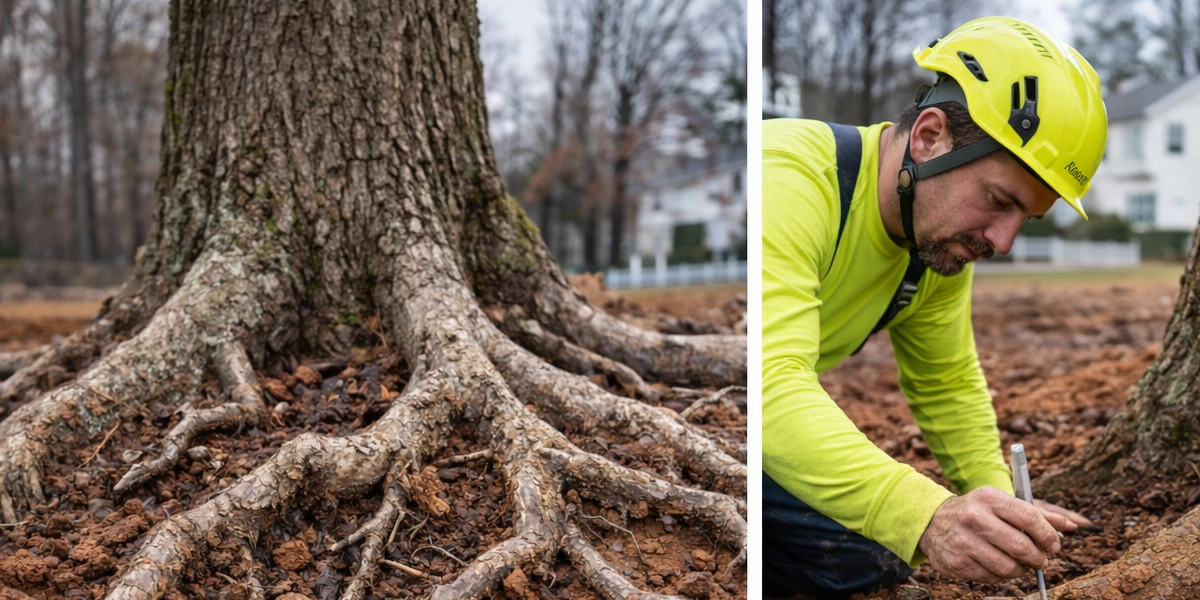
When you fertilize in the fall, the nutrients travel deep into the soil, feeding the roots directly. While the top growth slows, the roots stay active, expanding and storing carbohydrates.
Here’s what happens underground:
- Nutrients reach active root zones where fine feeder roots absorb them efficiently.
- Energy storage increases, giving trees reserves to survive winter stress.
- Root systems thicken and spread, anchoring trees more securely.
- New root hairs form, improving moisture and nutrient absorption.
A strong root system means less stress during winter and a faster rebound in spring.
Choosing the Right Fertilizer for Jacksonville Trees
Selecting the right fertilizer blend is key to success. Avoid generic products and focus on formulations suited to the region’s soil type and tree species.
Recommended options:
- Slow-release granular fertilizers: Provide nutrients steadily through winter.
- Liquid root injections: Ideal for mature or struggling trees; used by professional arborists.
- Organic compost blends: Improve soil structure and microbial activity.
Ideal nutrient ratio: A balanced formula like 3-1-2 or 2-1-1 (nitrogen-phosphorus-potassium) supports both root and foliage development.
Bushor Tree Surgeons customizes fertilizer blends based on soil pH, species type, and location exposure.
Step-by-Step Guide to Fall Tree Fertilization
If you’re fertilizing your trees at home, follow this practical process for best results:
- Test your soil. Determine nutrient levels and pH balance.
- Calculate fertilizer needs. Use tree diameter to estimate application rates.
- Choose the right product. Slow-release or root-injected formulas work best.
- Apply evenly around the drip line. This is where most feeder roots are located. The U.S. Forest Service recommends fertilizing the entire area beneath the canopy to ensure maximum uptake by the root system.
- Water thoroughly after application. Helps nutrients move into the root zones.
- Mulch around the base. Retains moisture and protects roots from temperature swings.
For large trees or properties with compacted soil, professional deep-root fertilization ensures nutrients reach the active root layer safely and evenly.
Signs Your Trees Need Fertilization
It’s not always obvious when a tree is nutrient-deficient. Watch for these signs in fall:
- Early leaf drop or poor color
- Sparse canopy or reduced annual growth
- Small or pale new leaves
- Branch dieback or weak twigs
- Premature flowering or poor fruit yield
If multiple trees in your yard show symptoms, schedule a soil test before fertilizing. Over-fertilization can be just as harmful as neglect.
Professional Deep Root Fertilization
Bushor Tree Surgeons specializes in deep root fertilization, a method that delivers nutrients directly to the root zone through pressurized injection.
Advantages include:
- Uniform nutrient distribution throughout the root system
- Reduced surface runoff and waste
- Aeration benefits for compacted soil
- Stronger, deeper root development
Professional-grade fertilizers also contain micronutrients and beneficial microbes that promote soil health beyond what store-bought products can achieve.
Complementary Tree Care in Fall
Fertilization works best when combined with other fall maintenance tasks.
Pair fertilization with:
- Mulching: Keeps soil insulated and moist.
- Tree pruning: Removes dead or diseased limbs before winter storms.
- Watering: Ensure trees receive consistent moisture during dry spells.
- Pest and disease inspection: Treat early to prevent winter infestations.
Together, these practices strengthen your landscape and prevent seasonal stress.
Environmental and Long-Term Benefits
Healthy trees do more than beautify your yard; they support Jacksonville’s entire ecosystem.
Environmental benefits of proper fertilization:
- Improves air quality and carbon capture
- Prevents soil erosion and runoff
- Enhances local shade canopy and wildlife habitats
- Reduces urban heat effects
A consistent fertilization routine keeps your trees strong, resilient, and beneficial to the environment year-round.
Common Mistakes to Avoid
Many homeowners unknowingly harm their trees by fertilizing incorrectly.
Avoid these errors:
- Applying fertilizer too close to the trunk
- Using high-nitrogen lawn fertilizer on trees
- Fertilizing during drought or extreme heat
- Ignoring soil pH and nutrient balance
- Over-fertilizing, which can burn roots
When in doubt, always consult a certified arborist for recommendations tailored to your property.
How Weather Patterns in Jacksonville Affect Fall Fertilization
Jacksonville’s weather can vary dramatically through fall, from late-season heatwaves to sudden cold snaps and heavy rainfall. Understanding these patterns helps time fertilization more effectively.
Here’s how local weather impacts soil and nutrient absorption:
- Rainfall: Frequent autumn rains help move nutrients deep into the root zone, but too much can wash fertilizers away. Apply just before steady, moderate rainfall, not during storms.
- Temperature: Ideal soil temperature for nutrient absorption is between 55°F and 70°F. Once the soil drops below that range, root activity slows.
- Humidity: High humidity accelerates microbial activity in the soil, which helps organic fertilizers break down more efficiently.
- Wind exposure: Trees in open or coastal areas lose moisture faster and often need soil conditioners or compost to retain nutrients.
Bushor Tree Surgeons monitors seasonal patterns across Duval County to determine the best fertilization timing for each property. This ensures nutrients are applied when your trees can use them most efficiently.
The Role of Soil Aeration in Tree Fertilization Success
Even the best fertilizer won’t work if the roots can’t access it. Compacted soil, common in Jacksonville’s clay or heavily trafficked lawns, restricts oxygen, water, and nutrient flow to the root zone.
That’s where soil aeration makes a difference.
Benefits of combining aeration with fall fertilization:
- Breaks up compacted soil, allowing deeper fertilizer penetration.
- Improves root oxygen exchange, stimulating new root growth.
- Enhances microbial activity, helping organic nutrients decompose and enrich the soil.
- Reduces surface runoff, keeping nutrients where they belong around your trees.
Bushor Tree Surgeons often performs core aeration before deep-root fertilization to maximize absorption and ensure long-term soil health. When combined, these services dramatically improve root strength and overall tree vitality heading into winter.
Frequently Asked Questions
When should I fertilize my trees in Jacksonville?
Fertilize between late September and mid-November, before soil temperatures drop below 55°F. This allows nutrients to reach active roots before dormancy.
Can I fertilize my trees in winter?
Avoid fertilizing during winter dormancy. Trees cannot absorb nutrients effectively when soil activity slows.
How do I know if my soil needs fertilization?
A professional soil test reveals nutrient deficiencies, pH imbalance, and organic matter content. Bushor Tree Surgeons provides testing and analysis to design a custom plan.
Is organic fertilizer better for trees?
Organic fertilizers improve soil structure and microbial life, but professional-grade slow-release blends often provide more precise nutrient control. The best choice depends on your soil and tree species.
What is deep root fertilization?
It’s a process where nutrients are injected directly into the root zone under pressure. This ensures even absorption and avoids waste or runoff.
Nourish Your Jacksonville Trees Before Winter Arrives
Fall tree fertilization is one of the best investments Jacksonville homeowners can make for long-term landscape health. By feeding roots before winter, you strengthen trees against storms, pests, and disease while setting them up for vigorous spring growth.
Schedule your fall fertilization service with Bushor Tree Surgeons today. Our certified arborists serve homeowners across Jacksonville, Ponte Vedra, and the Beaches with deep-root treatments designed for Florida’s unique soils.