April 18, 2026
Mulching is one of the simplest yet most effective ways to improve the health and longevity of your trees. It doesn’t just make your landscape look clean and finished. The real magic happens underground. Mulch supports soil health, balances moisture, and creates a protective environment that helps trees thrive naturally. Whether you’re caring for newly planted trees or mature ones, understanding how mulch works and how to use it properly can make a measurable difference.
How Mulching Supports Tree Health
Healthy trees start with healthy roots. Mulch acts as a buffer between the soil and the outside world. It moderates temperature, conserves moisture, and prevents weeds from competing with tree roots. The key is consistency, applying mulch correctly and maintaining it over time.
When mulch breaks down, it enriches the soil with organic matter, improving structure and microbial activity. This process mimics the natural forest floor, where decomposing leaves and bark continuously feed the soil ecosystem. For urban or suburban landscapes where natural leaf litter is removed, mulch fills that missing role.
The Science Behind Moisture Retention
Trees lose significant amounts of moisture through evaporation, especially during hot, dry months. Bare soil around tree roots dries out quickly, which stresses the root system. Mulch acts like insulation. It keeps soil cooler in summer and reduces water loss by limiting exposure to sun and wind.
For example, a layer of organic mulch two to four inches thick significantly reduces soil moisture evaporation. That means less frequent watering and more stable soil moisture levels. This is especially valuable for young trees that don’t yet have deep root systems. With mulch, water penetrates slowly into the soil and stays available for longer, promoting deep root growth. You can find further technical details in the National Institutes of Health (NIH) study on mulch and soil moisture.
Root Protection During Extreme Temperatures
Tree roots are sensitive to temperature extremes. In winter, freezing and thawing cycles can stress or damage roots. In summer, soil temperatures can rise to levels that cause dehydration and nutrient imbalance. Mulch provides thermal protection, helping soil maintain a more stable temperature year-round.
This temperature regulation also supports beneficial microorganisms and earthworms that live in the soil. These organisms break down organic material and release nutrients in forms that trees can absorb. Without mulch, surface roots can become exposed or damaged by lawn equipment or fluctuating weather conditions.
Mulching for Weed Control and Soil Competition
Weeds are more than an eyesore; they compete directly with tree roots for water and nutrients. When the top layer of soil is covered by mulch, sunlight can’t reach weed seeds. This suppresses germination naturally, without chemical weed control.
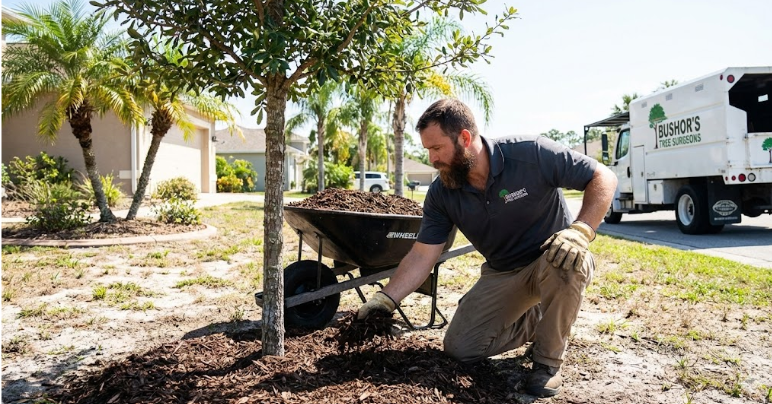
A two-to-three-inch layer of mulch is usually enough to block light and stop most weeds from growing. However, too much mulch can backfire. Piling mulch against the tree trunk creates a damp environment that invites pests, rot, and fungal growth. The right way is to spread mulch in a wide, even layer, leaving a small gap about three to six inches around the base of the trunk. For visual examples and best practices, see the USDA Forest Service guide on tree care.
Choosing the Right Mulch for Your Trees
Not all mulch is the same. The best mulch is organic and slow to decompose. It feeds the soil gradually while providing lasting protection. Here are common types used for trees:
Wood Chips
Wood chips are among the most popular choices for tree mulching. They decompose slowly and look natural in most landscapes. They also support fungal activity that benefits tree roots. However, avoid fresh wood chips from diseased trees, as they may carry pathogens.
Shredded Bark
Shredded bark provides a neat, uniform look and stays in place even on slopes. It breaks down slowly and can improve soil texture over time. It’s ideal for established landscapes where a clean, maintained look is preferred.
Compost and Leaf Mulch
These are rich in nutrients but break down faster than wood-based mulch. They’re ideal for improving soil fertility around young trees or in garden beds, but may need replenishment more often.
Pine Straw or Needles
Pine straw is lightweight, attractive, and great for acid-loving trees. It provides good insulation but doesn’t suppress weeds as strongly as heavier mulches.
How to Apply Mulch Correctly
Improper mulching can do more harm than good. The most common mistake is creating mulch “volcanoes” around the trunk. Here’s how to do it right:
- Clear the area: Remove grass, weeds, or debris in a circle around the base of the tree, ideally as wide as the tree’s canopy.
- Apply mulch evenly: Spread mulch in a layer about two to four inches thick. Too much can suffocate roots or retain excess moisture.
- Keep mulch off the trunk: Leave a small gap around the base to prevent bark decay and pest problems.
- Refresh annually: Add a thin layer once a year to maintain coverage and replenish nutrients, but don’t let mulch build up excessively.
Common Mulching Mistakes to Avoid
Even with good intentions, many property owners make errors that can harm their trees. Here are the most frequent problems:
- Too much mulch smothers roots and leads to shallow root growth. Roots need oxygen to thrive.
- Touching the trunk traps moisture and encourages decay or pest infestations.
- Using synthetic mulch (like rubber or gravel) might block weeds, but it doesn’t enrich the soil or regulate temperature as effectively as organic materials.
- Ignoring replenishment leaves the soil exposed once the mulch decomposes. Mulch needs maintenance to stay effective.
For a comprehensive breakdown of application methods, refer to the University of New Hampshire Extension’s mulching tips.
Seasonal Mulching Strategies
Spring Mulching
Spring is ideal for applying fresh mulch. The soil has warmed up, and new growth is starting. Mulching now helps retain moisture from spring rains and suppresses emerging weeds.
Summer Mulching
In summer, mulch acts as a shield against heat and drought. For dry regions, topping off existing mulch ensures steady moisture retention. Avoid heavy applications during extreme heat to prevent fermentation or odor issues.
Fall Mulching
Fall mulch helps insulate soil before winter and protects roots from freezing. It also provides a slow nutrient release as organic matter breaks down over winter.
Winter Mulching
In colder climates, late-fall mulching after the ground freezes can prevent heaving and root damage caused by freeze-thaw cycles. Avoid mulching too early, which can attract rodents seeking warmth.
How Mulching Impacts Tree Growth Long-Term
Over time, well-maintained mulch supports better tree growth, stronger roots, and higher survival rates during drought or frost. Mulched trees typically grow faster and show fewer signs of stress compared to those planted in bare soil.
Research has shown that mulching improves soil pH balance, nutrient absorption, and microbial diversity. It’s one of the few low-cost, low-effort practices that benefit nearly every aspect of tree health.
Sustainable and Eco-Friendly Mulching Practices
Mulching doesn’t just help your trees; it supports a healthier ecosystem. Using recycled yard waste, composted materials, or locally sourced mulch reduces environmental impact. Avoid dyed or chemically treated mulches that can leach toxins into the soil.
Another eco-friendly practice is sheet mulching, which uses layers of cardboard or newspaper beneath organic mulch. This enhances weed suppression and soil improvement naturally, with minimal disturbance to the root zone.
When to Re-Mulch and How to Maintain It
Inspect mulch regularly. Over time, it will compact or decompose. Fluffing it with a rake once or twice a year helps maintain airflow and appearance. Add a new layer only when needed, usually every 12 to 18 months. The goal is to preserve a balanced thickness, not to bury the base of the tree.
Why Professional Mulching Makes a Difference
While mulching may seem simple, professionals understand soil composition, root behavior, and local climate conditions. They know which materials suit your specific trees and how to apply them correctly for long-term benefits. Proper mulching done by experts ensures consistent results and avoids costly mistakes like trunk rot or suffocated roots.
FAQs About Mulching Trees
How thick should mulch be around trees?
Aim for a mulch layer about two to four inches thick. This depth locks in moisture, prevents weeds, and keeps soil temperatures stable without suffocating the roots. Too much mulch holds excess water and can lead to fungal growth or root rot.
Should mulch touch the tree trunk?
No. Always leave a gap of three to six inches between the mulch and the trunk. When mulch piles up against bark, it traps moisture and creates the perfect environment for decay, insects, and disease. Keeping the base clear allows the trunk to breathe and stay dry.
What type of mulch is best for trees?
Organic mulch such as shredded bark, compost, wood chips, or leaf mold is best. These materials decompose naturally, feeding the soil and improving its structure over time. They also help mimic a forest floor, which supports natural root health. Avoid rubber, gravel, or dyed mulch, which can trap heat and provide no soil benefit.
How often should mulch be replaced?
Inspect mulch once or twice a year and refresh it every 12 to 18 months. Over time, organic mulch breaks down and loses volume. Add a thin new layer when it starts looking compacted or bare, but don’t pile fresh mulch on top of old layers without loosening the base first.
When is the best time to mulch trees?
Spring and fall are the most effective seasons. In spring, mulch helps hold in moisture before summer heat arrives. In the fall, it insulates the soil and protects roots from winter freezes. Avoid mulching during extreme heat or when the ground is frozen.
Keep Your Trees Strong with Smart Mulching Practices
Mulching is one of the easiest and most powerful steps you can take to protect and enhance your trees. It conserves water, shields roots from stress, and naturally suppresses weeds, all while enriching the soil. The key lies in using the right materials, applying them correctly, and maintaining them year after year. With thoughtful care, your trees will grow stronger, healthier, and more resilient for decades to come.