Key Takeaways
- Some tree species in Jacksonville are naturally more vulnerable to storm damage due to shallow roots or brittle wood.
- Trees such as sand pine, laurel oak, water oak, and Chinese elm are more likely to fall during strong winds.
- Poor pruning, disease, or root damage can increase the chance of a tree failing in a storm.
- Warning signs like leaning trunks, cracked bark, or dead limbs should be inspected by a professional arborist.
- Preventive trimming, inspections, and storm preparation can greatly reduce tree failure risks.
Living in Jacksonville, Florida, means enjoying beautiful trees, coastal breezes, and a lush environment. However, it also means preparing for hurricanes, tropical storms, and severe thunderstorms each year. High winds combined with heavy rainfall can place enormous pressure on trees across the city.
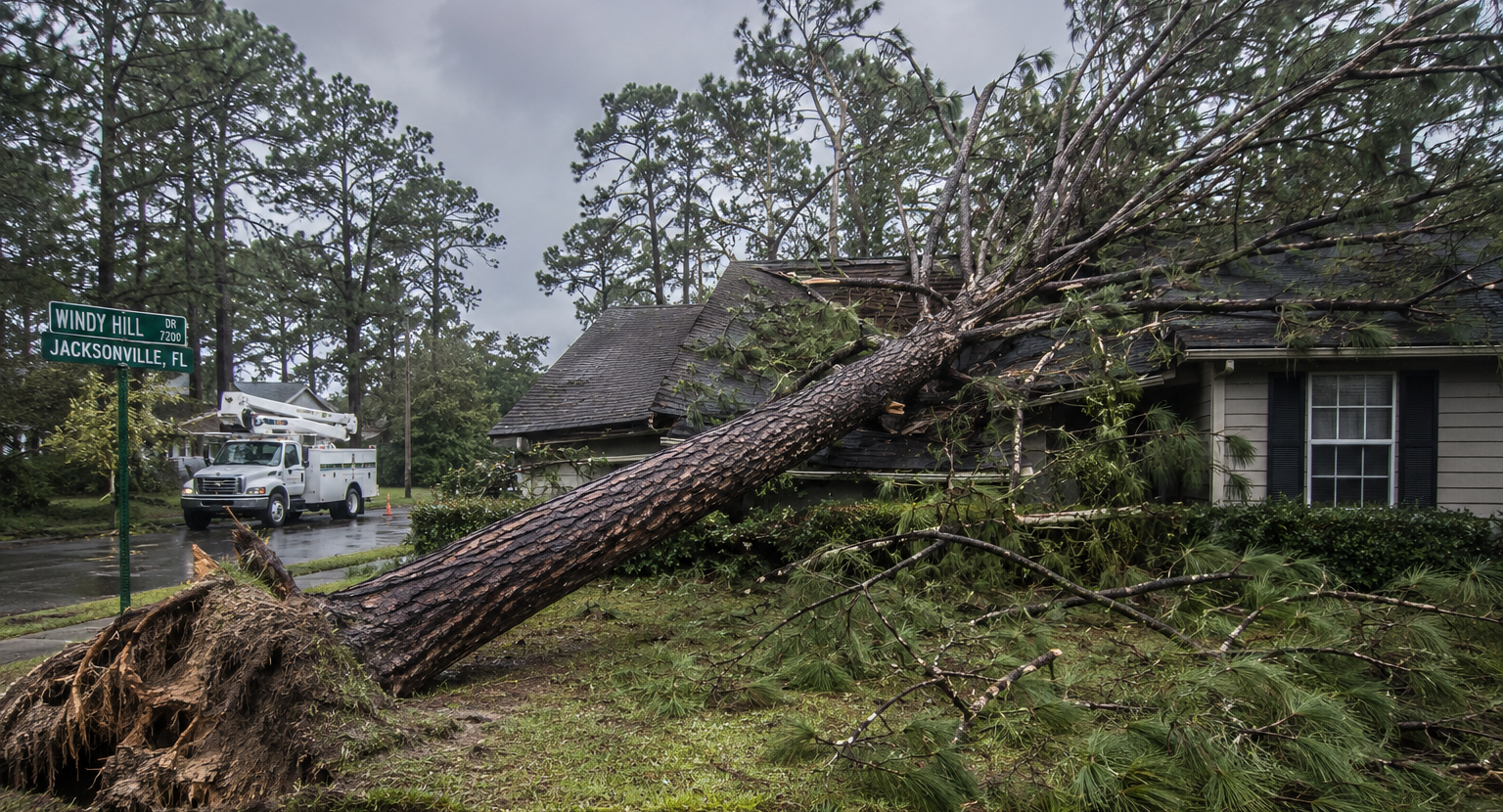
When storms hit, fallen trees are one of the most common causes of property damage. Large branches can break off and crash into roofs, fences, vehicles, or power lines. Entire trees can uproot when saturated soil loses its ability to hold the root system in place.
While any tree can fail during extreme weather, certain species are far more likely to fall during storms. Understanding which trees are most vulnerable can help Jacksonville homeowners reduce risk before the next major storm arrives.
Why Some Trees Fall During Storms
Tree failure during storms usually occurs in one of two ways: uprooting or trunk breakage. Uprooting happens when the root system loses its grip in the soil, allowing the entire tree to tip over. This is common when the ground becomes saturated after heavy rain.
Trunk or branch breakage happens when the wood cannot withstand the force of strong winds. Some trees naturally have brittle wood or weak branch attachments, which makes them more susceptible to snapping during storms.
Other factors that influence storm failure include:
- Shallow or poorly developed root systems
- Large dense canopies that catch strong winds
- Structural defects in the trunk or limbs
- Disease or internal decay
- Poor pruning practices
Even trees that normally tolerate storms can become dangerous if they are neglected or improperly maintained.
Laurel Oak
The Laurel Oak is one of the most common shade trees found throughout Jacksonville neighborhoods. These trees grow quickly and provide wide canopies that create excellent shade in residential areas.
Unfortunately, their rapid growth often leads to weaker wood compared with other oak species. Laurel oaks frequently develop shallow root systems and internal decay as they age. Because of these characteristics, laurel oaks are among the trees most commonly damaged or uprooted during hurricanes and severe thunderstorms in North Florida. Large limbs may break unexpectedly, especially in older trees that have not been pruned properly.
Water Oak
Another species that often struggles during storms is the Water Oak. Like laurel oak, water oak grows rapidly and produces a large canopy. However, fast growth can lead to structural weaknesses. Water oaks often develop multiple heavy limbs that extend outward from the trunk at weak angles. These connections may split when exposed to high winds.
Older water oaks can also develop internal rot or hollow sections within the trunk. This hidden decay weakens the tree’s structural strength, increasing the likelihood of trunk failure during storms. Because of these risks, many arborists recommend regular inspections of mature water oaks in residential landscapes.
Sand Pine
The Sand Pine is another tree commonly associated with storm damage in Florida. Sand pines often grow tall and narrow, which makes them particularly vulnerable to strong winds. One of the biggest problems with this species is its shallow root system. During heavy rainfall, the soil around the roots can become loose and saturated, making it easier for the tree to topple.
When hurricane-force winds arrive, sand pines may simply uproot and fall over. Because these trees can grow very tall, they can cause significant property damage when they fail.
Chinese Elm
The Chinese Elm is another tree that may struggle during strong storms. Although it grows quickly and provides attractive shade, Chinese elm often develops poor branch structure.
Branches frequently grow at narrow angles where they attach to the trunk. These weak attachment points can split during high winds, causing large limbs to break off. Some Chinese elms also develop multiple trunks that compete with each other for stability. This can create structural stress that makes the tree more vulnerable during severe weather.
Other Trees That May Fail During Storms
Several other trees in Jacksonville landscapes may also experience storm damage under certain conditions. For example, some maple species develop brittle wood that can break during strong winds. Sweetgum trees may drop large limbs during storms, especially when the canopy becomes dense and heavy.
Even some pine trees can become hazardous if they grow extremely tall without proper pruning or maintenance. It’s important to remember that species alone do not determine risk. Tree health, location, and maintenance history also play major roles in whether a tree survives a storm.
Tree Size and Age Can Increase Risk
As trees grow older and larger, they may become more vulnerable to storm damage. Large trees catch more wind, which increases the force applied to the trunk and roots.
Older trees may also develop internal decay, cavities, or structural weaknesses that are not immediately visible from the outside. These hidden defects can cause sudden failures during storms. That doesn’t mean mature trees should always be removed. Many large trees can remain safe for decades when they receive proper care and monitoring from trained arborists.
Warning Signs a Tree Might Fall
Homeowners should watch for several warning signs that indicate a tree may be at risk during storms.
- A leaning tree is one of the most obvious warning signs. If a tree suddenly begins leaning or the soil around the base appears lifted, the root system may already be failing.
- Cracks in the trunk or large dead branches are also signs of structural weakness. Trees with hollow trunks or visible decay should be inspected immediately.
- Another common warning sign is root damage caused by construction or soil compaction. When roots are disturbed, the tree may lose stability over time.
If any of these issues are present, a professional tree inspection is highly recommended.
Storm-Resistant Trees in Jacksonville
While some species are vulnerable to storm damage, others are well adapted to Florida’s climate.
- The Live Oak is widely considered one of the most wind-resistant trees in the Southeast. Its strong wood and deep root system allow it to withstand powerful winds.
- The Bald Cypress is another resilient species that performs well during storms, particularly in wet or flood-prone areas.
- Palm species such as the Sabal Palm, Florida’s state tree, are also known for their flexibility in high winds.
- Planting wind-resistant trees can significantly reduce storm damage risk in residential landscapes.
Preparing Jacksonville Trees for Hurricane Season
Frequently Asked Questions
1. Which trees fall most often during storms in Jacksonville, FL?
Some of the trees most commonly damaged during storms in Jacksonville, Florida, include Laurel Oak, Water Oak, Sand Pine, and Chinese Elm because they may develop weaker wood or shallow root systems.
Heavy rain can saturate the soil and weaken root support, while strong winds place pressure on the canopy. Trees with shallow roots, structural defects, or large dense crowns are more likely to fall.
3. How can I tell if a tree might fall during a storm in Jacksonville, FL?
Warning signs include leaning trunks, cracked bark, exposed roots, dead branches, and hollow sections in the trunk. These issues should be evaluated by a certified arborist.
4. Which trees are more resistant to storms in Jacksonville, FL?
Species such as Live Oak, Bald Cypress, and Sabal Palm are known for stronger wind resistance in Florida landscapes.
5. Should dangerous trees be removed before hurricane season in Jacksonville, FL?
If a tree shows signs of severe decay, root damage, or structural instability, removal before hurricane season may prevent major property damage.
6. Can pruning help prevent storm damage in Jacksonville, FL?
Yes. Proper tree trimming removes deadwood, reduces canopy weight, and improves airflow, helping trees withstand strong winds more effectively.
7. Who should inspect trees for storm risk in Jacksonville, FL?
Professional arborists, such as the team at Bushor’s Tree Surgeons, can assess tree stability and recommend trimming, cabling, or removal when necessary.
8. What should I do if a tree falls during a storm in Jacksonville, FL?
Avoid approaching damaged trees, especially if power lines are nearby. Contact a professional emergency tree service immediately to remove debris and secure your property safely.
Summary Checklist: Trees at Risk During Storms
| Risk Factor | Why It Matters | What Homeowners Should Do |
|---|---|---|
| Weak tree species | Species like Laurel Oaks and Pecans are more prone to splitting or uprooting under storm pressure | Identify vulnerable trees on your property and prioritize them for inspection |
| Shallow root systems | Water Oaks and Pines may fail more easily in saturated or unstable soil conditions | Check for leaning trunks, exposed roots, or soil movement after heavy rainfall |
| Dense or oversized canopy | Heavy canopies create greater wind resistance, increasing the chance of storm failure | Schedule structural pruning to improve airflow and reduce canopy weight |
| Hidden internal decay | Heart rot and internal decay can severely weaken a tree without obvious external warning signs | Arrange a professional arborist assessment for older or mature trees |
| Poor tree maintenance | Dead branches, weak branch unions, and neglected pruning increase safety hazards | Maintain routine tree care and remove hazardous overhanging limbs |
Final Advice
Storms are a regular part of life in Jacksonville, and preparation is essential for protecting both your property and your landscape. Identifying trees that may be vulnerable to high winds, especially species like sand pine, laurel oak, water oak, and Chinese elm, can help homeowners take proactive steps before severe weather arrives.
Routine inspections, strategic pruning, and proper tree maintenance are some of the most effective ways to reduce storm damage. Trees that are healthy and structurally sound are far more likely to withstand high winds than those that are diseased, neglected, or improperly maintained.
For homeowners seeking expert guidance, professional tree care services can help assess tree health, identify structural risks, and prepare trees for severe weather.
Whether you need preventive pruning before hurricane season or emergency storm cleanup, timely tree care can help protect your home, landscape, and surrounding trees.