April 6, 2026
Key Takeaways
- The black soot on your Crape Myrtle is a fungus called Sooty Mold that grows on the excrement of sucking insects.
- The primary culprit in 2026 is the Crape Myrtle Bark Scale (CMBS), an invasive insect that has spread rapidly through Northeast Florida.
- Sooty Mold does not eat the tree, but it can block sunlight, leading to stunted growth, fewer blooms, and premature leaf drop.
- Management requires a multi-step approach involving systemic treatments, horticultural oils, and mechanical cleaning.
- Crape Murder (excessive pruning) stresses the tree and makes it more susceptible to these infestations.
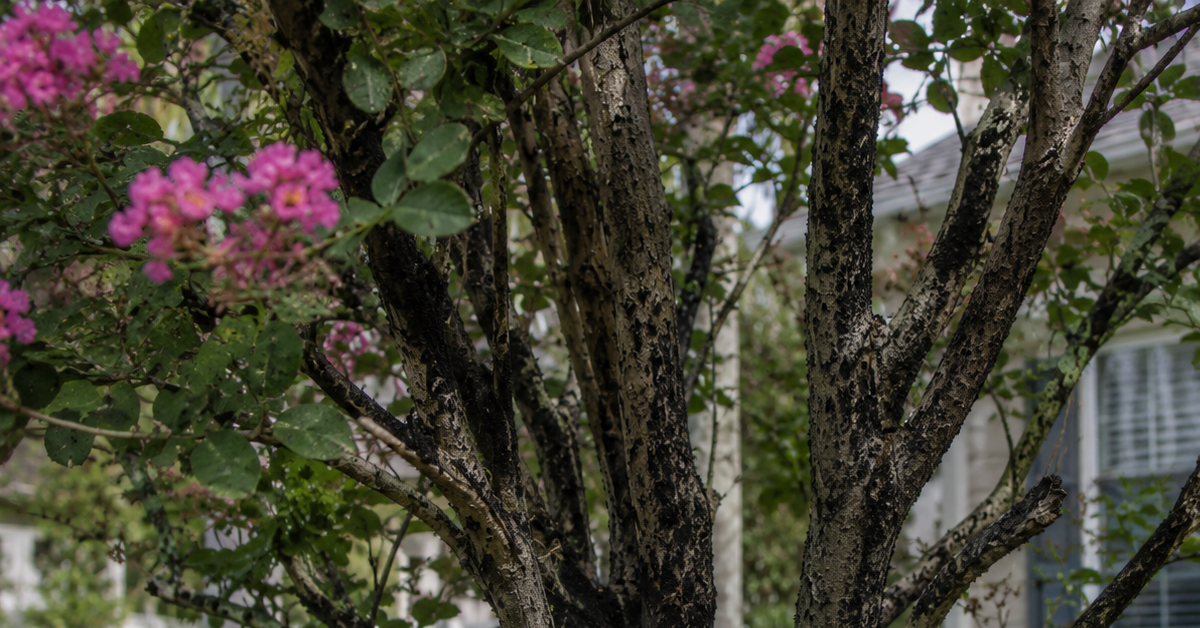
Few trees define the Jacksonville landscape quite like the Crape Myrtle. From their vibrant summer blooms to their smooth, sculptural trunks, they are a staple in almost every neighborhood from San Marco to Mandarin. However, over the last few years, a dark shadow has literally fallen over these trees. If your once-beautiful Crape Myrtle looks like it has been doused in chimney soot or charcoal, you are not alone. In 2026, the epidemic of black trees reached a peak in Northeast Florida.
While the black appearance is alarming, it is actually a symptom of a deeper pest problem. Understanding why your Crape Myrtles are turning black is the first step toward restoring the health and aesthetic of your landscape. The reason your Crape Myrtles are turning black is due to a fungus called Sooty Mold that grows on top of a sticky substance known as honeydew. This honeydew is actually the waste produced by sap-sucking insects, specifically the Crape Myrtle Bark Scale, which has become a major problem in Jacksonville as of 2026.
This guide explores the relationship between invasive insects and the fungus known as Sooty Mold, and what you can do to save your trees.
What Is Sooty Mold?
Sooty Mold is a non-parasitic fungus. Unlike many tree diseases that rot the wood or infect the vascular system, Sooty Mold stays on the surface. It does not eat the tree. Instead, it feeds on a sticky, sugar-rich substance called honeydew.
Honeydew is the liquid excrement of sap-sucking insects. As these pests gorge themselves on the nutrient-rich fluids inside your Crape Myrtle, they secrete the excess sugar, which coats the leaves, branches, and trunk. Once the honeydew is present, the spores of the Sooty Mold fungus find a perfect breeding ground. The mold grows into a thick, black mat that can eventually cover the entire tree, as well as the sidewalks, cars, and patio furniture located beneath the canopy.
The Real Culprit: Crape Myrtle Bark Scale (CMBS)
While aphids were once the main source of honeydew in Jacksonville, 2026 has seen a massive surge in a more aggressive pest: the Crape Myrtle Bark Scale.
These insects are easy to identify if you look closely. They appear as small, white or gray felt-like bumps huddled in the crevices of the bark or around pruning wounds. If you squeeze one, it will bleed a distinctive pink fluid. CMBS is particularly damaging because it populates the trunk and main branches, leading to a much higher volume of honeydew production than aphids, which typically stay on the leaves.
The Impact on Tree Health
Because Sooty Mold is only a surface fungus, many homeowners assume it is strictly a cosmetic issue. Unfortunately, that isn’t the case. In a coastal environment like Jacksonville, where trees already deal with heat and humidity stress, a heavy coating of Sooty Mold acts like a black curtain.
It blocks the process of photosynthesis by preventing sunlight from reaching the leaves. Over time, this starves the tree of energy. If left untreated, a black Crape Myrtle will produce significantly fewer flowers, its leaves will turn yellow and fall off early, and the tree’s overall growth will become stunted. In severe cases, the constant stress can lead to secondary infections or branch dieback.
Treatment and Restoration Strategies
Restoring a black Crape Myrtle in 2026 requires a logical, persistent approach. You cannot simply wash the mold away without addressing the insects that are feeding the fungus.
- Systemic Insecticides: The most effective way to control Bark Scale is through a soil drench applied in the early spring. The tree absorbs the treatment through its roots and distributes it to the branches, killing the insects when they feed.
- Horticultural Oils: During the winter or early spring, applying dormant oils can suffocate the scale insects hiding in the bark. This is a more environmentally friendly option but requires precise timing.
- Mechanical Cleaning: If the mold is thick, you can gently scrub the trunk with a soft brush and a mild soap solution. This improves the tree’s appearance and allows it to breathe while the insecticides take effect.
- Proper Pruning: Avoid Crape Murder. Cutting your trees back into blunt stumps creates massive amounts of new, succulent growth and large wounds, both of which are magnets for Bark Scale.
When your Crape Myrtles start turning black, it takes more than a garden hose to fix the underlying issue. Bushor’s Tree Surgeons has been Jacksonville’s trusted partner for tree health since 1962, and we have seen the recent explosion of Bark Scale firsthand. As a family-owned business with three generations of ISA Certified Arborists, we provide the systemic treatments and specialized care needed to kill the pests and clear the mold. We are available 24/7 across Duval, St. Johns, Clay, and Nassau counties for everything from health consultations to emergency removals. Our team uses top-tier equipment and decades of local experience to ensure your landscape stays healthy and beautiful.
Call us today at (904) 789-8884 to get your trees back to their vibrant best.
Frequently Asked Questions
1. Will the black mold eventually go away on its own?
No. As long as the insects are present and producing honeydew, the mold will continue to grow. Even after the insects are killed, the mold may take several months to flake off naturally unless it is mechanically cleaned.
2. Can I use a pressure washer to clean my Crape Myrtle?
It is not recommended. The high pressure can damage the delicate bark of the tree, creating wounds that invite even more pests and diseases. A soft brush and a garden hose are much safer.
3. Is Crape Myrtle Bark Scale contagious to other trees?
While it primarily targets Crape Myrtles, there have been cases of the scale spreading to other plants like American Beautyberry. It is best to treat infested trees quickly to prevent the pests from migrating.
4. Why is my driveway turning black under the tree?
That is the honeydew dripping from the tree and the subsequent mold growth. If you have patio furniture or a car under the tree, the sticky residue can be difficult to remove and may damage the finish over time.
5. When is the best time to treat for Bark Scale?
In Jacksonville, the best time for systemic treatments is typically late March through early May, when the tree is actively taking up water and nutrients for the growing season.
6. Does Crape Murder cause the black mold?
Indirectly, yes. Excessive pruning stresses the tree and forces it to grow thick, leggy branches that are more susceptible to insect infestations.
7. Are there any Crape Myrtle varieties that are resistant to Bark Scale?
In 2026, researchers are still looking for truly resistant varieties. However, maintaining a healthy, well-fertilized tree is the best defense against any pest.
8. Can ants cause my tree to turn black?
Ants don’t cause the mold, but they farm the insects that do. Ants protect aphids and scale insects from natural predators because they want the honeydew. If you see lines of ants on your trunk, it’s a sure sign of a pest problem.
Summary Checklist: Sooty Mold Management
| Condition | Risk Level | Recommended Action |
|---|---|---|
| White or gray bumps on bark | High | Schedule professional treatment to address suspected bark scale infestation |
| Sticky residue on leaves (honeydew) | Moderate | Rinse affected foliage and inspect for sap-feeding insect activity |
| Black coating on trunk or branches | Moderate | Clean visible buildup carefully and investigate the underlying pest issue |
| Premature leaf drop | High | Arrange a full arborist inspection to assess tree stress, pests, or disease progression |
| Lines of ants climbing the trunk | Low to Moderate | Inspect for scale insects or honeydew-producing pests attracting ant activity |
Final Advice
To successfully eliminate sooty mold in 2026, you must prioritize insect control over cosmetic cleaning. Follow this logical three-step plan:
- First, identify the pest. If you see white, felt-like bumps that bleed pink when crushed, you have Crape Myrtle Bark Scale.
- Second, apply a systemic soil drench in early spring; this is the most effective way to kill the insects from the inside out and stop the production of sticky honeydew.
- Third, avoid the temptation to Crape Murder your trees, as the resulting stress and succulent growth only invite heavier infestations. Remember, the black mold is a symptom, not the disease; once the insects are gone, the mold will eventually flake off or can be safely washed away.
If your trees are heavily coated and failing to bloom, immediate professional intervention is necessary to prevent long-term decline.
For a targeted treatment plan that restores your trees’ health, call Bushor’s Tree Surgeons at (904) 789-8884.