September 10, 2026
Key Takeaways
- An arborist report is a written, professional evaluation of a tree’s health, structure, or risk, prepared for a specific purpose.
- Common reasons to request one include removal permits, insurance claims, real estate transactions, and neighbor or boundary disputes.
- The process typically includes an on-site visit, measurements and photos, a risk or health assessment, and a written document.
- Reports prepared for city or county permit purposes need to meet specific local requirements.
- Turnaround time depends on the property’s size and the purpose of the report, but most residential reports can be completed within a matter of days.
An arborist report is often the missing piece between “I want to remove this tree” and actually getting it done, especially in Jacksonville, Florida, where many trees are protected under the city’s tree ordinance. Whether you need documentation for a permit application, an insurance claim after storm damage, a real estate closing, or a dispute with a neighbor, the report has to be prepared correctly to hold up with the office or party reviewing it. Here’s what the process actually looks like from start to finish.
What an Arborist Report Actually Is
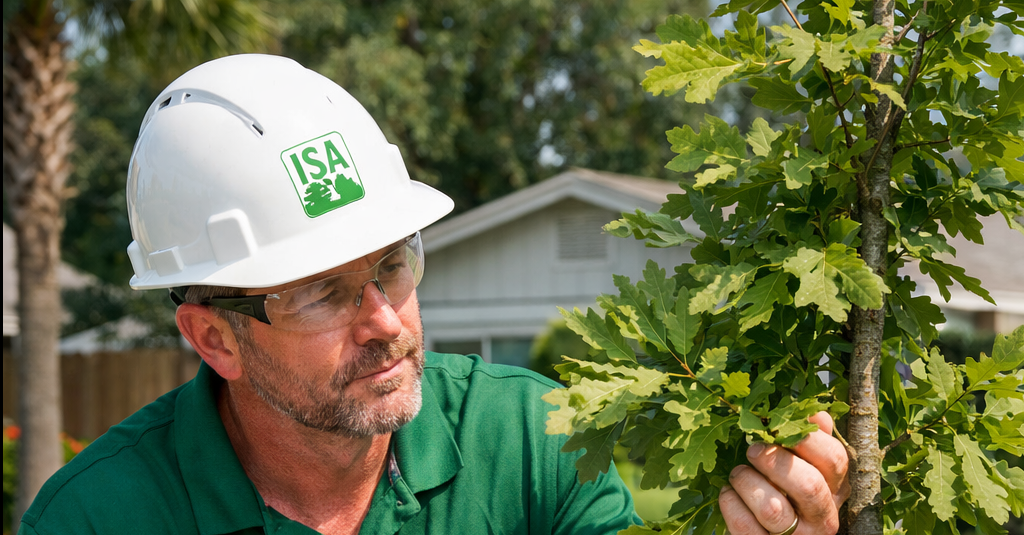
An arborist report is a written professional document, prepared by a qualified or ISA-Certified Arborist in Jacksonville FL, that records the condition of one or more trees and provides findings tied to a specific purpose. It’s different from a casual opinion or a verbal recommendation given during a routine service call. A formal report includes measurements, observations, photographs, and a clear conclusion, and it’s written to be read and relied upon by a third party: a city permit office, an insurance adjuster, a real estate attorney, or a court.
Common Reasons Jacksonville Property Owners Arborist Report
- Removal Permits: The City of Jacksonville, along with Clay, St. Johns, and Nassau counties, protects many trees under local ordinances. Removing a protected or large tree often requires documentation showing the tree is dead, hazardous, diseased, or otherwise meets the criteria for approved removal.
- Insurance Claims: After storm damage, insurers frequently want a written assessment distinguishing between sudden, covered damage and pre-existing decline, along with photos and measurements to support the claim.
- Real Estate Transactions: Buyers, sellers, or lenders sometimes request a tree assessment before closing, particularly for large or older trees close to structures.
- Construction and Development: Site plans near existing trees often require documentation of tree health and root protection zones before permits are approved.
- Neighbor or Boundary Disputes: When a tree’s condition, ownership, or overhanging limbs becomes a point of disagreement, a neutral, professional report can clarify the facts.
Step 1: Initial Consultation
The process starts with a phone call or online request describing the property, the tree or trees in question, and the reason for the report. This helps determine what type of assessment is needed. A permit-related report for a single backyard tree looks different from a multi-tree risk assessment for an insurance claim or a construction site.
Step 2: On-Site Visit and Tree Inventory
A certified arborist visits the property to examine each tree in question. This includes – measuring trunk diameter at standard height, estimating canopy spread and height, and recording the species. For multiple trees, each one is typically numbered and tracked individually so the report can reference specific trees clearly, which matters when a permit office or adjuster is reviewing the document against the property.
Step 3: Health and Risk Assessment
This is the core of the evaluation. The arborist examines the trunk, root flare, canopy, and visible roots for signs of decay, cavities, cracks, included – bark, dieback, pest activity, or disease. For risk-focused reports, the arborist also considers what the tree could strike if it failed, a house, a fence, a parking area, or a power line, since risk assessment weighs both the likelihood of failure and the consequence if it happens.
Step 4: Photographic Documentation
Photos are taken of the whole tree, close-ups of any defects, the surrounding site, and any relevant context, like proximity to structures or existing damage. For insurance and storm-related reports, photos documenting the specific damage are especially important, since they help the adjuster connect the report’s findings to what actually happened on-site.
Step 5: Written Report Preparation
Findings are compiled into a formal document. Depending on the purpose, this typically includes –
- the property address and date of inspection
- a description and measurements of each tree
- the arborist’s observations and health or risk findings
- supporting photographs, and a clear conclusion or recommendation
- removal, pruning, monitoring, or preservation.
Reports intended for permit submission are prepared to match the specific format and criteria the local jurisdiction requires.
Step 6: Permit Submission or Delivery
If the report supports a removal permit application, it’s submitted to the appropriate office, City of Jacksonville, Clay County, St. Johns County, or Nassau County, along with any other required paperwork. For insurance claims, the report typically goes directly to the property owner or their adjuster. For real estate or legal purposes, it’s usually delivered directly to the requesting party or their attorney.
How Long Does It Take?
For a single residential tree, the on-site visit itself usually takes well under an hour, and the written report can often be completed and delivered within a few business days. Larger properties with multiple trees, or reports requiring more detailed documentation for insurance or legal purposes, take longer, sometimes a week or more depending on the scope.
What Makes a Report Hold Up Under Review
Not every written assessment carries the same weight once it reaches a permit office, adjuster, or attorney.
- A report that will actually be relied upon needs to be specific and verifiable rather than general. That means each tree should be individually identified, ideally tied to a site plan or numbered diagram, with measurements recorded using standard methods so a reviewer can cross-check the findings against the property if needed.
- Vague language like “the tree appears unhealthy” carries far less weight than a report noting specific defects, their location on the tree, and how they relate to the applicable removal criteria.
- For reports supporting a City of Jacksonville or county permit application, it also matters that the arborist preparing the document understands exactly which criteria the reviewing office is looking for.
- A protected tree removal permit, for example, typically needs the report to address whether the tree is dead, dying, hazardous, diseased, or interfering with a permitted structure, not just a general statement about condition.
- Reports that don’t speak directly to these criteria are more likely to be sent back with requests for additional information, which slows down the whole process. This is one of the main reasons it’s worth working with an arborist who prepares reports for Jacksonville-area jurisdictions regularly, rather than someone unfamiliar with what a particular office expects to see, since that familiarity often means the difference between a report accepted on the first submission and one that bounces back for revisions.
What Affects the Cost?
Report cost generally depends on –
- the number of trees being assessed, the complexity of the findings
- whether specialized testing is needed, such as resistance drilling to check for internal decay, and
- the purpose of the report, since permit and legal documentation often require more detailed write-ups than a simple health check.
Bushor’s Tree Surgeons has a team of certified arborists who prepare arborist reports for Jacksonville homeowners and businesses across all of the reasons above, permit applications, storm damage claims, real estate transactions, and disputes. As we work regularly with the City of Jacksonville’s tree ordinance and the requirements in Clay, St. Johns, and Nassau counties, we know what local offices expect to see, which helps avoid back-and-forth delays. If your report is tied to a tree removal, we also handle the actual work once it’s approved, so there’s no gap between documentation and getting the tree safely down.
Frequently Asked Questions About Arborist Reports in Jacksonville, Florida
Do I need an arborist report to remove any tree?
Not always. Many smaller or unprotected trees can be removed without one. Protected or larger trees under Jacksonville’s ordinance, or those in Clay, St. Johns, or Nassau counties, typically require documentation to support a removal permit.
How much does an arborist report cost?
Cost varies with the number of trees and the purpose of the report. A single-tree permit report is typically less involved, and less costly, than a multi-tree commercial or legal assessment.
Can an arborist report help with an insurance claim?
Yes. A report documenting storm damage, tree condition, and photos can support a claim and clarify whether damage was sudden or pre-existing.
Who reviews arborist reports for permits in Jacksonville?
The City of Jacksonville’s tree protection office reviews reports submitted with removal permit applications; county offices in Clay, St. Johns, and Nassau counties handle reports for properties in their jurisdictions.
How long is an arborist report valid?
Tree conditions can change, especially after storms, so many jurisdictions and insurers expect a report to reflect a relatively recent inspection, often within the same season as the intended use.
Summary Checklist: Getting an Arborist Report in Jacksonville, Florida
| Situation | What to Check | What to Do |
| Removing a large or protected tree | City or county tree ordinance rules | Request a report before applying for a removal permit |
| Storm damage occurred | Photos and documentation of the damage | Schedule an inspection promptly for insurance purposes |
| Selling or buying a property with large trees | Tree health near structures | Request a pre-closing arborist assessment |
| Neighbor dispute over a tree | Ownership, condition, and boundary questions | Get a neutral, professional report |
| Multiple trees on a commercial site | Numbering and individual tree documentation | Ask for a full property tree inventory |
| Report needed for a permit application | Local format and criteria requirements | Confirm the report meets the reviewing office’s standards |
Final Advice
An arborist report turns a subjective opinion into documented, professional evidence, whether you’re applying for a permit, filing an insurance claim, closing on a property, or resolving a dispute. Working with an ISA-Certified Arborist like Bushor’s Tree Surgeons who are familiar with Jacksonville’s tree ordinance and the surrounding counties’ requirements helps the process move smoothly and gives whoever is reviewing the report confidence in its findings.