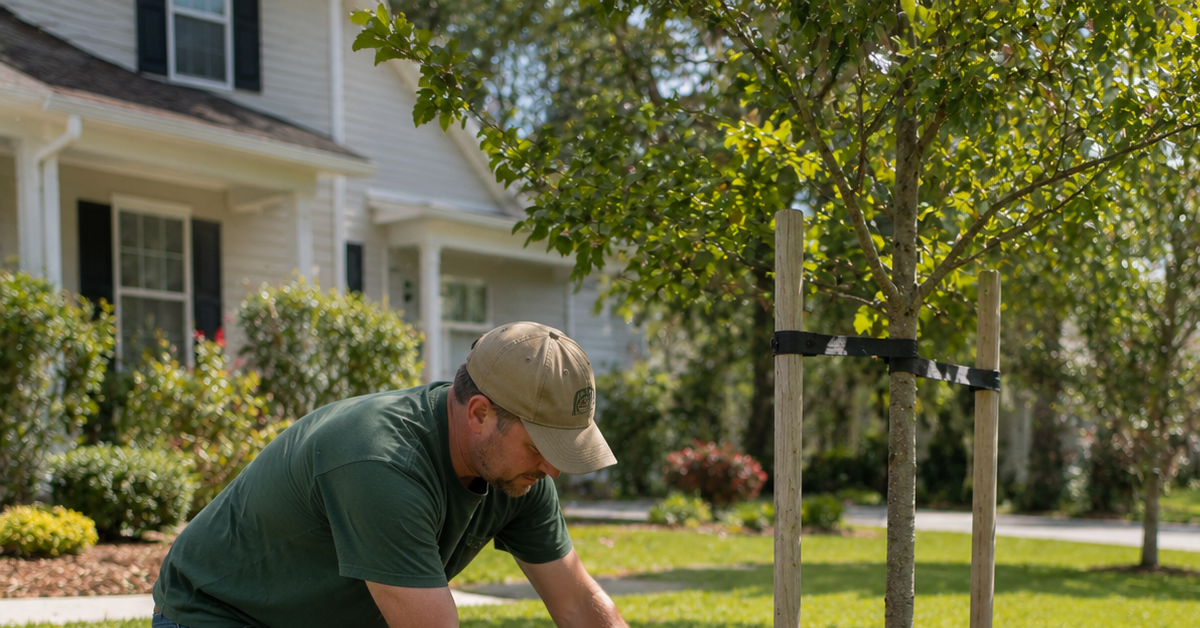
Key Takeaways:
- Species Selection: Always plant the right tree, in the right place, to account for Jacksonville’s unique soil and space.
- Proper Mulching: Maintain a donut shape with mulch to prevent trunk rot and retain moisture.
- Structural Pruning: Early intervention and regular thinning reduce the risk of storm-related limb failure.
- Hydration Needs: Deep, infrequent watering is superior to shallow daily misting for root development.
- Professional Health Checks: Annual inspections by certified arborists can catch disease before it becomes fatal.
Jacksonville is often referred to as a City in a Forest. From the historic canopy of Riverside to the salt-toughened greenery of Neptune Beach, our trees are the lungs of our community. However, maintaining a healthy urban forest in Northeast Florida requires more than just letting nature take its course. Our unique blend of sandy soil, high humidity, and seasonal storm pressure creates a specific set of requirements for tree longevity.
Essential Strategies for a Resilient Northeast Florida Landscape
Whether you are managing ancient live oaks or newly planted saplings, following a structured maintenance routine is the key to protecting your property value and ensuring safety. Here are nine essential maintenance tips specifically tailored for the Jacksonville environment.
1. Master the Art of Right Tree, Right Place
Maintenance actually begins before the tree is even in the ground. In Jacksonville, many homeowners face expensive removals later because a tree was planted too close to a foundation or power lines.
- Consider Mature Size: A young oak may look small now, but in 30 years, its root system and canopy will expand significantly.
- Soil Compatibility: Much of our soil is sandy and acidic. Ensure your chosen species, like the Southern Magnolia or Bald Cypress, can thrive in these conditions.
- Coastal Salt Tolerance: If you live near the Intracoastal or the ocean, choose species that can handle salt spray, such as the Saw Palmetto or Live Oak.
2. Implement Deep Watering Strategies
Jacksonville’s heat can be relentless, and sandy soil drains incredibly fast. Shallow watering with a lawn sprinkler often doesn’t reach the feeder roots located 12 to 18 inches underground.
- Deep Saturation: Use a soaker hose or a slow drip at the base of the tree. This encourages roots to grow downward, creating a more stable foundation against high winds.
- Timing: Water in the early morning to minimize evaporation and prevent the growth of fungus that thrives in warm, damp overnight conditions.
3. Use the Donut Mulching Method
Mulching is one of the best things you can do for a tree, provided it is done correctly. It regulates soil temperature, retains moisture, and keeps lawnmowers away from the trunk.
- Avoid the Volcano: Never pile mulch against the tree trunk. This traps moisture against the bark, leading to rot and pest infestations.
- The Donut Shape: Create a ring of mulch 2-4 inches deep, starting a few inches away from the trunk and extending to the drip line (the edge of the canopy).
4. Prioritize Structural Pruning
In a forest, trees prune themselves through competition. In a Jacksonville yard, they need human intervention. Regular pruning removes dead or diseased wood before it becomes a hazard.
- Airflow and Light: Thinning the canopy allows wind to pass through the tree more easily during a storm, reducing the sail effect that causes trees to topple.
- Safety Clearance: Keep branches at least 10 feet away from your roof to prevent structural damage and to discourage pests such as squirrels and roof rats from entering your home.
5. Fertilize Based on Soil Needs
Not every tree needs fertilizer, and over-fertilizing can actually stress a tree by forcing rapid growth that the root system can’t support.
- Soil Testing: Before applying nutrients, test your soil. Jacksonville soils are often deficient in manganese or magnesium, especially for palm trees.
- Slow-Release: Use high-quality, slow-release fertilizers that provide a steady stream of nutrients over several months rather than a sudden chemical spike.
6. Monitor for Local Pests and Disease
Our humidity is a breeding ground for various pathogens. Keep an eye out for changes in leaf color or bark texture.
- Common Threats: Be on the lookout for Aphids, Scale insects, and Ganoderma root rot.
- Early Detection: If you notice conks (mushroom-like growths) at the base of your tree, this is a sign of internal decay and requires an immediate professional assessment.
7. Protect the Critical Root Zone (CRZ)
The most common cause of tree death in developing Jacksonville neighborhoods is soil compaction.
- Avoid Heavy Machinery: Never Park cars or store heavy construction materials under the canopy of a tree. This crushes the tiny air pockets in the soil that roots need to breathe.
- Grading Changes: Adding or removing even a few inches of soil over the root zone can suffocate or dehydrate a mature tree.
8. Conduct Annual Pre-Storm Inspections
In Jacksonville, it isn’t a matter of if a storm will hit, but when. The best time to fix a hazardous tree is during the blue-sky months.
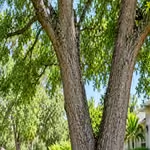
- Identify Weak Points: Look for V-shaped crotches (where two trunks meet) or heavy limbs overhanging your bedroom.
- Professional Eyes: An arborist can spot internal hollows or root rot that a homeowner might miss, allowing for preventative cabling or bracing.
9. Manage Tree Stress During Drought
During Florida’s dry spring months, trees undergo significant stress.
- Conserve Energy: Avoid heavy pruning during a drought, as the tree needs its leaves to produce energy to survive the heat.
- Mulch Check: Ensure your mulch layer is refreshed to help the soil retain whatever moisture it does receive.
For over 60 years, Bushor’s Tree Surgeons has been the premier choice for professional tree maintenance in Jacksonville. Located at 5525 St. Augustine Rd, we are a third-generation family business dedicated to the health and safety of Northeast Florida’s urban forest. Our team includes ISA Certified Arborists who specialize in everything from precision pruning and tree health care to 24/7 emergency storm response.
Bushor’s Tree Surgeons serve residential and commercial clients throughout Duval, St. Johns, and Clay counties with a commitment to transparent pricing and safety-first protocols. Whether you need an annual health check for your historic oaks or safe removal of a hazardous pine, we bring the expertise and specialized equipment to do the job right. Contact us today at (904) 789-8884 for a free estimate and let us help your landscape flourish.
Frequently Asked Questions by Homeowners in Jacksonville, FL
1. How often should I prune my trees in Jacksonville?
Most mature trees benefit from a professional pruning every 3 to 5 years, though faster-growing species or fruit trees may require annual attention.
2. What is the best mulch for Florida trees?
Pine bark, pine straw, or eucalyptus mulch are excellent local choices as they break down slowly and improve soil acidity.
3. Why are the leaves on my oak tree turning brown in the spring?
This is often Oak Anthracnose, a fungal disease common in Jacksonville springs. It usually looks worse than it is, but a professional check-up can confirm.
4. Can I prune my own large trees in Jacksonville?
If you cannot reach the branches from the ground, you should hire a professional. Working on ladders with saws is extremely dangerous and requires specialized rigging.
5. How much water does a newly planted tree need?
Newly planted trees generally need daily watering for the first few weeks, followed by 2-3 times a week for the first year until established.
6. Do I need to fertilize my palms differently in Jacksonville?
Yes. Palms have very specific micronutrient requirements (like potassium and magnesium). Using standard lawn fertilizer can actually cause a nutrient deficiency in palms.
7. Is it okay to top a tree to reduce its height?
No. Topping is a harmful practice that creates weak, fast-growing sprouts and leaves the tree vulnerable to decay and wind damage.
8. What should I do if my tree has a split trunk?
A split trunk is a major structural hazard. Contact an arborist immediately to discuss cabling and bracing options to save the tree.
Summary Checklist: Seasonal Tree Maintenance
| Condition | Risk Level | Recommended Action |
|---|---|---|
| Deadwood in the canopy | High | Remove dead or suspended limbs promptly to reduce falling branch hazards during wind events |
| Volcano mulching around the trunk | Moderate | Pull mulch back from the trunk to expose the root flare and reduce moisture-related decay and pest pressure |
| New construction activity nearby | Moderate to High | Inspect for root disturbance, soil compaction, and hidden structural stress caused by equipment traffic |
| Deep trunk cracks | Critical | Arrange immediate structural assessment, as significant cracking may indicate imminent failure risk |
| Encroaching power lines | High | Use qualified utility line-clearance professionals to safely manage electrical hazard exposure |
Final Advice
To maintain long-term tree health in Jacksonville, one must view a landscape not as a static backdrop, but as a dynamic ecosystem that requires consistent, informed intervention. The primary takeaway for any Northeast Florida property owner is the necessity of building structural and biological resilience well before the stresses of hurricane season or intense summer droughts arrive. Proper tree care begins with the “Right Tree, Right Place” philosophy to avoid future structural conflicts, followed by a lifelong commitment to soil health and hydration. Utilizing the “donut” mulching method and deep, infrequent watering cycles are critical steps in developing a robust root system capable of anchoring a tree during high-velocity wind events. Furthermore, structural pruning should be viewed as a preventative safety measure rather than a cosmetic luxury; by thinning the canopy and removing deadwood, you significantly decrease the “sail effect” and reduce the risk of catastrophic limb failure. Vigilance regarding local pests and diseases is equally vital, as early detection often marks the difference between a simple treatment plan and a complete removal. Ultimately, successful tree maintenance in our unique climate hinges on a partnership between the homeowner and the principles of arboriculture.
By implementing these nine essential tips, from protecting the critical root zone to conducting annual pre-storm inspections, you move beyond reactive disaster management toward a proactive model of environmental stewardship. A healthy urban canopy enhances air quality, lowers energy costs through natural shading, and provides a safer environment for the entire community. Achieving this balance requires a holistic understanding of how Florida’s sandy soils, high humidity, and extreme weather patterns interact with different tree species. Stewardship is an ongoing process of observation and adjustment, ensuring that the majestic oaks and palms of Jacksonville remain a legacy of strength and beauty for future generations.