July 22, 2026
A healthy redbay can go from green and thriving to completely dead in less than two months. Across Northeast Florida, laurel wilt disease is wiping out redbay, swampbay, sassafras, and avocado trees at an alarming rate. Because there is no practical cure once symptoms appear, recognizing the warning signs early is the only real defense you have.
Quick Answer: Laurel wilt is a deadly fungal disease caused by Raffaelea lauricola and spread by the invasive redbay ambrosia beetle. It attacks laurel-family trees such as redbay, swampbay, sassafras, and avocado, blocking water movement and causing rapid decline. A healthy redbay can die within just a few weeks of infection. The disease is widespread across Northeast Florida, including Duval, St. Johns, and Nassau Counties. There is no practical cure once a redbay is infected, making early detection, proper disposal of infected wood, and preventive treatment for high-value trees essential.
In This Article
- What laurel wilt is and which trees it kills
- How the redbay ambrosia beetle spreads it, step by step
- The early symptoms most homeowners miss
- Laurel wilt in backyard avocado trees
- Why moving firewood makes it worse
- What can and cannot be saved
- What to do if you suspect an infected tree
Key Takeaways
- Laurel wilt kills trees in the laurel family: redbay, swampbay, sassafras, and avocado.
- A healthy redbay can die within a few weeks of infection.
- The disease spreads through the redbay ambrosia beetle and through moved infected wood.
- Sawdust “toothpicks” pushed from the trunk and rapid one-sided wilting are early signs.
- There is no cure once a forest tree is infected; high-value trees can sometimes be protected preventively.
- Never move or store cut wood from a laurel-family tree.
Laurel Wilt by the Numbers
- The redbay ambrosia beetle is roughly 2 mm long, smaller than a grain of rice.
- A single infected beetle carries the fungus that can kill a mature redbay.
- Infected redbays often go from green to fully wilted in 4 to 8 weeks.
- The disease has spread across the Southeast since its US detection near Savannah in the early 2000s.
- Preventive fungicide injection (propiconazole) must be applied before infection and repeated periodically.
Why Laurel Wilt Is a Growing Threat in Northeast Florida
Redbay and swampbay are everywhere in Northeast Florida’s hammocks, wetland edges, and older Jacksonville yards. They thrive in the same moist, shaded ground that defines much of Duval and St. Johns County, which means the host trees and the beetle overlap almost perfectly here. Homeowners in Mandarin, Arlington, and the Beaches often don’t realize how many redbays line their property until the trees start dying in a wave. Avocado growers and backyard avocado owners face the same threat, since the tree shares the vulnerable laurel family. When one redbay dies on a street, neighboring laurels are frequently next, which makes early recognition a neighborhood concern, not just a single-tree problem.
What Is Laurel Wilt and Which Trees Does It Kill?
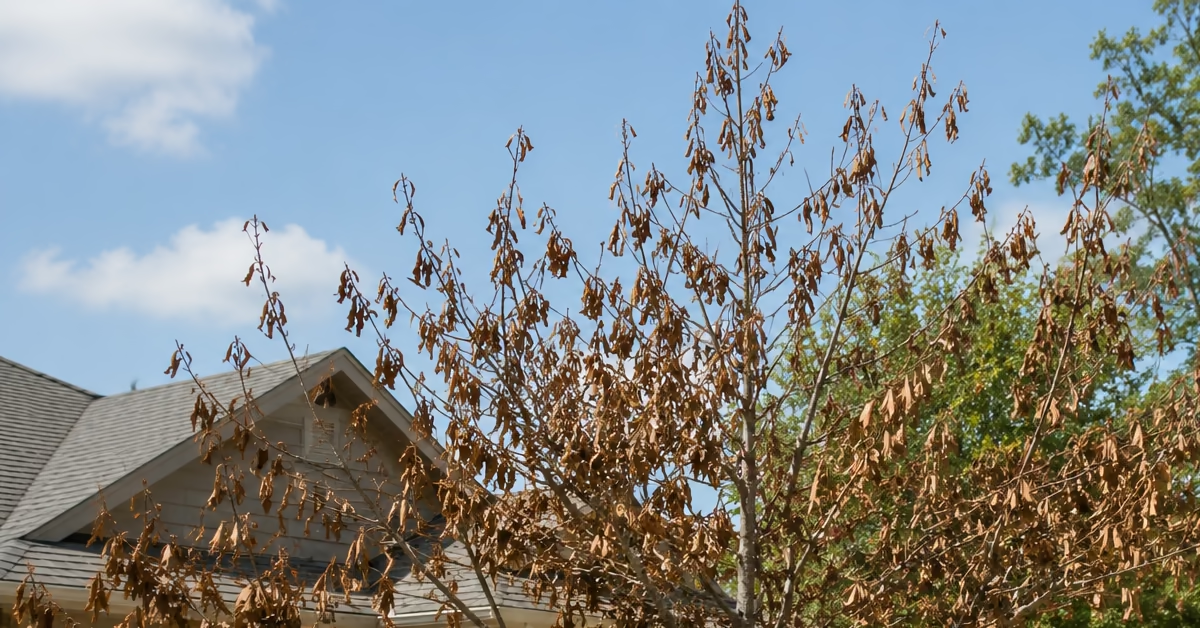
Laurel wilt is a vascular disease. The redbay ambrosia beetle bores into a tree and introduces the fungus Raffaelea lauricola, which the beetle farms for food. The tree fights back by plugging its own water-conducting vessels to wall off the fungus, and in doing so it cuts off water to its own canopy. The leaves wilt, brown, and die, often while still attached.
It targets the laurel family (Lauraceae): redbay, swampbay, silkbay, sassafras, pondberry, and cultivated avocado. According to the University of Florida IFAS Extension, laurel wilt has caused widespread redbay mortality across the Southeast and remains one of the most serious threats to laurel-family trees in the state. If you have a redbay or backyard avocado in Jacksonville, this is the disease to know.
How Does Laurel Wilt Spread?
The progression is predictable once you understand the cycle:
- The redbay ambrosia beetle bores into a healthy laurel-family tree.
- The beetle introduces the Raffaelea lauricola fungus into the wood.
- The fungus spreads through the tree’s water-conducting tissue.
- The tree blocks its own vascular system trying to contain it.
- Water flow stops, and the leaves wilt and die.
- New beetles emerge from the dying tree and attack nearby laurels.
There’s also a human-driven shortcut. Cut logs and firewood from infected trees carry both beetles and fungus to new areas, which is how laurel wilt jumps miles instead of yards. The USDA Forest Service and the Florida Department of Agriculture and Consumer Services both stress the same rule: do not move firewood. A redbay log tossed in a truck bed can seed an outbreak in a brand-new neighborhood.
What Are the Early Symptoms of Laurel Wilt?
| Symptom | What It Looks Like |
|---|---|
| One-sided canopy decline | Leaves wilt on one limb or section of the tree first |
| Brown leaves remain attached | Dead leaves stay on branches instead of falling |
| Sawdust toothpicks | Thin strands of compacted sawdust protrude from the bark |
| Beetle holes | Tiny round entry holes appear on the trunk and larger branches |
| Dark sapwood streaking | Brown to black staining is visible beneath the bark when a branch is cut |
The dark streaking beneath the bark is often the clearest sign of laurel wilt. Unlike drought stress, which usually causes gradual and uniform browning throughout the canopy, laurel wilt often causes one section of the tree to wilt and turn brown rapidly while leaves remain attached. When combined with sapwood staining and beetle activity, these symptoms strongly suggest a laurel wilt infection.
Laurel Wilt in Avocado Trees
Avocado deserves its own attention, because backyard avocado trees are popular across Jacksonville and the Beaches, and they are squarely in the laurel family.
Why It Matters: Avocado is economically significant statewide, and to a homeowner a mature, fruiting avocado is a high-value tree worth protecting. Unlike a wild redbay, an avocado is usually a candidate for preventive care.
Early warning signs: Watch for wilting or browning that starts in one section of the canopy, leaves that hang on after dying, and any sawdust toothpicks or fine boring dust at the trunk. Green fruit may shrivel as water flow fails.
Prevention, not rescue: A healthy avocado can sometimes be protected with preventive propiconazole injection applied by a licensed professional, but it must be done before infection and repeated on schedule. Once an avocado is symptomatic, treatment rarely saves it. If you have a valued avocado near redbays that are showing symptoms, that is exactly the situation to ask our tree health care team about preventive options.
Can a Tree With Laurel Wilt Be Saved?
For wild and yard redbays, realistically no. Once symptoms show, the tree is past saving, and the priority shifts to safe removal before it becomes a beetle nursery for the rest of the block.
For high-value avocado trees or prized specimen laurels not yet infected, preventive fungicide injection with propiconazole, applied through our tree health care program, can offer protection. An honest assessment from our certified arborists is the starting point for either path.
When removal is the answer, it has to be done right. Infected wood should be chipped small or disposed of locally, never hauled across town or saved as firewood. Our tree removal crews handle laurel-family trees with disposal that contains the beetle rather than spreading it, and stump grinding finishes the job. If a dead redbay is already brittle and threatening a structure, our 24/7 emergency tree service can take it down before it fails.
What We Commonly See in the Field
One of the most common calls we get starts with “half my tree died overnight.” With redbay, that’s almost literal. The pattern competitors rarely explain: homeowners often try to “save” the tree by pruning out the wilted limb, which does nothing for a vascular disease already in the trunk and can spread contaminated sawdust in the process. The other thing we see constantly is the firewood mistake. A neighbor takes the cut redbay logs for the fire pit, and a season later their own redbays start dying. We’ve watched laurel wilt move down entire streets in Mandarin and the Arlington area this way, one woodpile at a time. If you’re not certain what species a wilting tree is, treat it as suspect and have it identified before anyone cuts it.
What Homeowners Should Do Next
- Identify your laurels. Redbay, swampbay, sassafras, and avocado are the trees at risk.
- Walk the property and look for one-sided wilting and sawdust toothpicks.
- If you suspect infection, do not prune, cut, or move any wood. Call for identification first.
- For healthy high-value avocados or specimen laurels nearby, ask about preventive injection.
- Schedule professional removal and local disposal for confirmed infected trees.
Common Questions About Laurel Wilt Disease
What trees are most vulnerable to laurel wilt in Florida?
Members of the laurel family (Lauraceae): redbay and swampbay are hit hardest, followed by sassafras, silkbay, pondberry, and cultivated avocado. Redbay and swampbay are the most common hosts in Northeast Florida yards.
Can a dead redbay tree spread laurel wilt?
Yes. A dead or dying redbay is a beetle nursery. Emerging beetles carry the fungus to nearby laurels, and the wood itself spreads the disease if moved. Prompt removal and local disposal reduce that risk.
Does removing the tree stop the disease?
Removal of an infected tree reduces local beetle pressure and protects neighbors, but it does not cure laurel wilt elsewhere. The fungus and beetle persist in the area, so nearby laurels still need monitoring and, where valuable, preventive treatment.
Is laurel wilt dangerous to humans or pets?
No. The fungus and beetle only affect laurel-family trees. The danger to people is indirect: a dead, brittle redbay near a structure becomes a falling hazard and needs timely removal.
Will laurel wilt spread to my oak or pine trees?
No. It only affects the laurel family. Your oaks, pines, and maples are not hosts, though they face other Northeast Florida threats.
Can I treat my avocado tree to prevent laurel wilt?
Yes, preventively. Propiconazole injection by a licensed applicator can protect a healthy avocado, but it must be applied before infection and repeated periodically. It cannot reverse an active infection.
What should I do with the wood from a removed redbay?
Keep it local and process it small. Chip it on site or dispose of it through your hauler. Never transport laurel-family logs or save them as firewood, since that is the fastest way to spread the disease.
How do I know if it’s laurel wilt and not drought stress?
Drought browns the whole canopy gradually and evenly. Laurel wilt usually starts on one limb or side, the leaves stay attached, and the sapwood underneath shows dark streaking. A certified arborist can confirm it.
How fast can laurel wilt kill a tree?
A redbay tree can decline and die within 4 to 8 weeks after infection. Once symptoms appear, the disease progresses rapidly, making early detection critical.
Catch It Early, Protect the Rest
Laurel wilt moves fast, but the homeowners who limit the damage are the ones who recognize that first wilting limb for what it is and act before the beetles move next door. Early identification protects your other laurels and your neighbors’ trees, too.
If you’ve noticed sudden browning, one-sided wilting, or sawdust toothpicks on a redbay, swampbay, or avocado tree, don’t wait. Laurel wilt can kill a healthy tree in weeks. Schedule a professional inspection with Bushor’s Tree Surgeons to identify the problem early and protect nearby trees before the disease spreads.