May 6, 2026
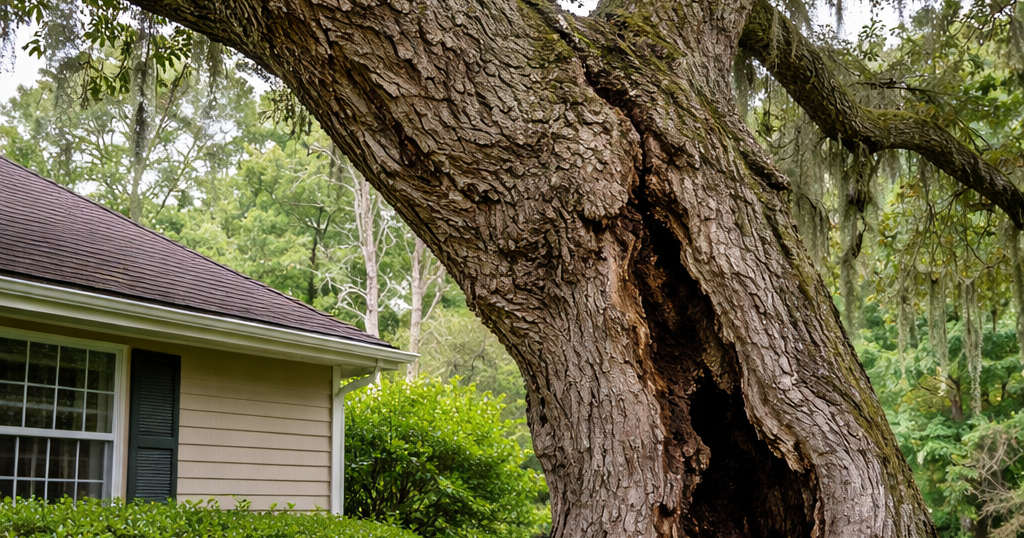
In North Florida, the Southern Live Oak (Quercus virginiana) is more than just a tree; it is a cultural icon. These majestic giants, some pre-dating the founding of Jacksonville and St. Augustine, define our landscape with their sweeping canopies and moss-draped limbs. However, as these trees reach maturity, often spanning 100 to 300 years, they enter a complex biological phase where their needs change and their vulnerabilities increase. A mature live oak is a self-contained ecosystem, but urban development, changing weather patterns, and specific regional pathogens can threaten its survival. This guide provides a deep dive into the common problems found in mature live oaks, offering North Florida homeowners the expert knowledge required to identify, manage, and preserve these irreplaceable natural assets.
Key Takeaways
- Mature live oaks face unique physiological challenges compared to younger trees, requiring specialized ‘legacy’ care.
- Soil compaction from urban development is the leading hidden cause of mature oak decline in North Florida.
- Distinguishing between natural semi-deciduous leaf drop and pathogens like Oak Wilt is critical for accurate diagnosis.
- Structural mitigation through cabling and bracing can often save large limbs that would otherwise be removed.
- The North Florida climate, characterized by sandy soil and high-intensity storms, dictates specific root and canopy management strategies.
- Proactive root collar excavation can reverse decades of decline caused by improper planting or mulching.
The Biological Reality of Mature Live Oaks
Understanding the problems of mature live oaks begins with acknowledging their unique biology. Unlike the rapid growth phase of youth, a mature oak focuses its energy on maintenance and defense. Quercus virginiana is remarkably resilient, but its massive size creates significant mechanical and metabolic demands. In North Florida’s sandy coastal plains, these trees develop sprawling, shallow root systems designed to anchor them against hurricanes. When these systems are disrupted or when the tree is forced to battle local pathogens, the decline can be slow and subtle, often going unnoticed until a major limb fails or the canopy thins significantly.
Environmental Stressors Specific to North Florida
North Florida offers a unique set of environmental challenges that directly impact the health of older oaks. While these trees are adapted to the region, the shift from natural forest to suburban environment has introduced stressors that legacy oaks are ill-equipped to handle without intervention.
Urban Soil Compaction and Root Suffocation
The most pervasive issue in Jacksonville and the surrounding areas is soil compaction. Mature live oaks require a delicate balance of oxygen and moisture in the upper 12 to 18 inches of soil. Construction of driveways, heavy lawn equipment, and even consistent foot traffic can crush the air pockets in the soil, effectively suffocating the fine feeder roots. This leads to ‘dieback’, where the tips of the highest branches begin to die because the roots cannot supply enough water and nutrients to the extremities.
Hydrological Extremes: Drought and High Water Tables
Our region experiences a ‘feast or famine’ cycle with water. During the intense summer heat, drought can lead to cavitation in the tree’s vascular system. Conversely, the high water table in coastal areas can lead to stagnant, anaerobic conditions during the rainy season. Mature oaks are particularly sensitive to sudden changes in the water table, which often occur during nearby land development or drainage modifications.
Wind Loading and Hurricane Resistance
While live oaks are famous for surviving hurricanes, mature specimens are often victims of their own success. Their massive, horizontal limbs catch the wind like sails. If a tree has internal decay (heart rot) or included bark (where two stems grow together), the mechanical stress of a storm can cause catastrophic failure. Understanding the USDA Forest Service data on oak resilience helps arborists design thinning strategies that allow wind to pass through the canopy safely.
Pathogenic Threats: Identifying Oak Diseases
Pathogens are often opportunistic, attacking mature oaks that are already stressed by environmental factors. In North Florida, three primary diseases dominate the diagnostic landscape for older specimens.
Oak Wilt (Bretziella fagacearum)
Oak Wilt is an aggressive fungal disease that is increasingly appearing in the Southeast. It spreads through root grafts where the roots of neighboring oaks touch and fuse, and by sap-feeding beetles. In mature live oaks, the decline can be rapid. The fungus clogs the xylem, and the tree effectively dies of thirst despite having adequate water. Identifying the ‘bronzing’ of leaves is the first step in a race against time to save the tree and its neighbors.
Bacterial Leaf Scorch (BLS)
Often mistaken for drought stress, BLS is caused by the bacterium *Xylella fastidiosa*. It is spread by leafhoppers and causes a slow, chronic decline. You will notice a ‘halo’ of yellow or brown at the edges of the leaves in late summer. While not immediately fatal like Oak Wilt, BLS weakens the tree’s immune system, making it vulnerable to wood-boring insects and secondary fungi.
Hypoxylon Canker: The Symptom of Stress
Hypoxylon Canker is the ultimate ‘stress indicator.’ This fungus lives harmlessly on many trees but becomes pathogenic when the tree is severely stressed (usually by drought or root damage). It manifests as large, crusty patches on the limbs or trunk. Once these fungal mats appear, it indicates that the tree’s sapwood is being digested by the fungus, often signaling that the tree is beyond saving if the coverage is extensive.
Structural Failures in Massive Canopies
As a live oak grows, its structural geometry changes. What was a sturdy branch in a 50-year-old tree can become a multi-ton liability in a 200-year-old tree. Managing this weight is the key to legacy tree preservation.
Included Bark and Co-Dominant Stems
Included bark occurs when two branches grow at a tight ‘V’ angle. Instead of the wood fusing together, bark is trapped between them, creating a structural wedge that can split the tree apart. In mature oaks, these unions are often the point of failure during high winds. A certified arborist can identify these weak points and install high-strength steel cables or bracing rods to redistribute the load.
Over-Extended Limbs and Leverage Forces
The ‘lateral reach’ of a live oak is its most beautiful feature, but physics eventually takes its toll. Over-extended limbs can suffer from ‘summer branch drop’ or fail during heavy rains. Proper pruning for a mature oak does not mean removing the limb; it means ‘weight reduction pruning,’ where the arborist removes small amounts of foliage from the very end of the limb to reduce the leverage force on the attachment point.
Diagnostic Checklist for Homeowners
Early intervention is the only way to prevent the loss of a legacy tree. Use this diagnostic matrix to evaluate the health of your mature live oak.
| Observation Area | Warning Signs | Likely Issue | Recommended Action |
|---|---|---|---|
| Root Flare | Mulch or soil piled against the trunk, no visible flare | Root rot, girdling roots, poor oxygen flow | Request root collar excavation (RCX) |
| Upper Canopy | Dead branches at the top of the tree (stagheading) | Root stress, soil compaction, and possible disease | Soil testing and nutrient analysis |
| Trunk Bark | Oozing sap, dark patches, or fungal growth | Canker disease or root infection | Immediate arborist inspection |
| Leaf Color | Yellowing, browning edges, or sudden decline | Leaf scorch, nutrient deficiency, or disease | Leaf tissue testing |
| Branch Unions | Cracks or weak connections between stems | Included bark and structural weakness | Install cabling or bracing |
Modern Preservation Strategies
Modern arboriculture offers several advanced techniques to extend the life of mature oaks that were previously thought to be in terminal decline. The University of Florida IFAS provides extensive research on these preservation methods.
Air-Spade Technology and Root Decompaction
By using supersonic air tools, arborists can remove soil from around the roots without damaging the delicate root hairs. This allows for the correction of girdling roots that have begun to wrap around the trunk, effectively strangling the tree’s vascular system.
Bio-Stimulants and Mycorrhizal Inoculation
Instead of traditional fertilizers that can cause rapid, weak growth, mature oaks benefit from ‘soil amendments’ like biochar and mycorrhizal fungi. These improve the soil’s natural biology, helping the tree’s own roots absorb nutrients more efficiently in our sandy North Florida soil.
Preservation Pruning vs. Standard Trimming
For a legacy oak, pruning should be ‘surgical.’ The goal is to remove the minimum amount of live tissue while achieving the maximum reduction in wind load and weight. This requires an arborist who understands the long-term energy budget of an older tree.
Frequently Asked Questions
My live oak is losing all its leaves in the spring. Is it dying?
Live oaks are semi-deciduous. In North Florida, they typically drop their old leaves in late February through March as new buds emerge. If the leaf drop is uniform and new green growth is visible, it is usually a healthy natural cycle rather than a disease.
How do I recognize Oak Wilt versus simple drought stress?
Oak Wilt (Bretziella fagacearum) is a fungal pathogen that blocks the tree’s water-conducting vessels. In mature specimens, symptoms include rapid wilting, browning of leaves from the edges inward, and fungal mats under the bark. It is highly contagious through root grafts and requires immediate professional isolation.
How often does a mature live oak actually need pruning?
Pruning frequency depends on health, but generally, a mature live oak should be inspected every 3 to 5 years. Pruning should focus on ‘structural thinning’ to reduce wind resistance and ‘weight reduction’ on long horizontal limbs to prevent catastrophic failure during storm season.
Is the Spanish moss on my oak tree killing it?
Ball moss and Spanish moss are epiphytes, not parasites. They do not take nutrients from the tree. However, in extreme cases, heavy moss loads can shade out interior buds or add significant weight to weakened branches. Removal is typically recommended only for aesthetic preference or weight management.
What is root collar excavation and does my old oak need it?
Root collar excavation (RCX) involves using high-pressure air tools to remove excess soil and mulch from the base of the tree. This exposes the flare where the trunk meets the roots. For mature oaks, this is vital because buried flares lead to rot and girdling roots that can slowly suffocate the tree.
Protecting Jacksonville’s Legacy Trees Starts with Early Action
Preserving a mature live oak is an act of stewardship for the North Florida environment. These trees are not merely landscaping; they are historical markers that provide cooling, habitat, and character to our communities. By recognizing the early warning signs of disease and structural fatigue, you can ensure your legacy trees remain standing for another century. For expert diagnostic assessments and specialized preservation services, trust the ISA Certified Arborists at Bushor’s Tree Surgeons to provide the professional care your property deserves.