April 13, 2026
Living in St. Johns County means enjoying beautiful beaches, sunny skies, and lush green spaces. But coastal living also brings unique challenges for tree care, like salty air, sandy soil, and intense summer storms. Choosing and maintaining the right trees for this environment can mean the difference between a thriving landscape and one that struggles to survive.
In this comprehensive guide from Bushor Tree Surgeons, we’ll explore the best trees for Florida’s coastal climate, how to care for them year-round, and practical tips to protect your property from storm damage and salt stress.
At Bushor Tree Surgeons, we’ve helped St. Johns County homeowners protect their coastal trees for decades, from historic St. Augustine to modern Nocatee communities.
Understanding Florida’s Coastal Climate
St. Johns County sits along Florida’s Atlantic coast, where warm temperatures, sea breezes, and high humidity shape the local ecosystem. While this subtropical environment supports a wide range of species, it also presents key challenges:
- Salt exposure: Sea spray and brackish groundwater can damage salt-sensitive species.
- Sandy soil: Drains quickly but holds few nutrients.
- High winds: Frequent storms and hurricanes require trees with flexible, deep-rooted structures.
- Intense sun: Prolonged heat and UV exposure stress delicate foliage.
The goal for coastal tree care is to select species that can tolerate salt, wind, and drought while still providing shade, beauty, and erosion control.
Expert Tip: Avoid planting salt-sensitive trees like maples or azaleas within a mile of the ocean; even windblown salt can damage their leaves.
Native Trees That Thrive in St. Johns County
Native trees are naturally adapted to the local soil, weather, and wildlife. The Florida Native Plant Society recommends prioritizing native species to support local pollinators and ensure your landscape can handle Florida’s seasonal extremes without excessive irrigation.
Top native performers include:
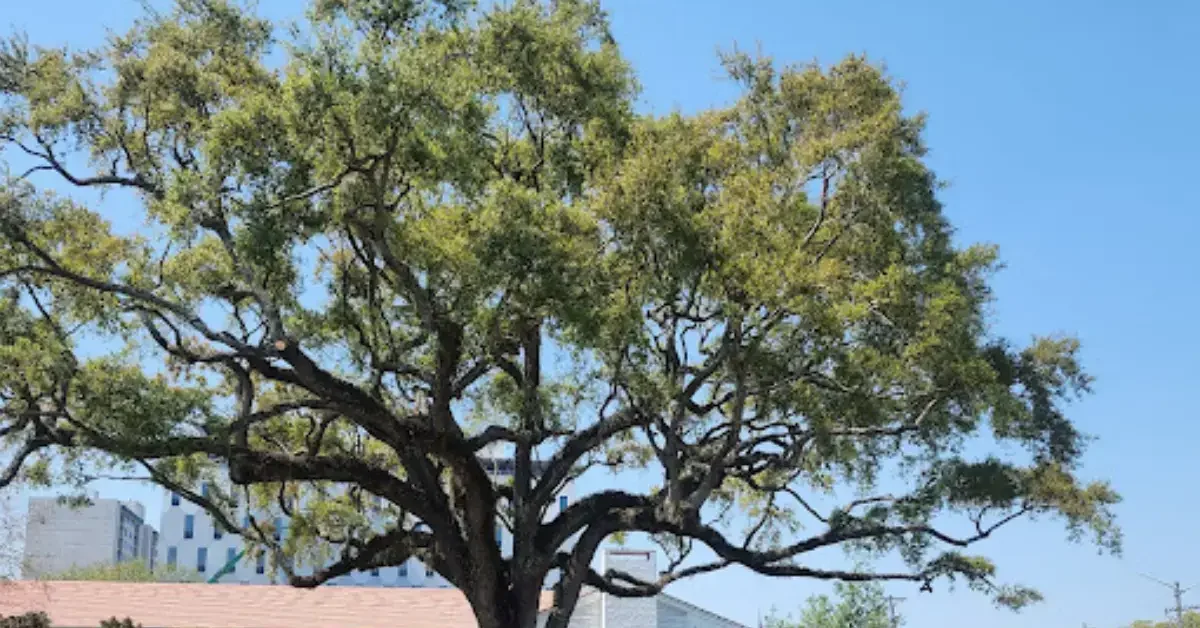
1. Live Oak (Quercus virginiana)
A Florida classic, the live oak is prized for its strength and wide canopy. It withstands hurricanes, thrives in sandy soil, and provides excellent shade.
Benefits:
- Extremely wind-resistant
- Supports wildlife habitats
- Long lifespan and low maintenance
2. Southern Magnolia (Magnolia grandiflora)
Known for its glossy leaves and large white blooms, this evergreen is both beautiful and hardy. It tolerates moderate salt and heat.
Best use: Accent tree for front yards or property borders.
3. Slash Pine (Pinus elliottii)
A tall, fast-growing native pine that’s ideal for coastal windbreaks. Its deep roots make it storm-tolerant and suitable for poor, sandy soils.
Tip: Avoid overwatering; pines prefer drier soil conditions.
4. Cabbage Palm (Sabal palmetto)
Florida’s state tree and a coastal favorite. It’s naturally resistant to wind and salt, making it perfect for beachfront properties.
Fun fact: The cabbage palm can survive complete saltwater inundation during storms.
5. Red Cedar (Juniperus virginiana var. silicicola)
A hardy evergreen that thrives in salty air and poor soil. Its dense canopy makes it an excellent windbreak and privacy screen.
Salt-Tolerant Trees for Coastal Yards
If you live within a few miles of the coast, salt spray is unavoidable. Planting salt-tolerant trees ensures survival even in harsh seaside conditions.
Top salt-tolerant picks:
- Sea Grape (Coccoloba uvifera): Iconic along Florida beaches; thrives in salty winds. According to the University of Florida IFAS Extension, Sea Grapes are highly salt-tolerant and serve as a primary stabilizer for Florida’s coastal dunes.
- Buttonwood (Conocarpus erectus): Great for hedges and shoreline stabilization.
- Silver Buttonwood: Adds silvery foliage color and tolerates heavy salt exposure.
- Geiger Tree (Cordia sebestena): Bright orange flowers and strong resistance to sea spray.
These species adapt naturally to the elements, reducing the need for fertilizers or frequent watering.
Best Shade Trees for Coastal Properties
Shade is essential in Florida’s warm climate. Coastal homeowners should look for broad, wind-tolerant species that can handle full sun.
Excellent shade options:
- Live Oak: The gold standard for shade and hurricane strength.
- Mahogany (Swietenia mahagoni): Elegant with wide canopies and deep roots.
- Gumbo Limbo (Bursera simaruba): Nicknamed the “tourist tree” for its peeling red bark; thrives in sandy soil.
- Sycamore (Platanus occidentalis): Large, fast-growing, and tolerant of salt and wind.
These trees provide cooling shade, reduce energy costs, and enhance curb appeal.
Flowering Trees for Color and Curb Appeal
Coastal landscapes don’t have to be all palms and pines. Flowering trees add beauty, color, and seasonal interest to Florida yards.
Top picks:
- Crape Myrtle (Lagerstroemia indica): Vibrant summer blooms; drought-tolerant and low maintenance.
- Tabebuia (Tabebuia aurea): Striking yellow flowers that thrive in coastal heat.
- Jacaranda (Jacaranda mimosifolia): Purple blooms and light shade canopy.
- Frangipani (Plumeria spp.): Tropical flowers with a compact size for small yards.
Planting a mix of flowering and evergreen species creates a landscape that looks great year-round.
Palms That Perform Well in St. Johns County
No Florida coastal landscape is complete without palms. The key is choosing species that can withstand salt, humidity, and wind.
Recommended palms:
- Sabal Palmetto: Native and nearly indestructible.
- Windmill Palm (Trachycarpus fortunei): Cold-hardy and compact for smaller yards.
- Pindo Palm (Butia capitata): Slow-growing, salt-tolerant, and produces edible fruit.
- Sylvester Palm (Phoenix sylvestris): Stately appearance and good salt resistance.
Regular fertilization and inspection help palms stay vibrant and disease-free.
Tree Care Tips for Coastal Homeowners
Proper care ensures your trees remain strong and healthy despite the coastal elements.
Essential maintenance practices:
- Deep watering: Encourage deep root growth to anchor trees during storms.
- Mulching: Helps retain moisture and moderate soil temperature.
- Soil enrichment: Add compost or organic matter to improve sandy soils.
- Pruning: Remove weak or crossing branches to reduce storm damage.
- Fertilization: Use slow-release fertilizer with magnesium and potassium to combat salt stress.
Schedule professional pruning and soil care at least once a year to maintain structure and resilience.
Protecting Trees from Storm Damage
Hurricane season poses the greatest threat to coastal trees. Preventive measures can protect your property and reduce cleanup costs.
Storm prep checklist:
- Inspect trees for cracks, leaning, or decayed limbs.
- Remove weak or overextended branches before hurricane season.
- Avoid topping or over-pruning.
- Stake young trees securely but allow natural movement.
- Work with certified arborists for large removals or canopy thinning.
After storms, avoid DIY cutting of damaged trees; hidden tension can cause serious injury.
Environmental Benefits of Coastal Trees
Healthy coastal trees offer far more than shade. They protect communities and ecosystems.
Benefits include:
- Reducing coastal erosion and storm runoff
- Filtering pollutants from air and water
- Providing habitat for birds and pollinators
- Enhancing property value and aesthetics
Native trees, in particular, play a vital role in stabilizing sand dunes and supporting local wildlife.
Professional Tree Care in St. Johns County
Caring for trees in coastal environments requires local expertise. Bushor Tree Surgeons offers specialized services across St. Augustine, Nocatee, Ponte Vedra, and surrounding areas.
Our services include:
- Tree planting and selection advice
- Professional pruning and shaping
- Disease and pest management
- Storm preparation and emergency response
- Fertilization and soil improvement programs
Their certified arborists combine science-backed care with decades of local experience to ensure your coastal trees stay healthy and storm-ready.
Choosing the Best Trees for Coastal Landscapes in St. Johns County
Selecting the right trees is one of the most important steps in creating a landscape that lasts. In St. Johns County’s coastal climate, the wrong species can struggle with salt burn, weak roots, or storm breakage, while the right ones can thrive for decades with minimal maintenance.
Key factors to consider when choosing coastal trees:
- Salt tolerance: Look for species that can handle both salt spray and brackish groundwater. Cabbage palms, sea grapes, and buttonwoods are top performers.
- Root depth and stability: Deep-rooted trees like live oaks and slash pines withstand high winds far better than shallow-rooted ornamentals. The Arbor Day Foundation notes that trees with a central leader and balanced canopy are significantly more resilient during high-wind events.
- Canopy structure: Select trees with flexible branches and balanced crowns to reduce wind resistance.
- Growth size: Match tree size to available space. Plant large species well away from roofs, driveways, and power lines.
- Maintenance needs: Choose trees that align with how much care you’re able to provide. Native species typically need less pruning and fertilizer.
Expert Tip: Visit established landscapes in coastal communities like Ponte Vedra Beach or Vilano to see how mature coastal trees perform in real conditions before planting new ones on your property.
Frequently Asked Questions
What trees grow best near the ocean in Florida?
Trees like live oaks, cabbage palms, buttonwoods, and sea grapes perform best near the ocean in Florida. These species are naturally salt-tolerant, wind-resistant, and thrive in sandy coastal soils, making them ideal for properties in St. Johns County and Northeast Florida.
Can I plant fruit trees near the Florida coast?
Yes, but choose salt-tolerant varieties such as guava, fig, and pomegranate. Young fruit trees need protection from direct salt spray and benefit from regular watering to flush excess salt from the root zone.
How do I protect coastal trees from salt damage in Florida?
Rinse foliage with fresh water after coastal storms to remove salt residue. Use mulch around the base to retain moisture and improve soil health, and make sure your property drains well to prevent salt buildup in the soil.
When is the best time to plant trees in St. Johns County, FL?
Fall and early spring are the best seasons for planting new trees in St. Johns County. Cooler temperatures and steady rainfall help roots establish before the summer heat, giving your trees a stronger start.
Should I hire a certified arborist for coastal tree care in Florida?
Yes. Local certified arborists understand Florida’s unique climate, sandy soils, and salt exposure. Professional guidance ensures proper planting, pruning, and fertilization to keep coastal trees healthy and resilient year-round.
Schedule Your Coastal Tree Care Consultation Today
Tree care in St. Johns County requires a balance of beauty and resilience. Choosing the right species and providing consistent care helps your trees withstand salt, sun, and storms while adding long-term value to your property.
Bushor Tree Surgeons proudly helps homeowners across Northeast Florida maintain healthy, hurricane-ready trees that thrive in coastal conditions. Schedule a professional inspection or custom coastal care plan in St. Johns County today to protect your landscape for years to come.