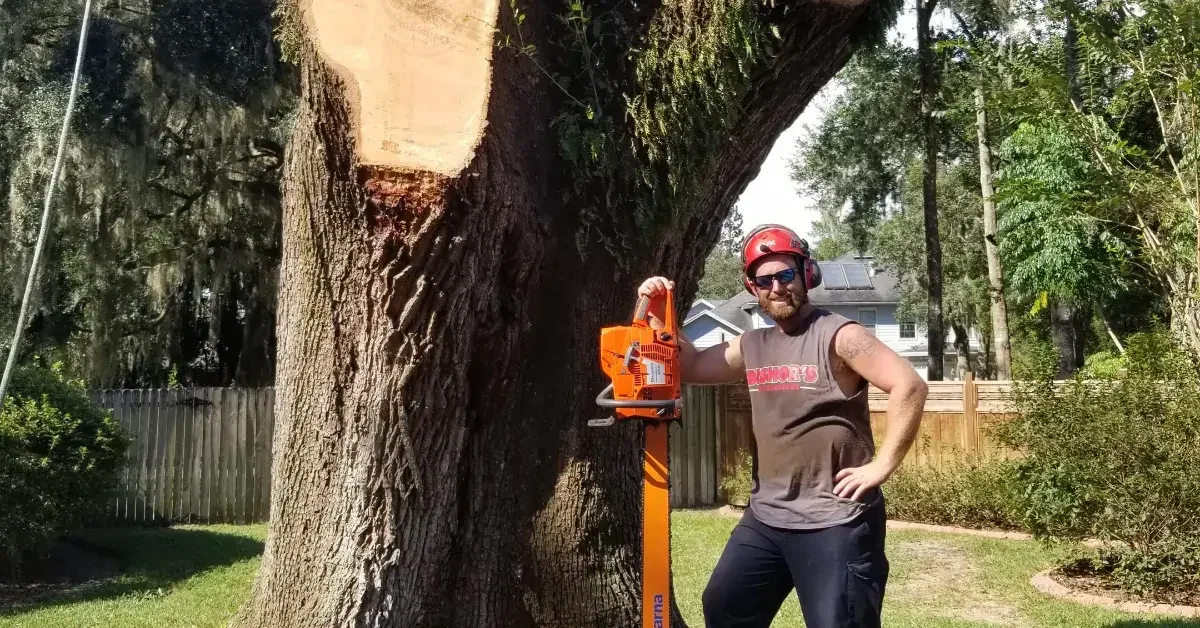
Pruning is one of the most important steps in keeping trees healthy and beautiful, but when done wrong, it can cause lasting damage. In Jacksonville’s humid climate, where storms and heat stress are common, improper pruning can weaken branches, invite disease, or even kill a tree.
Serving homeowners across Jacksonville, Ponte Vedra, and St. Johns County, Bushor Tree Surgeons provides professional pruning for Florida’s challenging climate.
In this comprehensive guide from Bushor Tree Surgeons, we break down the most common tree pruning mistakes homeowners make, explain how to avoid them, and share professional techniques to keep your landscape safe and thriving.
The Importance of Proper Tree Pruning for Healthy Growth
Tree pruning does more than shape your landscape; it’s essential for long-term tree health, safety, and structure. Done correctly, pruning improves airflow, removes weak limbs, and directs growth. Done poorly, it stresses the tree and increases the risk of decay or storm failure.
Benefits of proper pruning:
- Strengthens branch structure and reduces storm damage
- Encourages healthy new growth and flowering
- Prevents disease by removing infected wood
- Improves sunlight penetration and air circulation
- Enhances the overall appearance and balance of the canopy
Because Jacksonville experiences heavy rainfall and tropical storms, the right cuts at the right time make all the difference in protecting your property.
Mistake #1: Topping Trees to Control Height
Topping is the most damaging pruning mistake. It involves cutting the top portion of a tree to reduce its height. As noted by Purdue University Forestry, this practice leads to ‘epicormic’ sprouts, weakly attached shoots that grow rapidly and are far more likely to break during Jacksonville’s storm season.
Why it’s harmful:
- Creates large wounds that invite pests and disease
- Leads to weak, fast-growing sprouts
- Ruins the tree’s natural shape and structure
- Shortens the tree’s lifespan dramatically
Better alternative:
Ask an arborist about crown reduction instead. This controlled method removes select limbs to reduce height safely without harming the tree’s stability or form.
Mistake #2: Over-Pruning or “Lion-Tailing”
Over-pruning happens when too many interior branches are removed, leaving the canopy thin and bare. This is often called “lion-tailing.” It makes trees look uneven and increases stress.
Problems caused by over-pruning:
- Reduces the tree’s ability to produce energy through photosynthesis
- Exposes inner bark to sunscald and heat damage
- Weakens branch structure and increases storm vulnerability
Best practice:
Never remove more than 20–25% of a tree’s live canopy in a single season. The goal is balance, not drastic thinning.
Mistake #3: Making Flush Cuts Against the Trunk
Cutting branches too close to the trunk damages the branch collar, a natural protective tissue that seals wounds. Flush cuts remove this layer, exposing the tree to decay. The University of Florida IFAS Extension explains that trees don’t heal like humans; they ‘compartmentalize’ wounds, and a cut that stays outside the branch collar is vital for this process.
What to do instead:
- Cut just outside the branch collar, leaving a small stub for proper healing.
- Avoid cutting too far out (no stub cuts either).
- Use clean, sharp tools for precise cuts.
Proper pruning helps trees close wounds quickly, minimizing infection risk.
Mistake #4: Ignoring the Right Season
Pruning at the wrong time of year can stress trees and interfere with growth cycles. In Jacksonville’s warm, humid climate, timing is everything.
Best seasons to prune:
- Late winter to early spring: Ideal for structural pruning while trees are dormant.
- Late summer to early fall: Best for light shaping and removing deadwood.
Avoid pruning:
- During spring growth spurts (can cause sap bleeding)
- Right before hurricane season (trees need full strength for storms)
- In extreme summer heat (can dry out new cuts)
Bushor Tree Surgeons uses timing strategies specific to local species like live oaks, pines, magnolias, and crepe myrtles to protect long-term health.
Mistake #5: Using Dull or Dirty Tools
Every cut you make is a wound. Using dull, rusted, or dirty tools tears bark and spreads disease.
Avoid this by:
- Cleaning blades with disinfectant before and after pruning
- Sharpening shears and saws regularly
- Making smooth, clean cuts without crushing the wood
Professionals always sanitize tools between trees to prevent spreading fungi and bacteria.
Mistake #6: Ignoring Tree Structure
Every tree has a unique growth pattern. Randomly cutting branches without understanding the structure leads to imbalance and instability.
Signs of poor structure:
- Multiple competing leaders (main stems)
- Crossing or rubbing branches
- Heavy limbs extending too far from the trunk
Corrective pruning focuses on:
- Developing a strong central leader
- Maintaining well-spaced lateral branches
- Removing narrow crotch angles that can split under weight
Structural pruning is essential for young trees to establish a healthy foundation early on.
Mistake #7: Neglecting Safety and Equipment
Many homeowners underestimate the risks of tree pruning. Falls, power line contact, and improper ladder use cause serious injuries every year in Jacksonville.
Safety rules:
- Never prune near power lines. Call professionals.
- Use stable ladders and avoid overreaching.
- Wear gloves, goggles, and helmets.
- Keep children and pets away from work zones.
If pruning involves chainsaws or climbing, leave it to licensed arborists with safety gear and insurance.
Mistake #8: Pruning Without a Goal or Plan
Pruning isn’t just about cutting branches; it’s about achieving specific goals for health, safety, or appearance. Random pruning often does more harm than good.
Before pruning, identify your objective:
- Removing dead or diseased limbs
- Improving airflow and light penetration
- Shaping for aesthetics
- Reducing storm hazards
A pruning plan ensures each cut serves a purpose and supports long-term growth.
Mistake #9: Forgetting Aftercare
Pruning doesn’t end when the cutting stops. Proper aftercare helps trees recover quickly and stay healthy.
Post-pruning steps:
- Water deeply during dry spells.
- Add mulch around the base (but keep it off the trunk).
- Avoid fertilizing immediately after heavy pruning.
- Monitor for signs of stress like wilting or leaf loss.
Regular inspections by arborists help detect problems early and prevent future damage.
Professional Tree Pruning the Right Way
When it comes to protecting your trees, there’s no substitute for professional expertise. Bushor Tree Surgeons provides certified arborist pruning across Jacksonville with a focus on safety, health, and long-term results.
Professional pruning includes:
- Strategic canopy thinning to improve airflow
- Structural shaping for young and mature trees
- Deadwood and disease removal
- Hazard mitigation before storm season
By trusting professionals, you ensure every cut supports rather than harms your tree.
Local Tree Species That Require Special Pruning Care
Jacksonville is home to a variety of native and ornamental trees that each require unique pruning techniques. Understanding their needs prevents unnecessary stress and supports proper growth.
Species that need special attention:
- Live Oaks: Prune carefully to preserve strong branch unions and prevent decay in large limbs.
- Magnolias: Minimal pruning required, remove only damaged or crossing branches to maintain structure.
- Palm Trees: Over-pruning can weaken palms; trim only dead or broken fronds.
- Crepe Myrtles: Avoid ‘crepe murder’ (the practice of severely topping the trunks); focus on thinning interior shoots instead. The Arbor Day Foundation emphasizes that proper thinning maintains the natural, graceful form of the tree while promoting more vigorous blooms.
- Pine Trees: Light thinning helps prevent wind damage, but never remove the top leader.
Proper species-specific care ensures trees remain resilient through storms and seasonal changes.
Seasonal Pruning Tips for Jacksonville’s Climate
Jacksonville’s subtropical climate creates unique challenges for timing pruning tasks. High humidity, summer heat, and hurricane risk all influence when and how to prune safely.
Seasonal guidelines:
- Winter: Ideal for structural shaping and major pruning while trees are dormant.
- Spring: Light pruning after flowering trees bloom to avoid removing buds.
- Summer: Remove small deadwood, but avoid heavy pruning during heat waves.
- Fall: Inspect trees before hurricane season and remove weak or overextended limbs.
Aligning pruning with seasonal weather patterns promotes healing and reduces pest and disease risks.
Jacksonville’s hurricane season makes timing even more critical. Pruning too late can leave trees vulnerable to wind damage.
Post-Pruning Maintenance for Healthier Trees
Even after professional pruning, ongoing care is essential to help trees recover and thrive.
Recommended maintenance steps:
- Regular watering: Especially during dry spells to prevent stress.
- Soil enrichment: Add organic mulch and slow-release fertilizer around the drip line.
- Health checks: Watch for signs of pests or fungus on fresh cuts.
- Follow-up trimming: Schedule annual inspections to manage new growth and maintain structure.
Post-pruning maintenance keeps your Jacksonville landscape strong, balanced, and beautiful year-round.
Frequently Asked Questions
How often should I prune my trees in Jacksonville?
Most trees benefit from pruning every 2–3 years, but fast-growing species may need annual shaping. Oaks and pines require less frequent trimming.
Can pruning prevent storm damage?
Yes. Proper pruning removes weak or dead branches, reduces wind resistance, and strengthens the tree’s structure before hurricane season.
Should I paint over pruning cuts?
No. Wound paint traps moisture and slows healing. Healthy trees seal naturally without coatings.
Is it safe to prune trees myself?
Light pruning is fine, but large or high branches require professional equipment and safety training. DIY pruning can be dangerous.
What’s the best time of year to prune fruit or flowering trees?
Right after they finish blooming. This preserves next year’s buds and encourages stronger flowering cycles.
Keep Your Jacksonville Trees Healthy with Expert Pruning
Tree pruning might seem simple, but it takes skill, timing, and knowledge to do it right. Avoiding common mistakes keeps your trees healthy, your property safe, and your landscape beautiful.
For reliable, professional pruning in Jacksonville, contact Bushor Tree Surgeons. Their licensed arborists combine local expertise, safety standards, and advanced techniques to care for trees across North Florida.