March 3, 2026
When you look at the vibrant landscapes of Cedar Hills, Oregon, it is easy to assume all trees thrive equally. Many homeowners initially wonder about common tree species that struggle in sandy soil. However, the truth for Washington County, including Cedar Hills, is quite different: our predominant soil type is heavy clay. This dense, often compacted clay presents unique challenges for many tree species. Bushor’s Tree Surgeons understands these local nuances. We are here to guide you through identifying trees that won’t flourish here and offer solutions to keep your landscape healthy.
Key Takeaways
- Cedar Hills primarily has heavy clay soil, not sandy soil, which impacts tree health significantly.
- Trees needing good drainage, like Douglas-fir and Incense Cedar, often struggle in compacted clay.
- Local regulations require permits for street tree removal and encourage replanting.
- Amending clay soil with organic matter improves drainage and aeration for better tree growth.
- Bushor’s Tree Surgeons offers expert assessment and solutions for trees struggling in Cedar Hills’ unique soil conditions.
The Reality of Cedar Hills’ Soil: Mostly Clay, Not Sand
Understanding the local soil composition is the first step to successful tree care. While some might think of sandy soil, Cedar Hills properties are mostly built on dense clay. This soil type has distinct properties that directly affect how trees grow and survive. Recognizing these characteristics helps homeowners make informed decisions about their landscape.
- Tiny, Sticky Particles: Clay soil consists of extremely fine particles that bind together tightly.
- Excellent Water Retention: It absorbs and holds water effectively, often leading to waterlogged conditions after heavy rain.
- Prone to Compaction: When wet, clay can be easily compacted, which restricts the movement of water and air.
- Brick-like When Dry: As it dries, clay soil can form a hard, brick-like crust, making it difficult for roots to penetrate and grow.
- Poor Drainage: The tight particle structure means water drains very slowly, creating environments where roots can suffocate from lack of oxygen.
Key Tree Species That Don’t Thrive in Cedar Hills’ Clay Soil
Given the challenges of heavy, often waterlogged clay soil, certain tree species native to or thriving in well-drained or sandy conditions will predictably struggle in Cedar Hills. Knowing these can prevent costly planting mistakes and ensure your landscape investments yield healthy, long-lasting trees. Bushor’s Tree Surgeons can help identify these species on your property.
- Douglas-fir (Pseudotsuga menziesii): Though an Oregon native, Douglas-fir struggles significantly in poorly drained or wet sites. Its roots need loose, uncompacted soil for proper oxygenation.
- Incense Cedar (Calocedrus decurrens): This species also shows clear intolerance for poorly drained soils, making it a poor choice for heavy clay.
- Many Willows and Cottonwoods: While some alders can tolerate more clay, most willows and cottonwoods, which are riparian species, struggle in consistently heavy, poorly draining clay. They need better drainage than dense clay can provide.
- Pin Oak (Quercus palustris): Commonly planted, Pin Oaks often develop chlorosis (yellowing leaves due to nutrient deficiency) in urban alkaline clay soils, despite their natural preference for acidic, poorly drained soils.
- Trees Requiring Naturally Well-Drained Conditions: Generally, any tree species that thrives in naturally sandy or loamy soils will likely struggle in Cedar Hills‘ dense clay without substantial soil amendments.
Cedar Hills Climate: A Factor in Tree Resilience
Cedar Hills’ unique climate also plays a significant role in tree health, especially when combined with clay soil. Our region experiences distinct seasons that can stress trees not suited for these conditions. Bushor’s Tree Surgeons considers these factors when evaluating your trees.
- Mediterranean Climate: We experience warm, dry summers and very cold, wet, overcast winters.
- Temperature Swings: Annual temperatures typically range from 35-37°F in winter to 83-84°F in summer.
- Seasonal Wetness: November is our wettest month, averaging 8.7 inches of rain, which exacerbates poor drainage in clay soils.
- Summer Drought: Western Oregon often sees six or more months of saturated soils followed by five months of very dry conditions, a challenging cycle for many trees.
- Average Snowfall: Cedar Hills receives about 3 inches of snow annually, adding to winter moisture levels.
Local Regulations & Best Practices for Cedar Hills Homeowners
Navigating tree care in Cedar Hills also means understanding local rules. Permits, utility considerations, and proper planting practices are all part of responsible tree management. Bushor’s Tree Surgeons ensures all work complies with these important guidelines.
Permits and Replacements
Removing or planting trees in Cedar Hills, particularly ‘street trees’ (those in the strip between the sidewalk and street), requires adherence to specific local regulations. Ignoring these can lead to fines or complications.
- Street Tree Removal: A permit from the Homes Association of Cedar Hills is necessary for removing street trees.
- Washington County Interest: Washington County also has oversight on plantings within its right-of-way; larger street tree removals may require a county permit.
- Replacement Intent: Generally, if a street tree is removed, the intent should be to replace it, and the stump must be removed.
- Approved Trees: Washington County encourages planting approved tree species suitable for the local environment.
Safety and Utility Considerations
Safety should always be your top priority when dealing with trees. Before any digging or major work, take these crucial steps to protect your property and avoid hazards.
- Call Before You Dig: Always contact the Utility Notification Center (8-1-1) before any digging to locate underground gas and water lines.
- Utility Line Clearance: Avoid planting large shade trees within 25 feet of overhead utility lines to prevent power outages and expensive maintenance.
- Under Wires: Trees planted directly under utility lines should mature at less than 30 feet tall.
Common Customer Pain Points in Cedar Hills Tree Care
Homeowners in the Portland Metro Area, including Cedar Hills, frequently encounter specific issues when seeking tree services. Bushor’s Tree Surgeons focuses on addressing these concerns directly, providing a smooth and professional experience.
- Communication Gaps: Frustration often arises from poor communication, especially during urgent situations.
- Trimming Concerns: Homeowners worry about improper trimming techniques that can damage trees or lead to poor health outcomes.
- Conflicting Estimates: Receiving widely varied quotes for similar tree removal jobs makes it hard to choose a reliable service.
- Crew Professionalism: While companies generally strive for professionalism, isolated incidents with crew members can reduce satisfaction.
- Insurance and Licensing: Customers increasingly prioritize companies that are fully licensed, bonded, and insured, ensuring property protection and worker safety.
How Bushor’s Tree Surgeons Addresses Local Tree Challenges
When your trees are struggling due to Cedar Hills’ clay soil, you need more than just a quick fix. You need a comprehensive, professional approach. Bushor’s Tree Surgeons brings expertise and a commitment to quality that stands apart. We are fully insured and licensed, giving you peace of mind with every project.
Our Expert Assessment Process
Our process begins with a thorough understanding of your specific situation. We don’t believe in one-size-fits-all solutions, especially with the unique soil and climate of Cedar Hills.
- On-Site Evaluation: We visit your property to assess the struggling trees, examining species, age, health, and surrounding conditions.
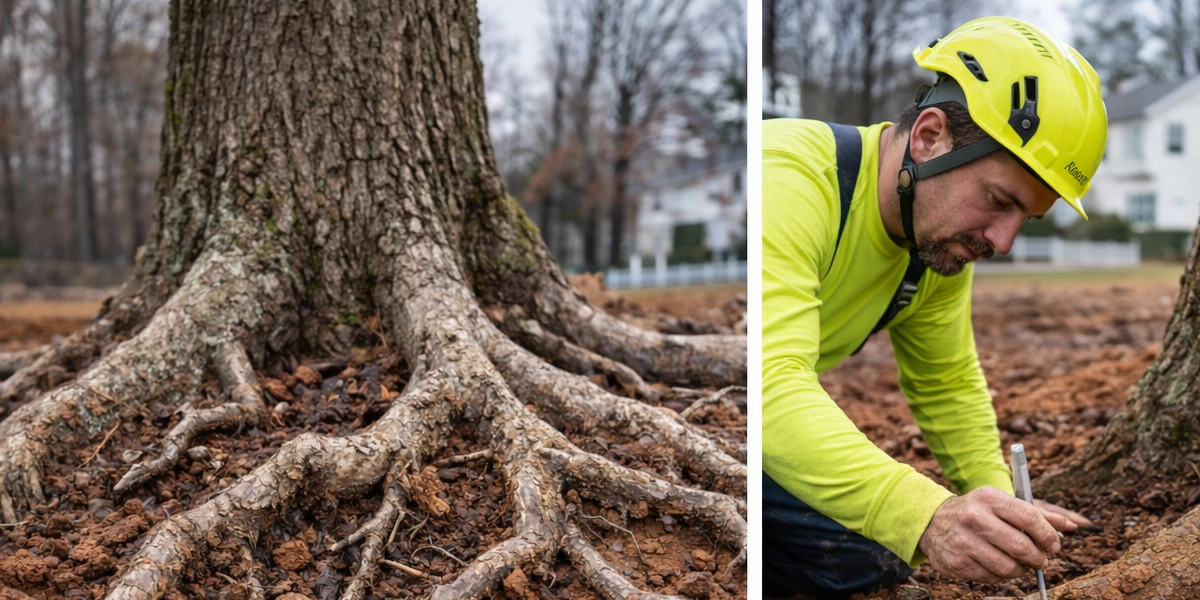
- Soil Analysis: We evaluate your specific clay soil conditions, identifying compaction, drainage issues, and nutrient deficiencies.
- Local Climate Consideration: Our experts factor in Cedar Hills’ seasonal wetness and dry summers to predict long-term impacts.
- Regulation Compliance: We confirm all necessary permits and adhere to local ordinances set by the Homes Association of Cedar Hills and Washington County.
Tailored Solutions & Professional Execution
Once we understand the problem, we develop a precise plan. Whether it’s remediation or removal, our team executes with care and efficiency, utilizing industry best practices. We are committed to providing reliable solutions for the Cedar Hills community. For immediate assistance, contact us today.
- Soil Remediation: We recommend and implement strategies like organic matter incorporation to improve clay soil structure and drainage.
- Targeted Pruning: For stressed trees, precise pruning can improve health and reduce strain.
- Safe Removal: If a tree is beyond saving or poses a risk, we perform safe, efficient removal, even for Cedar Hills’ average 57-foot tall trees.
- Stump Grinding: We ensure complete stump removal, preparing the site for new, more suitable plantings.
- Thorough Cleanup: Our crews are known for leaving your property cleaner than we found it, addressing a common customer pain point.
Professional Tree Care: Value vs. Risk
Choosing the right tree service can feel daunting, especially with varying estimates and concerns about quality. Here’s why trusting Bushor’s Tree Surgeons is a clear choice for your Cedar Hills property, offering value beyond just cost.
| Factor | DIY Approach (High Risk) | Bushor’s Tree Surgeons (Professional Value) |
|---|---|---|
| Expertise & Diagnostics | Limited understanding of soil conditions, tree biology, and disease identification. High risk of misdiagnosis. | ISA Certified arborists with deep knowledge of local soil conditions, climate patterns, and tree health assessment. |
| Safety & Insurance | Significant risk of injury or property damage. No liability protection for accidents. | Licensed and insured professionals follow strict safety protocols to protect people and property. |
| Equipment & Efficiency | Basic tools only. Increased physical risk and longer project timelines. | Professional-grade equipment designed for safe and efficient tree removal, trimming, and large tree handling. |
| Permits & Regulations | Unfamiliarity with local ordinances may lead to violations or fines. | Knowledge of local requirements and coordination of permits when needed. |
| Long Term Tree Health | Improper cuts or removal methods can stress trees and cause structural problems. | Proper pruning standards and health-focused strategies to support long-term structural integrity. |
| Cleanup & Disposal | Debris removal and disposal are handled by the homeowner. | Complete cleanup and responsible debris management after project completion. |
Frequently Asked Questions
Does Cedar Hills really have sandy soil?
Cedar Hills primarily features clay soil, not sandy soil. This heavy soil retains water, becomes compacted easily, and can form a hard crust when dry. These characteristics significantly affect root growth, oxygen supply, and drainage for many tree species.
Which specific tree species struggle most in Cedar Hills’ clay soil?
Trees that need well-drained conditions often struggle. Examples include Douglas-fir and Incense Cedar, which dislike poorly drained sites. Many willows and cottonwoods also suffer in consistently heavy, waterlogged clay, as do Pin Oaks which can develop chlorosis.
How can I improve clay soil for my trees?
Improving clay soil drainage is key. Incorporate organic matter like compost or coconut coir to lighten the soil structure. This helps create pockets for air and water movement, preventing compaction and improving root health.
Do I need a permit to remove a tree in Cedar Hills?
Yes, tree removal, especially for ‘street trees’ (between sidewalk and street), often requires permits from the Homes Association of Cedar Hills or Washington County. Always contact the Utility Notification Center (8-1-1) before digging.
What’s the average cost for tree removal in Cedar Hills?
Homeowners in Cedar Hills typically spend around $700 for tree removal, with costs ranging from $263 to $1,126. Emergency removals average about $1,049. The average tree height of 57 feet in the area can influence these prices.
Why should I hire a professional for struggling trees?
Professional arborists from Bushor’s Tree Surgeons offer deep knowledge of local soil and climate. We provide safe, efficient removal or treatment, adhere to regulations, and ensure thorough cleanup, protecting your property and investment.
Final Thoughts on Managing Clay Soil Challenges in Cedar Hills
Understanding the unique challenges Cedar Hills’ clay soil presents is vital for a healthy landscape. While some trees naturally struggle, proper care and soil amendments can make a significant difference. For expert advice, precise diagnostics, and professional tree care tailored to your property, contact Bushor’s Tree Surgeons. Our team is ready to help your trees thrive.