September 25, 2026
Key Takeaways
- Water oaks are fast-growing and popular for their quick shade, but this rapid growth often comes with a shorter structural lifespan than other oak species.
- Water oaks are particularly prone to internal decay, making trees that appear healthy from the outside potentially hazardous within.
- Age, past storm damage, and improper pruning history all increase the likelihood of structural problems in mature water oaks.
- Regular professional assessment is especially important for water oaks given how difficult internal decay can be to detect visually.
- Understanding a water oak’s typical risk pattern helps Jacksonville homeowners make timely, informed removal decisions.
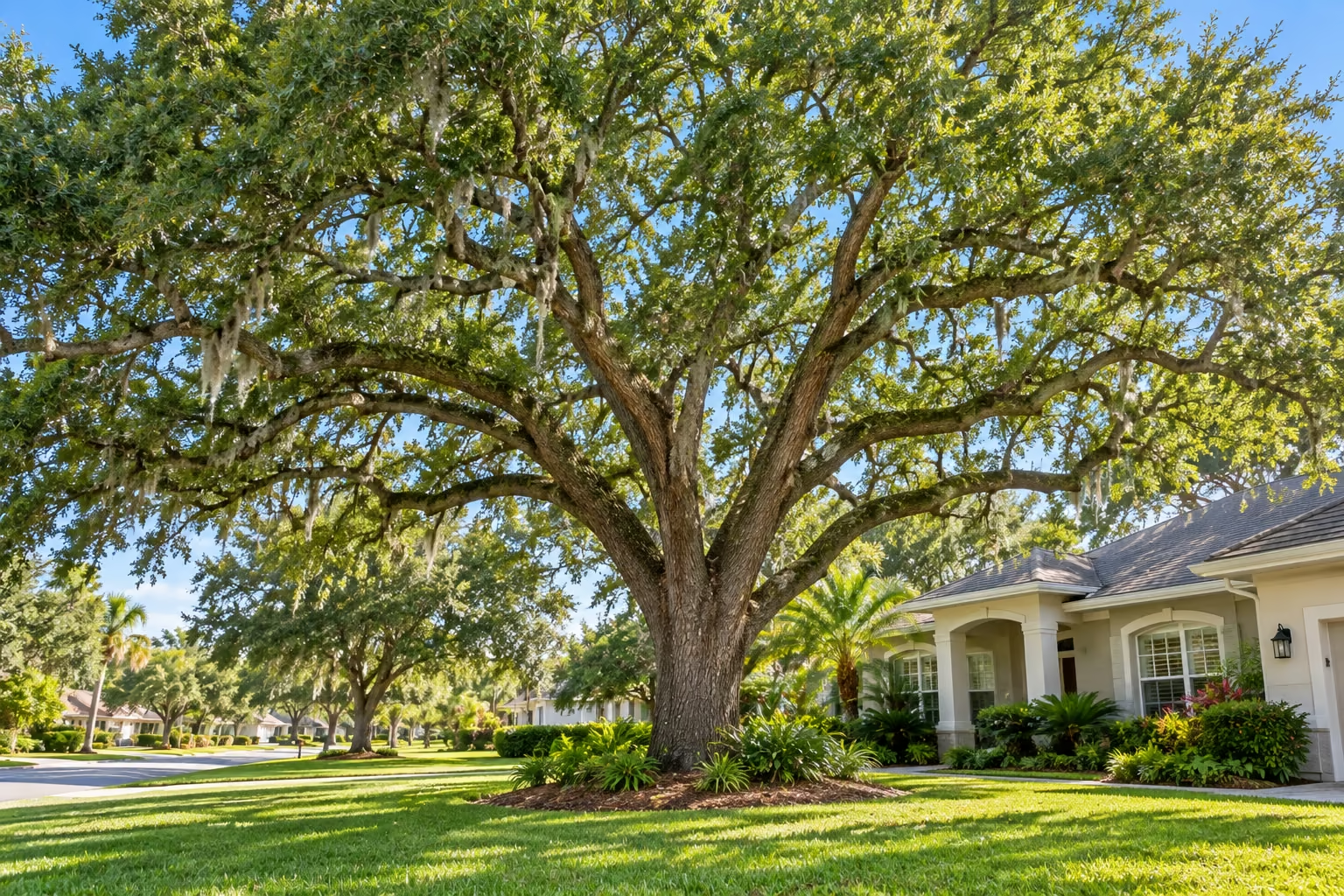
Water oaks are one of the most common large shade trees found throughout Jacksonville’s older neighborhoods. They are valued for their relatively fast growth and the substantial canopy they can provide within a few decades. However, water oaks also carry a well-documented reputation among arborists for developing structural problems as they age, often well before they show obvious external signs of decline.
Understanding why this happens, and what to watch for, is important for any Jacksonville homeowner with a mature water oak on their property.
Why Water Oaks Grow the Way They Do
Water oaks are known for their relatively fast growth rate compared to many other oak species, which made them a popular choice for landscaping and street tree planting throughout the Southeast for much of the 20th century. This fast growth allowed newer neighborhoods to establish meaningful shade within a couple of decades rather than the half-century or more that slower-growing oaks like live oak typically require.
This fast growth comes with a trade-off. Fast-growing wood is usually less dense and less structurally strong. Water oaks also have a shorter structural lifespan than many other oak species. Arborists often associate them with a higher risk of decay as they age. These issues can become more noticeable when the trees reach several decades of age.
The Decay Problem
Water oaks are particularly susceptible to internal decay, often entering through old pruning wounds, storm damage, or areas where limbs have broken away naturally over the years. Once decay-causing fungi enter the tree through one of these openings, they can spread through the interior of the trunk or major limbs for years before producing any visible external symptom.
This is one of the more concerning aspects of water oak risk: a tree that can appear fully healthy from the outside harbors significant internal decay that substantially weakens its structural integrity. By the time visible signs like fungal conks, cavities, or bark separation appear, the decay has often been progressing for a considerable period.
Common Signs of Structural Risk in Mature Water Oaks
Mature water oaks can develop structural problems as they age. Some warning signs are easy to spot, while others may require professional inspection. Knowing what to look for can help identify potential hazards early.
-
Fungal Growth at the Base or on Major Limbs
Shelf-like fungal growths, sometimes called conks, are one of the clearest visual indicators of internal decay in a water oak. These growths often appear at the base of the trunk or at points along major limbs where past damage or pruning wounds have allowed decay to establish. Shelf-like fungal growths generally indicate that decay has been developing for a meaningful period and warrants a professional structural assessment.
-
Cavities and Hollow Sections
Visible cavities, or hollow-sounding sections when the trunk is tapped, indicate that decay has progressed to remove a significant amount of the tree’s structural wood. While a healthy tree can sometimes tolerate a degree of hollowing, particularly if the surrounding wood remains sound, larger cavities in combination with a heavy canopy create real concern for structural failure, especially during Jacksonville’s frequent summer thunderstorms.
-
Deadwood and Canopy Dieback
Dead branches within an otherwise living canopy are common in mature water oaks and often indicate that the tree’s overall vigor is declining, even if the majority of the canopy still appears healthy. Significant deadwood also represents its own separate hazard, since dead branches are more likely to break and fall than living ones, particularly during high wind.
-
Weak Limb Unions from Rapid Growth
Because water oaks grow quickly, they can develop limb unions that haven’t had the benefit of the slower, more gradual strengthening process seen in slower-growing species. Combined with the tree’s naturally dense, wide canopy, this can create limb unions that are more prone to failure under the weight of a full canopy during storms, particularly for large, low-angle limb attachments.
Why Age Matters So Much for Water Oaks
Many of Jacksonville’s water oaks were planted during major residential development several decades ago, and many trees in older neighbourhoods are now reaching an advanced age. As water oaks mature, they can become more vulnerable to internal decay and structural weakness.
A tree may provide healthy shade for 30 or 40 years before these issues become noticeable. However, structural risks can develop gradually, even without a major storm, injury, or other event triggering the decline. A professional tree service firm in Jacksonville, FL can perform regular inspections to identify these concerns before they develop into serious hazards.
This is different from some other tree species, where age alone is less predictive of structural risk. For water oaks specifically, cumulative age, combined with any history of storm damage, improper pruning, or construction-related root disturbance, meaningfully raises the likelihood of significant internal decay.
The Role of Florida’s Storm Patterns
Jacksonville’s frequent summer thunderstorms, combined with the occasional tropical system or hurricane, put regular wind stress on the area’s mature trees. For a water oak that already has some degree of internal decay, this recurring wind loading increases the cumulative risk of eventual failure, even if the tree has weathered many previous storms without incident.
Each storm places additional stress on already-weakened wood, and the cumulative effect over years can push a tree toward failure even without a single catastrophic event.
Why Visual Inspection Alone Isn’t Always Enough
Given how much of a water oak’s structural risk can develop internally without obvious external symptoms, visual inspection from the ground has real limitations. A professional assessment often includes more thorough evaluation techniques, such as – sounding the trunk for hollow areas or evaluating the root flare more closely, to build a more complete picture of the tree’s actual structural condition rather than relying solely on how healthy the canopy appears.
This is particularly important for homeowners with large, mature water oaks positioned near their home, driveway, or other frequently used areas, where the consequences of an undetected structural failure would be significant.
When Removal Becomes the Right Call
As water oaks grow quickly, they can develop weaker wood, and are vulnerable to internal decay that may be difficult to detect visually, Jacksonville homeowners should consider closer monitoring as these trees mature. Removal may become appropriate when significant decay, cavities, or other structural concerns are confirmed, especially when the tree stands near a home or other structure. However, not every mature water oak needs to be removed. Many remain structurally sound and can continue providing shade and value for years with proper care.
Because of their species-specific risks, mature water oaks can benefit from more frequent professional assessments than slower-growing and more structurally durable species such as live oak.
How Bushor’s Tree Surgeons Can Protect Your Trees and Property
Bushor’s Tree Surgeons has over 60 years of experience helping Jacksonville homeowners understand what their mature trees need as conditions change over time. Our team can evaluate the tree’s overall condition, surrounding environment, and potential impact on nearby homes, driveways, and other areas. This gives you a clearer basis for deciding whether the tree can remain in place or requires professional attention.
Bushor’s Tree Surgeons has a team of ISA-certified arborists who assess your water oaks and recommend the most appropriate course of action, whether that involves continued care, corrective work, or removal.
We aim to identify potential problems early, helping you avoid property damage and unnecessary safety concerns. With our guidance, you can make informed decisions while protecting your home and trees.
Frequently Asked Questions About Water Oaks and Removal Risk in Jacksonville, FL
Why are water oaks more prone to problems than other oak species?
Their fast growth rate produces comparatively weaker wood and a shorter structural lifespan, along with higher susceptibility to internal decay compared to slower-growing oak species.
Can a water oak look healthy and still be structurally unsound?
Yes, internal decay in water oaks can progress significantly before producing visible external symptoms, which is part of why professional assessment matters.
At what age do water oaks typically start showing structural risk?
Many water oaks begin showing increased structural risk as they reach several decades of age, though this varies based on growing conditions and history of damage.
What should I do if I see fungal growth on my water oak?
Schedule a professional assessment promptly, since fungal growth typically indicates internal decay that warrants evaluation of the tree’s overall structural condition.
Do all mature water oaks need to be removed eventually?
Not necessarily; many remain structurally sound with proper monitoring, but water oaks generally warrant more frequent professional assessment than more structurally durable species.
How does Florida’s storm activity affect water oak risk?
Recurring wind stress from frequent storms places cumulative load on already-weakened wood, increasing the risk of eventual failure over time.
Is it safe to have a large water oak near my home?
It depends on the tree’s specific condition; a professional assessment can determine whether a water oak near your home currently poses a manageable or significant risk.
How often should a mature water oak be professionally assessed?
Given the difficulty of detecting internal decay visually, more frequent assessment, often every year or two for larger, older trees, is generally advisable compared to more durable species.
Summary Checklist: Water Oak Structural Risk Evaluation
| Evaluation Area | What to Confirm |
| Fungal growth | Check base of trunk and major limbs for conks |
| Trunk condition | Look for cavities or hollow-sounding sections |
| Canopy dieback | Note extent and location of dead branches |
| Limb unions | Assess for weak attachments, particularly on large limbs |
| Tree age and history | Consider age along with any past storm or pruning damage |
| Proximity to structures | Weigh risk tolerance based on location |
| Assessment frequency | Schedule more frequent checks than for durable species |
Final Advice
If you have a mature water oak on your Jacksonville property, do not rely on its appearance alone to judge its safety. Watch for signs such as fungal growth, cavities, dead branches, canopy dieback, or weak limb attachments, as these can point to deeper structural problems. Have larger or older water oaks inspected regularly, especially when they stand close to your home or driveway. Remember that not every aging water oak needs removal, as many can remain healthy with proper care.
A professional assessment can help you understand the tree’s condition and decide whether it needs maintenance, monitoring, or removal. Acting early can reduce the risk of property damage and safety concerns. If you are unsure about a mature water oak, Bushor’s Tree Surgeons can assess the tree and recommend the safest next step.