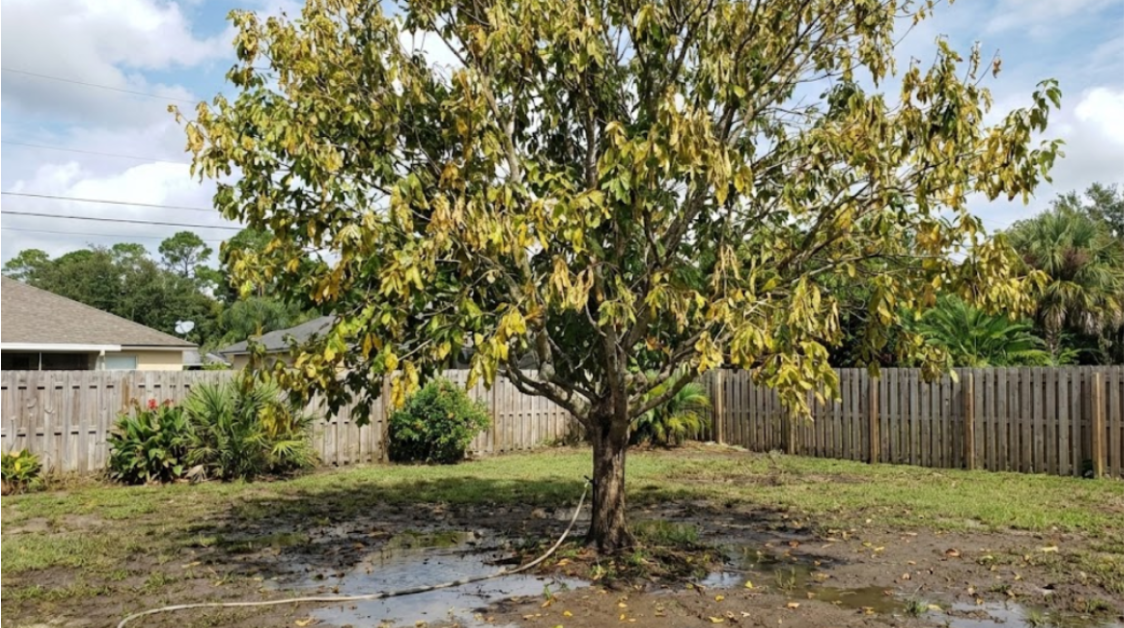
When your tree’s leaves start turning yellow, it’s natural to worry that something serious is happening. Many homeowners assume it’s a disease or bug infestation, but the real cause often starts underground with the water.
Trees need balance. Too much water and the roots suffocate. Too little and the tree dries out. Both problems show up the same way: yellow leaves, weak branches, and early leaf drop.
Knowing whether your tree is getting too much or too little water is the key to saving it. Once you understand what your tree is trying to tell you, you can act before the damage becomes permanent.
Why Tree Leaves Turn Yellow
When leaves turn yellow outside of fall, your tree is under stress. Water imbalance is one of the most common reasons for stress, especially in landscapes with uneven watering or sprinkler systems that run too often.
Water directly affects how roots absorb oxygen and nutrients. If the soil stays wet too long, the oxygen gets pushed out, and the roots begin to rot. If the soil dries out completely, the roots can’t absorb nutrients or water. In both cases, the leaves lose their green color because the chlorophyll that keeps them green starts to break down, a condition botanists call chlorosis.
You may notice leaves yellowing from the edges inward or whole branches losing color. It’s your tree’s way of signaling that something is wrong below the surface.
Signs Your Tree Is Overwatered
Overwatering is a common mistake. Many people think watering more often keeps trees healthy, but roots also need air to survive. When the soil stays soaked, oxygen can’t reach the roots, and decay begins.
Look for these signs:
- Soil around the base stays wet or muddy for days after watering.
- Leaves turn yellow but feel soft or limp instead of dry.
- Moss or mushrooms appear near the base.
- Bark begins to crack or peel near the bottom.
- New growth is small, pale, or weak.
- There’s a sour or musty smell near the roots.
When roots sit in water too long, they rot. According to Utah State University’s guide to overwatering, saturated soils starve roots of oxygen and cause canopy dieback, leaf yellowing, and leaf loss, even though the soil looks full of moisture
If this sounds familiar, stop watering and let the soil dry before resuming a slower, deeper watering routine. If the problem continues, contact Bushor’s Tree Surgeons for a professional inspection.
Signs Your Tree Is Underwatered
Underwatering causes a very different kind of stress. When a tree doesn’t get enough consistent moisture, it conserves energy by slowing growth and dropping leaves.
Look for these signs:
- Soil is dry, cracked, or pulling away from the roots.
- Leaves turn yellow or brown starting at the tips.
- Leaves curl or droop during the day.
- The canopy looks thin or patchy.
- New growth slows or stops completely.
Dry trees are more vulnerable to pests and disease because their natural defenses weaken. Prolonged dryness also kills small feeder roots, which makes it harder for the tree to recover even after watering resumes.
If this looks like your tree, schedule a Tree Trimming and Maintenance Inspection with Bushor’s Tree Surgeons to help restore its water balance.
Quick Comparison: Overwatering vs Underwatering
| Sign | Overwatering | Underwatering |
|---|---|---|
| Soil Condition | Wet or soggy for days | Dry, hard, or cracked |
| Leaf Texture | Soft, limp, drooping | Dry, crispy, brittle |
| Leaf Color | Yellow, sometimes pale | Brown or yellow from the edges |
| Growth | Weak, slow, pale growth | Little or no new growth |
| Soil Smell | Musty or sour smell | No unusual smell |
| What To Do | Reduce watering. Improve drainage | Deep water slowly, 1–2 times per week |
This table helps you quickly compare both conditions and adjust your care routine before your tree’s health declines further.
Simple Soil Moisture Test You Can Do at Home
You can easily find out whether your soil is too wet or too dry using this quick test.
- Push a screwdriver or soil probe about six to eight inches into the ground near the root zone.
- If it goes in easily and the soil feels sticky or damp, it’s overwatered.
- If it’s hard to push and comes out dry or dusty, it’s underwatered.
- Grab a handful of soil from six inches deep and squeeze it.
- If it drips or forms a solid wet lump, it’s too wet.
- If it crumbles apart, it’s too dry.
- If it holds together lightly without dripping, it’s balanced.
Testing the soil takes only a few minutes and helps you water based on your tree’s needs instead of guessing.
What Happens When Trees Get Too Much Water
When the soil stays wet for too long, it traps water in every air pocket around the roots. Without oxygen, roots suffocate and begin to rot.
Root rot spreads fast and usually starts before you notice symptoms. The leaves yellow, growth slows, and the trunk can become soft or develop a lean. Mushrooms or mold may appear near the base, which means the fungus has reached the root system.
Too much water can also attract harmful fungi that feed on weakened roots. Once these fungi spread, the tree can decline quickly without treatment.
If you see these signs, contact Bushor’s Tree Surgeons for a soil and drainage inspection. A certified arborist can determine whether the issue is waterlogging, compacted soil, or root disease.
What Happens When Trees Don’t Get Enough Water
When trees don’t get enough water, their roots move closer to the surface, where they can dry out even faster. The canopy starts to thin, leaves lose color, and the tree may begin shedding branches to save energy.
Inside the tree, nutrient transport slows down. Without water to carry nutrients up, the leaves lose chlorophyll, and energy production drops.
A dry tree also becomes a target for pests like borers, aphids, and scales. These insects prefer stressed trees because they can easily feed on weak tissue. Over time, a lack of water weakens the trunk, making it more vulnerable to breakage or sunscald.
If drought stress has affected your tree, book a Tree Health Evaluation with Bushor’s Tree Surgeons. Our team can assess root depth, soil conditions, and recommend recovery treatments.
How to Fix Overwatering Problems
If your tree is sitting in soggy soil, you need to let oxygen return to the root zone.
- Stop watering for at least a week and allow the soil to dry.
- Redirect gutters, downspouts, or sprinklers away from the base.
- Remove excess mulch and keep it two to three inches deep.
- Use a garden fork to aerate compacted soil so air can flow in.
- If you smell decay or see mushrooms, call an arborist.
Once air returns to the soil, new roots can begin to grow. For severe root rot, Bushor’s Tree Surgeons can treat the soil and improve drainage to prevent recurrence.
How to Fix Underwatering Problems
If your tree is dry and brittle, you need to establish a steady watering routine.
- Water deeply once or twice a week so moisture reaches 8–12 inches down.
- Use a soaker hose around the drip line for slow, deep watering.
- Water early in the morning to reduce evaporation.
- Apply mulch to hold moisture, but keep it a few inches away from the trunk.
- During hot or windy weeks, check the soil twice and adjust as needed.
Avoid overcorrecting by flooding the area after drought. Gradually reintroduce water so the soil absorbs it evenly. For personalized watering schedules, ask about Seasonal Tree Maintenance Plans from Bushor’s Tree Surgeons.
How to Maintain the Right Water Balance for Healthy Trees
Healthy trees depend on a consistent watering rhythm.
- Young trees need deep watering once or twice a week until roots establish.
- Mature trees usually need watering every two to three weeks during dry weather, and the University of California’s IPM program recommends allowing soil to dry partially between waterings, then irrigating deeply enough to wet the soil at least two feet down.
Soil type affects how often you should water:
- Sandy soil drains fast, so watered more often.
- Clay soil holds water longer, so water less often but for a longer time.
Let the top few inches of soil dry between waterings. That helps balance air and moisture around the roots. Avoid letting sprinklers hit the trunk directly. Instead, water around the drip line, where most of the active roots absorb moisture.
Other Causes of Yellow Tree Leaves (Beyond Watering Issues)
Watering problems aren’t the only cause of yellow leaves. Other issues can include:
- Compacted soil that limits oxygen to the roots.
- Low nitrogen or iron in the soil leads to nutrient deficiency.
- Insect damage from aphids or mites that drain sap.
- Fungal diseases like leaf spot or anthracnose.
- Root damage from construction or mowing.
- Seasonal shedding, where trees naturally drop older leaves.
If you’ve ruled out watering issues but your tree still looks unhealthy, book a Tree Health Diagnosis with Bushor’s Tree Surgeons. We can identify whether your tree is dealing with pests, disease, or nutrient problems.
When to Call a Tree Specialist
If your tree keeps losing leaves or the yellowing spreads quickly, professional help is the safest option.
Call Bushor’s Tree Surgeons if you notice:
- Cracked or peeling bark.
- Mushrooms or fungus at the base.
- Soft, spongy, or waterlogged soil near the trunk.
- Sudden leaf drop or dead branches.
- Leaning or instability.
Our certified arborists can test soil, inspect roots, and identify the exact cause of the stress. We also provide Tree Trimming, Tree Health Treatments, and Emergency Tree Removal for trees that have become unsafe.
FAQs: Why Are My Tree Leaves Turning Yellow?
Can overwatering and underwatering cause the same symptoms?
Yes. Both can make leaves turn yellow and fall early. The difference lies in the soil. Overwatered soil feels wet and sticky, while underwatered soil feels dry and crumbly. Always check the soil before watering.
How often should I water my trees?
Mature trees usually need deep watering every two to three weeks. Younger trees need watering once a week until roots are established. Always test the soil before each watering.
What time of day should I water my trees?
Early morning is best. Cooler temperatures prevent water loss through evaporation and allow roots to absorb moisture efficiently.
How can I tell if my tree has root rot?
Root rot appears as yellow leaves, peeling bark, soft roots, or a sour odor. You might also see mushrooms or fungus near the base. If you do, contact Bushor’s Tree Surgeons immediately for an inspection.
Can too much mulch damage my tree?
Yes. Thick mulch layers trap too much moisture and suffocate roots. The International Society of Arboriculture’s proper mulching guidelines recommend a 2–4 inch layer applied near but not touching the trunk, extending out toward the drip line.
When should I call an arborist?
If yellowing continues for more than two weeks or you see bark cracks, fungus, or unstable soil, schedule an inspection. Bushor’s Tree Surgeons can assess the root zone and correct the problem early.
Bring Your Trees Back to Health with the Right Care
Yellow leaves are your tree’s way of asking for attention. Whether the problem is overwatering or underwatering, both can be corrected if caught early.
Overwatering suffocates the roots and causes decay. Underwatering dries them out and blocks nutrient flow. Both conditions weaken your tree and drain its color and strength.
Check the soil before watering. Adjust your routine based on what your tree and soil show you. With consistent care, most trees recover once their roots get the right balance of air and moisture.
If the yellowing continues or you are unsure what’s causing it, contact Bushor’s Tree Surgeons. Our certified arborists specialize in diagnosing and correcting water stress, compacted soil, and disease. With professional care, your trees can regain their health, color, and strength for years to come.