April 24, 2026
Palm trees add structure, shade, and character to landscapes, but they’re also vulnerable to a range of diseases and pests that weaken or kill them if not addressed early. These issues often begin subtly, showing up as yellowing leaves, drooping fronds, or small trunk wounds. By the time visible symptoms appear, the infection or infestation is often advanced. The key to saving a palm lies in early recognition, consistent monitoring, and swift corrective action.
Palms are a staple of tropical and subtropical landscapes. They’re hardy in appearance but delicate in biology. Understanding how these plants grow, how diseases spread, and what pests target them protects them for the long term. Below is an expanded guide to spotting, understanding, and managing palm tree diseases and pests before they cause irreversible damage.
Why Palm Trees Are More Vulnerable Than They Look
Palm trees are biologically unique. They aren’t true woody trees like oaks or pines. Instead, they grow more like grasses, with a single growing tip called the crownshaft. This crown is the palm’s heart. If it’s damaged by pests, disease, or improper pruning, the entire palm dies because it cannot regenerate new growth points.
Their vascular system is simple compared to other trees. They lack growth rings and secondary xylem, which means they can’t compartmentalize decay or isolate infection. Once a fungus or pest enters the palm’s vascular tissue, it travels quickly through the entire system, disrupting water and nutrient flow. In severe cases, palms can decline within weeks.
Environmental conditions also play a big role. Poor drainage, compacted soil, or mechanical damage can stress palms and make them more susceptible to pathogens. Many palm issues start as stress problems before evolving into infections.
Common Palm Tree Diseases and Their Warning Signs
Fusarium Wilt
What it is: Fusarium wilt, caused by Fusarium oxysporum, is a destructive fungal disease that invades the vascular system through the roots or wounds. It often spreads via contaminated soil, pruning tools, or windblown spores.
Early signs:
- Yellowing or browning on one side of a frond while the other remains green.
- Wilting that starts with the oldest fronds and progresses upward.
- One-sided dieback that moves toward the crown.
- V-shaped lesions on leaflets.
What to do: Remove infected fronds immediately and burn or bag them; do not compost. Disinfect tools with a 10% bleach solution between cuts. Once Fusarium reaches the crown, the palm cannot be saved. Focus on protecting nearby palms through tool sanitation and avoiding soil disturbance. For a detailed identification gallery, refer to the UF/IFAS Palm Problems Key.
Ganoderma Butt Rot
What it is: One of the most devastating palm diseases, Ganoderma butt rot is caused by Ganoderma zonatum, a soil-borne fungus that attacks the lower trunk and disrupts nutrient flow.
Early signs:
- Wilting or drooping fronds despite adequate watering.
- A hard, shelf-like conk or mushroom emerging at the trunk base.
- Dark, spongy, or hollow wood when the trunk is probed.
- General decline without visible pest activity.
What to do: There’s no treatment once the disease advances. The infected palm must be removed, including the root ball. Never replant another palm in the same spot. To prevent spread, sanitize equipment, and avoid damaging trunks with lawn tools. Organic matter management and reducing soil compaction can lower the risk.
Lethal Bronzing (Texas Phoenix Palm Decline)
What it is: A bacterial disease transmitted by sap-feeding planthoppers. It mainly targets Phoenix palms (Canary Island date, queen, and pygmy date) and Sabal palms.
Early signs:
- Sudden fruit drop before ripening.
- Progressive bronzing of lower fronds, moving upward.
- Death of the spear leaf.
- Rapid canopy collapse within months.
What to do: Prompt removal of infected palms is essential to protect surrounding palms. In endemic areas, preventive antibiotic injections can offer temporary protection. Keep palms fertilized and watered properly to resist infection pressure.
Bud Rot
What it is: Bud rot often follows periods of heavy rainfall or overwatering. Fungi like Phytophthora palmivora infect the crown, especially when the growing tip remains wet.
Early signs:
- New fronds fail to emerge or open.
- Soft, decaying crown tissue that smells sour.
- The center collapses while the lower trunk looks healthy.
What to do: Improve air circulation, avoid watering the crown directly, and treat early infections with copper-based fungicides. Prevent by pruning dead fronds during dry weather and improving drainage in planting areas.
Leaf Spot and Blight Diseases
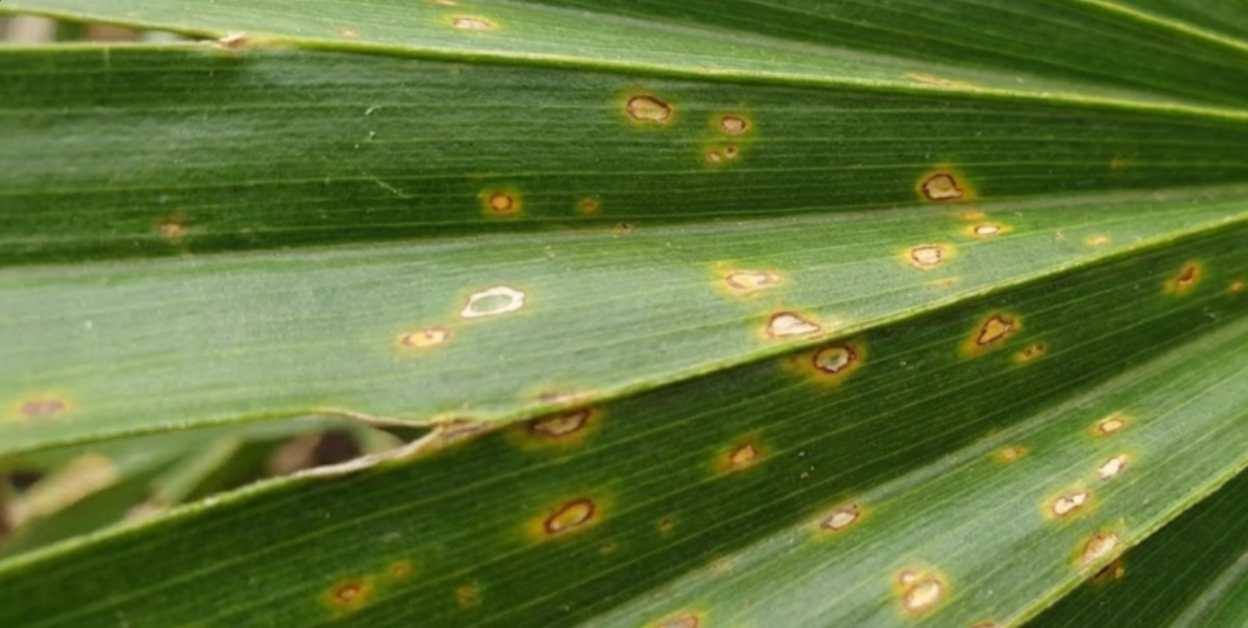
What it is: A group of fungal and bacterial infections that produce leaf lesions and discoloration. Detailed management strategies can be found in the Clemson University Palm Diseases & Pests Fact Sheet.
Early signs:
- Small water-soaked dots that turn brown or black.
- Lesions that merge and distort fronds.
- Premature yellowing or shredding of leaf tips.
What to do: Remove infected fronds, dispose of debris, and apply preventive fungicides. Keep irrigation low and targeted to the soil, not leaves. Balanced fertilization and sanitation help limit outbreaks.
Common Palm Tree Pests and How to Identify Them
Palm Weevils
What they are: Palm weevils, including the red and palmetto weevil, are destructive borers that tunnel through trunks and crowns. They prefer stressed or newly transplanted palms. You can find more on their biological impact via the USDA National Agricultural Library on Invasive Species.
Early signs:
- Holes in the crown or upper trunk.
- Sawdust-like frass at the base or crown.
- Foul odor from decaying tissue.
- Sudden canopy collapse.
What to do: Early prevention is key. Avoid wounding palms, treat cuts with protective sealant, and use insecticidal drenches where weevils are known. Remove infested palms to prevent spread.
Scale Insects
What they are: Tiny, immobile pests that suck sap from fronds and stems, leaving sticky residue.
Early signs:
- Sticky honeydew on fronds and surfaces below.
- Black sooty mold growing on honeydew.
- Small, waxy bumps on stems or leaves.
What to do: Use horticultural oils, insecticidal soaps, or systemic treatments depending on the infestation level. Keep plants clean and prune overcrowded fronds to improve air circulation.
Spider Mites
What they are: Microscopic arachnids that damage fronds by piercing cells, often thriving in dry, dusty environments.
Early signs:
- Silvery stippling or bronzing on fronds.
- Fine webbing near leaf bases.
- Dry or brittle leaves.
What to do: Spray leaves with water to wash off mites, maintain humidity, and apply miticides for severe infestations. Keeping palms clean reduces mite populations naturally.
Caterpillars and Bagworms
What they are: Leaf-eating larvae that consume or skeletonize fronds, sometimes creating silk bags made from debris.
Early signs:
- Chewed leaflets.
- Hanging silken cases.
- Fast defoliation during peak infestation.
What to do: Handpick and destroy larvae when visible. Apply Bacillus thuringiensis (Bt) during early feeding stages. Avoid broad-spectrum insecticides that harm beneficial predators.
Add a severity hierarchy early in the piece:
- Immediately lethal: Lethal Bronzing, advanced Ganoderma
- Manageable if caught early: Fusarium, bud rot, leaf spots
- Reversible with care: Nutrient deficiencies, pest damage
Environmental Stress That Mimics Disease
Palms often display symptoms that resemble infection when stressed by environmental conditions. Misdiagnosis leads to unnecessary treatments or losses.
Common stress causes:
- Nutrient Deficiency: Causes uniform yellowing, translucent spotting, or necrotic tips. Magnesium or potassium deficiencies are common.
- Water Imbalance: Overwatering suffocates roots, while drought causes premature frond death.
- Cold Damage: Freezing temperatures cause browning or tissue collapse in new growth.
- Mechanical Damage: Lawn equipment injuries create entry points for pathogens.
How to differentiate: If multiple palms show identical symptoms, suspect the environment. If damage appears isolated or progresses upward, disease or pest involvement is likely. Testing soil, leaves, and tissue samples provides clarity.
Early Detection Checklist for Homeowners
- Inspect crowns weekly for discoloration, rot, or frond distortion.
- Monitor trunk bases for mushrooms, conks, or cracks.
- Look for frass, holes, or sawdust indicating insect activity.
- Check leaf undersides for scales or mites.
- Avoid excessive pruning; never remove green fronds unnecessarily.
- Water deeply but infrequently, allowing soil to dry slightly.
- Fertilize quarterly with a slow-release palm formula containing micronutrients.
- Maintain clean equipment and sanitize between trees.
- Mulch with organic matter to regulate moisture and suppress weeds.
When to Call a Professional Arborist
If symptoms progress rapidly, the spear leaf dies, or fungal growth appears at the base, it’s time for professional evaluation. Certified arborists use lab diagnostics to identify the specific pathogen or pest and recommend targeted treatment plans. They can administer trunk injections, apply systemic insecticides, or safely remove hazardous palms.
Bushor’s Tree Surgeons provides professional inspection, diagnosis, and long-term palm health management. Their arborists specialize in identifying subtle disease markers and implementing preventive care that extends the life of your palms.
FAQs About Palm Tree Diseases and Pests
How can I tell if my palm tree is dying?
If the spear leaf, which is the newest central frond, turns brown, collapses, or pulls out easily, the growing point has likely died. Without it, the palm cannot produce new growth and will decline quickly. You may also see thinning canopies, soft crown tissue, or hollow trunk sounds. Once these appear, the tree cannot recover.
Can palm diseases spread to other trees?
Yes. Many fungal and bacterial infections move through contaminated soil, pruning tools, or insects. Working on multiple palms without cleaning your tools can transfer pathogens easily. Always disinfect with bleach or alcohol and remove infected debris quickly. Preventing the spread is far easier than curing it later.
Should I remove dead fronds right away?
Yes, but only remove dry, brown fronds. Green fronds are vital for photosynthesis and protect the crown from heat and sun exposure. Over-pruning weakens the tree and increases stress-related disease risks. Always prune in dry weather using clean, sharp tools to avoid spreading infection.
Can fertilizers prevent diseases?
Fertilizers cannot cure disease, but balanced nutrition helps palms resist stress and infection. Use a slow-release fertilizer made for palms that includes potassium, magnesium, and manganese. Apply it evenly around the root zone every few months and water deeply afterward. Healthy palms are naturally more resilient.
How often should palms be inspected?
Inspect palms monthly during the active growing season (typically April through October in most climates) and quarterly during dormancy. Increase inspection frequency after storms, drought, or extreme weather events. Watch for yellowing leaves, soft crowns, trunk cracks, or insect activity. Early detection allows timely treatment before problems become severe. Mature palms benefit from annual professional inspections to identify hidden issues.
Long-Term Palm Health Starts with Early Action
Palm trees are resilient when properly cared for, but once infection or pest infestation sets in, time is critical. Catching the problem early means the difference between saving and losing a tree. Routine inspection, proper watering, clean tools, and professional guidance keep your palms healthy and thriving for decades. Bushor’s Tree Surgeons can help you identify and address issues before they spread, ensuring your landscape stays strong, balanced, and beautiful year-round.