April 12, 2026
Palm trees add undeniable beauty to Jacksonville landscapes, but sometimes, these iconic trees become a liability. When a palm poses a risk or succumbs to an ailment, removal isn’t just an option; it’s a necessity. Understanding the specific reasons for palm tree removal helps homeowners make informed decisions for their property’s safety and health.
Key Takeaways
- Palm trees in Jacksonville often require removal due to lethal diseases like Ganoderma Butt Rot or Lethal Bronzing, which have no cure.
- Hazardous conditions from storm damage, leaning, or proximity to structures are major motivators for removal, especially during hurricane season.
- Local regulations in Jacksonville offer exemptions for most palm tree removals on residential property, especially with arborist documentation.
- Professional palm tree removal costs vary significantly based on factors like height and accessibility.
- Hiring ISA Certified Arborists ensures safe, compliant, and efficient removal, mitigating risks of DIY attempts.
What is Palm Tree Removal?
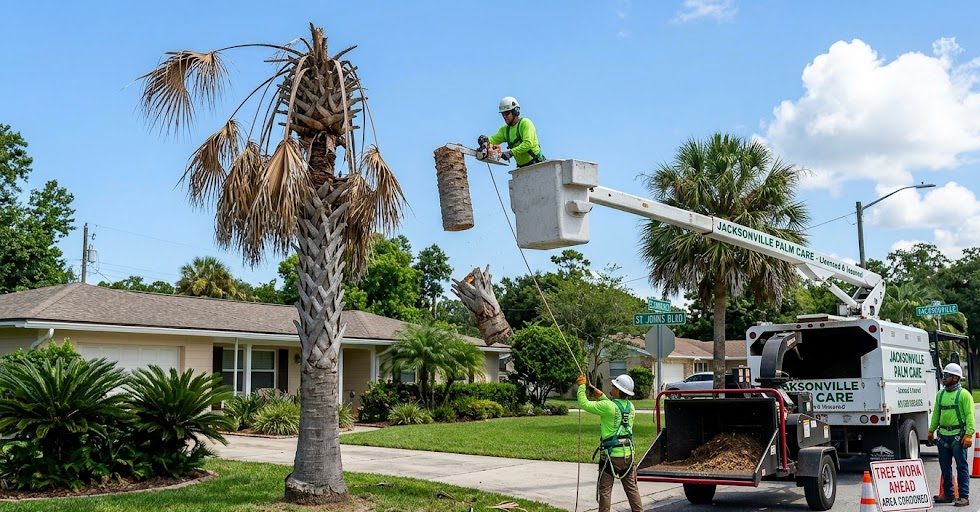
Palm tree removal is the process of safely taking down and disposing of a palm tree that poses a risk, is diseased, or is no longer desired on a property. Unlike other trees, palms have unique structures, making their removal a specialized task. This service often includes felling the tree, cutting it into manageable sections, and hauling away the debris.
Primary Reasons for Palm Tree Removal in Jacksonville
Several critical factors make palm tree removal an unavoidable task for many Jacksonville homeowners, ranging from biological threats to structural concerns and aesthetic preferences.
Disease and Pest Infestations
Diseases and pests are among the most common and devastating reasons for palm tree removal in Jacksonville, as many are incurable and can spread rapidly.
- Ganoderma Butt Rot: This lethal fungal disease attacks the base of the trunk, causing internal decay. It has no cure, and infected palms must be removed to prevent structural failure and potential spread.
- Lethal Bronzing Disease (LBD): Spread by plant hoppers, this bacterial disease causes fronds to yellow, bronze, and eventually die. First detected in Duval County in 2013, it’s incurable once infected and affects numerous palm species, including the native Sabal Palmetto. Immediate removal helps contain its spread.
- Fusarium Wilt: A widespread fungal disease that clogs the palm’s water-conducting tissues, leading to wilting and death. There is no cure, and infected palms require removal and destruction to prevent further contamination.
- Lethal Yellowing: Caused by phytoplasmas, this devastating disease turns fronds yellow and kills the tree. It affects over 30 palm species, and without a cure, removal is the only option.
- Bud Rot: Often triggered by heavy rain or humidity, this fungal disease attacks the palm’s growing tip. If the bud is severely damaged, the palm cannot recover and will die, necessitating removal.
Storm Damage & Safety Hazards
Jacksonville’s susceptibility to hurricanes and tropical storms means that damaged or unstable palm trees pose significant safety risks, making removal a critical preventative measure.
- Hurricane Preparedness: Weakened or tall palms can become projectiles or fall hazards during high winds. Proactive removal of at-risk palms minimizes property damage and ensures safety.
- Leaning or Unstable Palms: Palms that lean excessively or show signs of root instability are a direct threat to homes, vehicles, and power lines.
- Dead or Dying Fronds: While individual fronds can be trimmed, a palm with many dead fronds can shed heavy debris, posing a risk to anyone underneath.
Structural Interference & Overgrowth
As palms mature, their size and root systems can interfere with structures and utilities, demanding removal to prevent costly damage.
- Foundation Damage: Aggressive palm roots can crack foundations, driveways, and sidewalks, leading to expensive repairs.
- Utility Line Obstruction: Palms growing too close to power lines, water pipes, or septic systems create hazards and can damage essential infrastructure.
- Building Contact: Palms rubbing against roofs or walls can cause structural damage, create entry points for pests, and compromise insulation.
Decline and Death
Sometimes, a palm simply reaches the end of its life or loses its vitality, becoming an eyesore or a potential hazard.
- Natural Lifespan: Even healthy palms have a natural lifespan. As they age, they may become more susceptible to disease and decline, eventually requiring removal.
- Lack of Vitality: Palms that are no longer thriving, show stunted growth, or have consistently sparse foliage might be beyond recovery, detracting from your landscape.
Aesthetics & Landscape Redesign
Homeowners often choose to remove palms that no longer fit their landscape design or are planted in an unsuitable location.
- Unwanted Species: Certain palm varieties might not be desired, or a homeowner might prefer a different type of tree or plant.
- Poor Placement: A palm planted too close to a house, pool, or other features can become problematic as it grows, blocking views or sunlight.
- Overcrowding: Too many palms in one area can create an overgrown look, reducing curb appeal and hindering the growth of other plants.
Jacksonville’s Local Regulations & Palm Tree Removal Permits
Navigating the rules for tree removal in Jacksonville can feel complex, but understanding the specific ordinances for palm trees is key.
Florida’s Private Property Rights Law (HB 1159)
Florida’s Private Property Rights Law, HB 1159, significantly impacts tree removal on residential properties across the state, including Jacksonville.
- As of July 1, 2019, local governments cannot require permits or fees for removing trees on residential property if a certified arborist or licensed landscape architect documents that the tree poses a ‘greater risk to persons or property.’
- This law also states that homeowners are generally not required to replant removed trees, with exceptions for mangroves.
- Professional tree services can provide the necessary arborist documentation to help you comply with this state law, simplifying the removal process.
Jacksonville City Ordinances & Palm Exemptions
While HB 1159 provides broad protections, Jacksonville has its own set of ordinances, which typically offer exemptions for many palm tree removals.
- Jacksonville City Ordinances (Chapter 656 – Zoning Code, Part 12) generally require permits for removing ‘protected’ trees.
- However, most palms (excluding the native Cabbage Palm, *Sabal palmetto*) are typically exempt from permit requirements on single-family residential lots.
- This exemption applies as long as the palm is not within 20 feet of a street right-of-way or 10 feet of any other property line, and wasn’t part of developer mitigation plantings.
When You Might Still Need a Permit
Despite the general exemptions, certain situations may still necessitate a permit for palm tree removal in Jacksonville.
- Native Cabbage Palms: The native *Sabal palmetto* is considered a ‘protected tree’ if it meets certain size criteria, and its removal might require a permit.
- Protected Location: If a palm, even an exempted species, is within 20 feet of a street right-of-way or 10 feet of a property line and meets specific diameter requirements (e.g., 6-inch DBH or more), a permit might be required.
- Mitigation Plantings: Palms planted by a developer as part of conservation credits or mitigation for other tree removals may still be protected and require a permit.
- Commercial Properties: The exemptions primarily apply to single-family residential lots; commercial properties often have different rules.
The Cost of Palm Tree Removal in Jacksonville
Understanding the cost of palm tree removal in Jacksonville requires a personalized assessment, as prices fluctuate significantly based on factors like tree height, accessibility, and overall condition. Due to these complexities, requesting a professional estimate from Bushor’s Tree Surgeons is essential to determine the specific investment required for safe and effective removal.
Common Mistakes to Avoid During Palm Tree Removal
Even with the best intentions, homeowners can make critical errors when dealing with problematic palm trees, leading to safety hazards or legal issues.
- Underestimating Risks: Believing palm removal is an easy DIY job is a dangerous misconception. Palm fronds are heavy, and falling trunks can cause severe injury or death.
- Ignoring Regulations: Failing to check local Jacksonville ordinances or state laws (like HB 1159) can lead to fines or legal complications.
- Hiring Uninsured Services: Working with an uninsured company leaves you liable for any injuries or property damage that occur during the removal.
- Neglecting Stump Removal: Leaving a palm stump can attract pests, lead to regrowth, or become a tripping hazard. Professional stump grinding is usually recommended.
- Improper Pruning Instead of Removal: Attempting to ‘save’ a terminally diseased palm through excessive pruning is often futile and can prolong a dangerous situation.
- Waiting Too Long: Delaying the removal of a hazardous or diseased palm increases the risk of it falling during a storm or spreading its illness to other plants.
Frequently Asked Questions
Do I need a permit to remove a palm tree in Jacksonville?
Yes, Florida’s HB 1159 allows homeowners to remove trees on residential property if a certified arborist documents a ‘greater risk to persons or property.’ Jacksonville’s ordinances also exempt most palms from permits on single-family lots, unless they are protected species or within specific setbacks.
What are the most common palm tree diseases in Jacksonville?
Common diseases include Ganoderma Butt Rot, Lethal Bronzing Disease, Fusarium Wilt, Lethal Yellowing, and Bud Rot. Many of these are incurable and spread quickly, making prompt removal essential to protect other palms and property.
Can I remove a palm tree myself?
While theoretically possible, DIY palm tree removal is extremely dangerous due to the tree’s height, weight, and potential for unpredictable falls. Professionals have specialized equipment, training, and insurance to perform the job safely and efficiently.
What is stump grinding and is it necessary after palm removal?
Stump grinding involves using a machine to grind the stump down below ground level, preventing regrowth and allowing for new landscaping. It typically costs an additional $80 to $250, or around $9 per linear inch of diameter.
How do I know if my palm tree is diseased or dying?
Signs include discolored or wilting fronds (especially starting from the oldest), soft spots on the trunk, fungal conks, leaning, cracks, or visible insect infestations. If you notice these, consult an arborist immediately.
How fast do palm diseases spread?
The spread rate of palm diseases varies greatly depending on the specific pathogen. For instance, Lethal Bronzing Disease can spread relatively quickly via insect vectors, affecting multiple palms in a community over a short period. Fungal diseases like Fusarium Wilt can also spread through pruning tools or soil. Prompt identification and removal of infected palms are crucial to mitigate further spread.
Can diseased palms infect nearby trees?
Yes, many palm tree diseases are highly contagious and can infect nearby healthy palms. Diseases like Lethal Bronzing Disease and Fusarium Wilt are particularly concerning because they can be transmitted by insects or through contaminated tools and soil, posing a significant threat to the health of your entire landscape if not addressed swiftly.
Are palms more dangerous during hurricanes?
During hurricanes and severe storms, palm trees can indeed become more dangerous. Weakened, diseased, or over-pruned palms are prone to breaking or falling, turning heavy fronds or entire trunks into hazardous projectiles. Even healthy palms can pose a risk if they are exceptionally tall or located too close to structures, emphasizing the importance of proper maintenance and timely removal of at-risk specimens.
Protecting Your Property Through Responsible Palm Tree Removal
When palm trees show signs of irreversible disease or structural risk, removal is often the safest option. For informed, compliant decisions and safe removal, consider consulting Bushor’s Tree Surgeons.